Photography reference
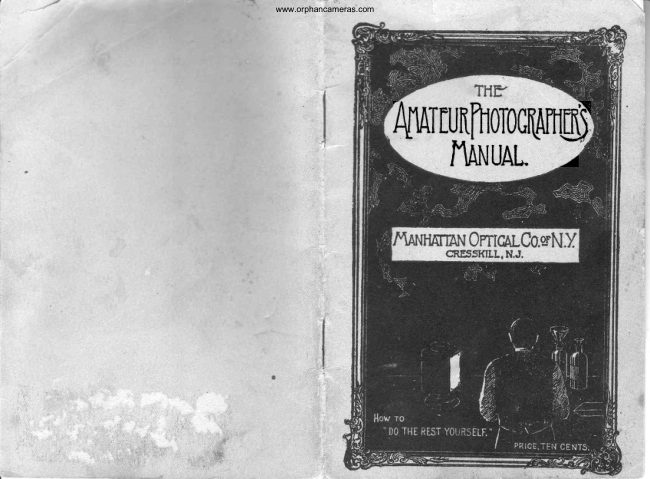
Amateur photographer's Product booklet
Product booklet for Amateur photographer's. 17 pages in English. Read the original PDF, download or print a copy without registration.
17 pagesEnglish1.6 MB PDF
Loading your manual…Open PDF directly
Document details
- Brand
- Various brands
- Model / document
- Amateur photographer's
- Document type
- Product booklet
- Language
- English
- Pages
- 17
- File size
- 1.6 MB
- Category
- Photography reference
- Document date
- Not specified in catalog
Search available document text
Find a term, then jump to its page in the original PDF. Image-only pages may not be searchable; check the PDF for exact wording and diagrams.
Page 5 · Read text
These shutters are adjustable to speeds varying from                        dry  plates from  the  light  while being conveyed  to and
one-hundredth  part  of a second to one second, and  to'                      from  rhe camera to the dark room.
time  exposures.  Al1 pneumatic  shutters are fitted with                       A number  of e.stra plate holders, at least three, will
.ittt..   iris or revolving diaphragms, generally the former'                     be found convenient, 1s they obviate frequent changing.
    The  finder assistJ the operator  in properly  locating
the view on the  plate, and  is generally attached to the                 THE  DRY  PLATES.
     of the canrera-bed---                                    If the object to be photographed be                                   trt             These are the prepared sensitive plates on whic\  the    FocusingScale.
near at hand-, judge  the distance as nearly as possible'                        picture  is taken, and which are afterward developed into
and secure the front  so that  the arrow  is directly  over                       negatives.  For instantaneo{rs work a rapid plate is neces-                                                      i           sary, but  for landscapes and general rvork a slower platethe proper figure on the scale, which indicates feet'
       it  the ob-ject is'far distant,-more  than one hundred                              will  give better results, as  it  will  allow more  latitude  in
feet,-bring   t-he arrow  to  the point  on the scale marked                                         I           exposure.                    "general"G."                               focus."                                           Any  reliable brand  of dry  plates may be used.     which  meatts

                                                           THE  DARK  ROOM.
THE  LENS.                                                                                                                                                                                                    I                                                                             Should  the  least ray  of  daylight,  or  artificial  light
    However   the  prospective  purchaser  may  suit  his                                                 i            other than  that from  the ruby lamp, strike the sensitive
fancy,there  is otte ".r.n1ial  to which the most careful at-                       dry plate previous to  its development,  it will be rendered
tention must be given, A GOOD  LENS;   without  this                           unfit  for photographic  purposes.
he can never hoPe to be successful'                                          The   first  essential,  therefore,   is  absolute  freedom
    The  exterioi  of a camera may proYe very deceptive'                       lrom  any light excepting  the rays from the ruby lamp.  A
Many  of the unfortunate victims  of cheap cameras whose                        closet with a tightly  fitting door  (felt can be placed over
appearance was srmilar  to those of a high  grade, have                       the edges anC the keyhole)  will be found to make an ex-
di.colr"t"d,  too late, that the lens, the soul of the camera,                          cdllent  dark  room,  but  as  running  water   is  desirable,
has been sacrificed to other parts relatively  of much les:                     though  not essential, the bath-room makes a very desir-
importance.  A customer will be best secured in this mat-                        able  substitute  for  the  dark  room   of  the  professional
 t.i  Uy depending on the guarantee  of a reputabie manu-                         studio.    If  the room  has a window,  extraordinary  pre-
 faclnrer.                                                                       cautions should be taken.
    Two  kinds of lenses may be necessary; one, the,rec-                       The operator  is now ready to begin work.   After en-
 tilinear, which  is a double lens, beit answers general r_e-                         terir-rg he should  first close the door and wait a few mo-
 quiremcnts and can be obtained  at moderate  cost'   In                    ments until the eyes will have become accustorned to the
 confined positions, such as interiors' narrow  streets, or in                     darkness:   if any  light  then enters  it can be readily  de-
 photographing  high  buildings, this.lens  will not answer'                       tected and excluded.
 L".".t.-"  the  fiela which   it covers,  i.  e., its angle,  is not
 great enough.  For such work   it will be necessary to use                FTLLTNG THE  PLATE  HOLDER.
 f wide "ttgl.  lens, which generally has an angle of from
                                                                   One  of the  first steps in making  a photograph  is to 8oo to 9oo.                                                                                                                                             fill  the  plate holders with  dry  plates.  Enter  the dark
                                                                    room and dust the plate holders thoroughly  with  a soft
THE PLATE HOLDERS.                                                   brush.  Then  light  the ruby lamp, and lock the door  to
                                                                               avoid interruption.
     Plate holders should be strong, light and absolutely                         Place the lamp  before you, and, holding  the  plate
 impervious  to  light.  They  are frames which protect the                     by the edges, carefully brush  it with a camel's hair brusir.
View original page 5Page 7 · Read text
until the view appears sharply defined on the groqnd-             EXPOSURE.
glass. Do not be too easily satisfied with your foctts'
6ut persevere,until you ar€ sure-that no sharper image                       LandscapeS.  One  of the most  difficult problems  of
c"r, t.  obtained. The results will amply repay you'                         photography  is to discover the proper time for exposure.
   The focus being correctly adjusted,re-set the screw'                                     It  is a general rule that the time  for exposure must be
securingthe bellowi while the exposureis being mad:'                      governed  by the intensity and actinism  of the iight  an<l                                                                                   the stop used.  The best teacher is experience, for since
                                                                                   the  conditions  of  light  are so various,  depending  not
                                                                                     only on the state of the sky, but on the season and hourSTOPS OR DIAPHRAGMS.                                                                                              of the day,  it is impossible to give absolute rules.
   The correct focus having been obtained, the next                         However,    it may be stated in a general way  that  for
step is to decide on the stop to be used'                                     landscapes, when using a small stop and  in  direct sun-
    Here the novice must iely on a few simple rules, un-                             light.  from  )ko  to Ys second will be sufifrcient with  rapirl
 til explrience has taught him the opening -best suited lo                       plates.
 iii.-r,iul".t  in hand, and those at.which the lens works                                            If  the  sun be  obscured, the  exposure  should  lte
best under varying"thatconciitionsof light'                                       doubled.
       It  is obvious     the smaller the opening through                         During  the middle of the day (eleven to two o'clock)
whi$  the light passes.the less light will reach the plate                      the sun  is at  its brightest, and exposures should not be
 in a given tp"..  of time; hence the smaller the stop the                     so long as before or  after these hours, other conditiotts
 longe;"Formust be the exposure,and vice versa'                                 being equal.        landscapesand ittteriors a small stop n'ill give                          Previous  to  eleven, and  after two  o'clock  are  the
 the best results. 3z is a very good stop for landscape                   hours best suited for out-door photography.  The reason
 work, while, for a well lighted interior, 64 is none too                          for  this  is very  simple;  at noon  or  during  the middle
 small; of course,in a dimly lighted interior a larger stop                      portion  of the day, the sun being  directly overhead, or
 -than-  64 will be found necessary'                                               nearly so, casts no long shadows, and the resulting nega-
    Fot portrait work a large stop, or even the full open-                         tive  will  lack contrast.  During  the early morning  and
 ing of th! lens, must be used and a short exposure given'                        late afternoon hours the light  is much  softer, rendering
 oifi.i*i..  the subject is apt to move before the exposure                     the lights and shades in the negative in a most pleasing                                                                     manner. is finished
    The proper stop having been put -in place' cap .the         'ry t.rrr (ot, if   ii U" a hand camera' close the shutter) I  therr                 'DEVELOPINC.
  i.i  a"*"   the ground-glass frame and  place the plate
 irofa.t  i"  posiii.on, securing it by the same catch which                                                 II            Have  the following  articles ready:
 held the frame.                                                           The Ruby Lamp,
    Most carneras of a late pattern are made with a                       The Developing  Mixture,
 .pti"g-""tuated  ground-glass; if this be the case' simply                        The "Hypo"   Solution.
 force the ground-glar. f-'u-e out enough -to insert the                          This  is a solution  of hyposulphite  of soda lL  lb. to a
 rr"i.  rt"iaJr, allowlng  it to spring back' Now draw the                      pint of water.
  ;i;;;  h;iJer'slide nearestthe front of camera' As an ad-                      Trays for each of these. Each tray should at  all iitional  safeguard against any light entering around thc                  times be used exclusively for its proper solution, and be
 ;i;;-h;1dlt,"it     is weu to throw the focusing cloth over                  so marked for identification that there is no possibilty
  fi;';;;k-;f'th.     camera' and allow  it to  fall on either                     of confusion. If there is no running water have a large
 .ia1.-t.i"g  particularly careful to protect the side from                    pitcher of cool (not very cold) water, and a tub or pail
 which the slide has been drawn'                                                       for slops. The water must be not over 600.
                                                          t o                                                                                                                                                                                              l t
View original page 7Page 10 · Read text
www.orphancameras.com

    Immerse the negative in the hypo solution, to everv                    hypo will gradually turn the white portions  of the picture
ounce of rvhich have been added five or six drops of No.                       yellow, and eventually spoil the print.
 r.  When  sufficiently reduced, remove and wash the neg-                   USE RUNNING  WATER   IF POSSIBLE,  and al-
ative thoroughly.                                                   1ow the prints to wash for about one hour.
    Very  often  only  part  of  the negative  needs reduc-                         IF. THE PRINTS ARE WASHED IN  STII,I,
tion, the other parts being  of the right  density.   In  this                WATER,   they will require a longer  time, and the water
case soak the plate well  in the hypo  solution, then  re-                     should be changed every ten  or  fifteen minutes.  Fre-
move  it, and apply the red prussiate to the parts where                      quently moving  the prints  also contributes  to thorough
                                                                           washing.needed, with  a small brush.                                                                         .t',iI
    The above formulas  will be found very valuable, but               W F I E N  T O N I N G      I S D O N E  A T  N I G H T ,  w a s h
DON'T  DEPEND  UPON  THEM   to correct errors in                       the prints immediately  after.  Do  not  allow them  to  re-
exposure.    If the exposure  is found to be at fault, make                    main  in waler oter  night,another negative rather than resort  to these artifices to    ..I                                                                              i;l
renredy the  first.                                              MOUNTINC.
TRrnntNc THE PRINTS.                                                           After  the prints  are washed, place them  face down.                                                                        on a sheet of clean glass,  blot  thetl  with  clean  white    Alu'ays do this before the prints are toned. Although                                                                                         blotting  paper to remove an-v excess of water, and applythe paper  is  ttttt so sensitive as the dry  plate, trinming                                                                               a coat of mounting  paste to the back.  A  bristle brush
should always be done in a weak light.                                                                            should be used for  this purpose.    Have  a  sheet  of  clean  glass on  which  to  lay  the                                                                                    Adjust the print  in the centre of the card mount, and,
print,  face up;  then  place your  cutting  form-which                        placing  a piece of  blotting  paper over  the face of  tht:
ihould be a piece of plate glass cut one-fourth inch small-                            print,  rub  quickly  from  the centre torn'ards the edges, to
er than the negative from which you are printing-on   the                                                                              expel  all  air bubbles.print;  adjust  to the proper  position, and cut along  the                                                                          The  paste in drying  a-lways draws  the rnount  out  crf
idg"s  with  a sharp knife.  A shoemaker's knife  will be                                                                              shape-cockles     it.  To  prevent  this,  place the mounted
found  excellent and  should  be  kept  for  this  purpose                       pictures face down on a sheet of clean paper and cover
alone. Do not use a scissors.                                                    thern with  a small board  or booli  lightly  weighted down.
       It   is unnecessary to  give any  instructions  for  the                                                                     They  will  dry perfectly flat in this position, and on being
manipulation  of the papers notv  in  general use, as  full                                                                        removed, can be bent  to any shape desired by  passing
instructions  will be found  in eacl-rpackage.                               them under a wooden  roller or through  a burnisher.
    Combined  toning and fixing  solutions are a.lso soitl              NEVER MOUNT PRINTS WHILE  DRY.   If
by the nranufactttrers of each paper, with complete direc-                    you do not wish to mount them immediately  after wash-
tions for use.                                                                           ing, allorv them  to  dry, and when ready to mount  place    Most  of these papers are either collodion  or gelatine'     i        them in water until they lie flat; then mount as usual.
so that   if the amateur  will  supply himself  with  tr'vo soltt-
tions. one for  all brands of collodion paper, and one f<;r                  INTERIORS.
the gelatine papers. he will be able to use any brand  of
                                                                                                has become  in a degree successfulpaper  that  suits him.  without  buying  a special toning    ,l             After  the amateur
solution  for each.  Far preferable to the combined baths.                           in taking  out-door  pictures, he naturally  turns  to some-
however, are the separate toning and fixing solutions.                            thing more  difficult, and in interior photography  he will
                                                                                           find a field for exercising  his ingenuity.  Problems and
WASHINC   TITE  PRINTS.                                                             difficulties which had not  confronted  him  in landscape
     After toning. the prints should be thoroughly washed                     work,  will  afford ample scope for experiment and  origi-
to remove  all traces of hypo.    If allowed to remain, the                          nalitv.
                                         r 6                                                                                                   r 7
View original page 10Page 11 · Read text
IN ALMOST   ALL  INTERIOR  WORK   a u'ide-               INDOOR  PORTRAITS.
angle lens of reliable manufacture  will  be found  indis-
pensable.                                                           A room having a north  light  is best for tndoor pcx'-
       It  is often necessary, on account of lack of room,  to                                       , traits, as  it can be used at any time  during  the day.    If
set the camera in a hall or passage, pointing  through  the                    a north room  is not  al'ailable use a wcst room  in  tlrc
open door,  or perhaps on a porch, pointing  the camera                   morning, and an east room  in the afternoon.
through  an open window.                                        NEVER   HAVE   SUNLIGHT     enter  the  windorv
   NEVER  DIRECT THE CAMERA TOWARDS                    which you are using.  Place the  sitter a couple  of feet
THE  LIGHT,  and, if possible,do not include anv win-                   from  the window, and an equal distance to one side, the            {
dows.  If however, it is necessaryto include a window'                 camera being  on  the  opposite  side.  Never  point  the               Idraw the shade and proceed with exposure until nearly                  camera. toward  the window.   Let  the shade be entirely    :      t
complete, then cap the lens and raise the curtain, after                    raised so as to admit as much  light as possible from  the
which expose a half second more. By the use of non-                      top.
halation plates, however, the necessityfor this method                    A  white screen (a sheet will  do) placed about thlec
is obviated.                                                                        or  four  feet from  the window  and facing   it, should bc                                                          I   THE EXPOSURE  varies greatly; some rooms aie                  used as a reflector to equalize the lighting;  otherwise the
very well lighted, while others are Yery dimly so. An                     side  of  the  sitter  nearest the window  would  be  well
averagewell lighted interior will require about five min-                      lighted,  while  the other side would be in deep shadow.
utes' exposure with a srnall stop.   It  is better to err on                 FOR   A  BACK-GROUND      the  wall   rvill  very
the side of over-expostlre.                                                      often answer, but  if too  far away, or not desirable for an-v
       If the interior is very dimly lighted, an exposure of                    other  reason, use the lvindow  shade spoken  of belore,
half an hour or more may be necessary. This would                     s.upporting   it on a rough  wooden  frame made  for  that
be an extreme case however'                                           purpose.
   SELECT A DULL, CLOUDY, RATHER THAN                   EXPOSURE.-On     a bright day, when using a large
A VERY  BRIGHT DAY  for interiors, as the light  is                    stop (f/8)  or the full opening  of the lens. an exposure  oi
more uniform.                                                                      il        nofromtwotwoportraitsto  threearesecondstaken underwill  probablyexactly thesuffice;samebutcon-as
PORTRAITs.                                                                         ditions,  it  is impossible to  give absolute directions;  the
    This  is by far the most difificult branch of photog-                   amateur's own experience  will be the best guide.
raphy;  it should be attempted only after the amateur
hai qualified himself by experiencein the other branches                FLAShI  LICHTS.
of his art.
   TAKE PORTRAITS  out-of-doorswhen possible,as                        This  branch  of photography   is becoming more  ancl
the light is much better than indoors. Under a porch or                 more  popular among  amateurs, and  especially among
 in the shade of a house give good lighting, and early                   those who  get  little  opportunity  for  following  their  fa-
morning or late afternoon are the best hours for por-                      vorite pursuit during the day.   It also allows one to make
 traits. The exposure should be about one to two sec-                    pictures of friends and family among the home surround-
onds, using a medium stop. By using a large window                     ings, which cannot well be obtained in any other way.
shade (gray is the best color) or a Japanesescreen for                 MAGNESIUM   POWDER    to  furnish  light  for the
back-ground, spreading a rug on the ground and per-                   exposure,  put  up  in  small  cartridges  ready  for  instant
haps placing a palm or other plant at one side, an in-                       lighting,  are sold by  all  dealers in  photographic  sup.                                                                                          plies.
 terior may be easily represented.   POSE THE SITTER CAREFULLY, so as to be                 FOCUSING   must be done by the aid of a lamp or   i
in harmony with the surroundings.and to get the best                   a candle.  Move  the light  to the top, bottom, and both                                                                              sides of  the group  or  object  that you  wisl-r to  photo-light possible.
                                         r 8                                                                                                                                                     t 9
View original page 11Page 16 · Read text
www.orphancameras.com
                                                                                          famous for  their        SOMETHING NEW.                                                                                         '  MANHATTAN   LENSES  are
       A LONG-FELT WANT  SUPPLIED.                          uniform reliability and perfect workmanship'
                                                               They are made in seven series,as follows:   The Wizard Oold Toning and Fixing Powders and
Develqping Powders. Can be sent by mail to any part
of the world.                                                                               ['
   The Wizard Toning and Fixing Powders are made
from a pure chloride of gold preparation, prepared es-
pecially for us in Europe, and rvill give any tone desired.
One powder will make a ten-ouncetoning bath by simply
dissolving it in cold water.
   The most convenientforrn of a tohing bath yet dis-
covered.
   The Amateur and Tourist cannot afford to be with-
out it.
   The Wizard  Developing Powder.   The strongest
and most reliable known.  Giving clear, sharp, crisp
negatives,positives, lantern slides, bromide prints, etc.,
etc.
    Put up in Metol, Hydrochinone, Eikonogen, Hy-
dro-Metol and Eiko-Hydro.
   The Wizard  Concentrated Developers. Put up in                   The  Daisy  Rapid  Achromatic,  a low priced lens'
solution form.                                                      unexcelledfor the amateur'suse.
   Can be diluted many times with water, and can be                   The  " Emil " Wide  An$le,  well known for  its ex-
used repeatedly with equally fine results.                                     cellent qualities. Can be had in  cells for the Unicum
    Will develop more plates than any other developer.                    shutter.
    Put up in Metol, Hydrochinone, Eikonogen, Hydro-                                                                The Extreme  Wide  Angle  Aplanat,   will  standMetol and Eiko-Hydro.                                                                        the professional'sseveresttests'                    Intensifler   The        Wizard                                                  the                          and  Qeducer                                            are                                                                The  Manhattan  Rapid  Rectilinear,  a low pricedbest    known                            for  faultily                               exposed                                       and             correctives                                                 de-                                          lI   i
veloped plates. They are remarkable for their ef;frciency.                  lens of high grade.qualitY.                                                               I                                                                The  Extra  Rapid  Rectilinear, absolutelv the best   The Wizard  Flardening and Clearing  Solution   is
indispensablefor crisp negativesand brilliant prints.                         of its class. The professional requires nothing better.
                                                                The  Planograph, an anastigmatic lens working  at
   MANHATTAN  OPTICAL  CO. OF N. Y.                          F. 14.
             CRESST<ILL'  N.  .t.             ,                           The  Manhattari  Portrait  Lens,  speedy, and giv-                                                                             ing the soit effects so much desired'
                      z8                                                            29
View original page 16Page 17 · Read text
THE CHROMACRAPH.
                           The  amateur who  has pro-                                                             '       -
                        gressed beyond the mere snap-
                          shot stage usually includes pho-
                         tographing    with    the    color                                                                                            Is your camera equipped with the  Brilliant View                         screen among  his  accomplish-                                                                        Finder ? And are you provided with the Wizard  Spirit                        ments.  By means of the Chro-
                       magraph,   the   proper   color'                  Level ?
                         values  in  the  subject may  be
                          rendered,                                   whether                                                                                      it be a paint-                                                                The Snap Shot Sighter increasesthe effiiiency of a                               ing,  a vase                                               of  delicately                                                              tinted
                             flowers,   or                                                                            . an  evening   land-                View Camera, and the Telemeter accurately measures
                         scape.                                         distanceswhich you can only estimate'
    The instrument consists of a brass ring finished in
 tasty matt black lacquer, and holding the yellow color
 screen. The purpose of the latter  is to moderate the                    Our  Amateur  Burnisher, at $5'oo. does the same
 chemical effect of the violet and blue rays, so that the                   class of work as the best of the professionals"
 same gradations of tone as the eye perceives,are rer.i'.
 dered in  tlie negative. The absolute parallerismof the
 plane surfaces of the glasses,as well as the uniform and                  Do you prepare your own solutions? Our Prescrip-
proper colorings of the same, are factors of prime im_                     tion Scales are standard,will weigh from one-half grain
portance, and these features have been made the subiect                       to. one ounce, and will last a life time'
of the most careful study in the Chrornograph. Each of        Ithese instruments is supplied with two differently tinted
                                                                                                                           for the askingglasses,interchangeablein the mount, and covering a                                         . Our catalogue can be hadsufficientrange for all purposes.               I
              For  lens  mlls     Pdces,  when      When              Iaather
             up  to  otrtside          fftted   to            fitted to          cwered             Capn.
                diamcter   of     our  camerr8.         others,              ca.
No.         r      ro/ru    $r.25     $r.5o    $ .so   $ .zs             THE MANHATTAN  OPTICAL  CO, OF N. Y. "    2       rfi       r.5o      r.75        .50       .30 "    3     ztl      I.7S     2.oo        .6o        .40                            CCCCcRESSK/,LL,N'   "' "   4    ss/+    2.oo     2.25                          . / J         .50
   When ordering, sind a strip of paper exactly reach_   n
ing around the hood or lens cell.
View original page 17From the M. Butkus archive. Original publisher and archive notices are retained.
Check the model and edition against your equipment.
PDF verified 2026-10-10.