Film cameras
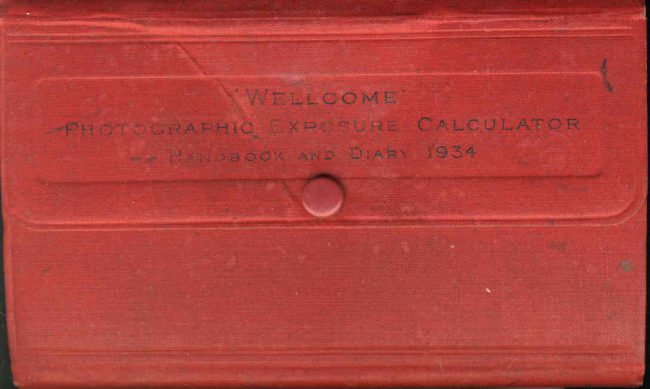
Photographic Exposure Calculator User manual
User manual for Photographic Exposure Calculator. 77 pages in English. Read the original PDF, download or print a copy without registration.
77 pagesEnglish6.5 MB PDF
Loading your manual…Open PDF directly
Document details
- Brand
- Various brands
- Model / document
- Photographic Exposure Calculator
- Document type
- User manual
- Language
- English
- Pages
- 77
- File size
- 6.5 MB
- Category
- Film cameras
- Document date
- Not specified in catalog
Search available document text
Find a term, then jump to its page in the original PDF. Image-only pages may not be searchable; check the PDF for exact wording and diagrams.
Page 26 · Read text
T O N I N G                                                                                T O N I N G


                     T O N I N G                                                          for each print  or enlargement,  develop  fully,  thoroughly
                                                                                                                                                                              in a                                                                                      The                                                                                                            be                                                                                                                                                                             first immersed                                                                                                                   fix  and  wash.                                                                                                                        prints  should    Prints,  lantern  slides, transparencies  and cin6 positive                                                                                                                                'Tabloid'                                                                                                                         Bleaching                                                                                                      dissolving                                                                      made by                                                                                   solution                                                                                                  one 6lms  can  often  be  considerably   improved,    from   a                                                              Compound    in  two   to  four*  ounces   of  water  and
 pictorial    point   of  view,   by  toning.    Providing    the                    thoroughly  bleached  to  a  light  colour,
 following    important    points   are  borne   in  mind,   the
 process  will  be found   to be quite  simple,  and  success.                                      It   is  important    that  the  prints,   etc.,  should  be
                                                                                              entirely   free  from  hypo,  otherwise   uneven   bleach-
 fui  results  certain.
                                                                                         ing  may   result.
   (1) The  material  to be toned must be correctl
                                                                                         After   rinsing   in  running   water,  prints  should  be
exposed    for  the   particular    toning   process   chosen                                                                    immersed in a solution made by dissolving one   'l  abloid   '
and   fully   developed.                                                        Suiphiding  Compound   in two  to fourx ounces of water.
                                                                                        l-he prints  will gradually  acquire a rich sepia coloul,  ev,
   For  blue  toning   rather   lighf   prints   give   the  best                                                                                                       in  the  case  of  gaslight   prints,   a  somewhat   \4'armer
results,   For  sepia and  other  toning  baths,  prints  must                      tone.  Do  not remove  them  from  the  tonir-rg bath  too
be  fully  exposed  and   fully  developed.    Over-exposed                         quickly,   but  give  them  time  to  acquire   full  strength,
and under-developed   prints  yield weak washed-out  tones.                    then wash them  in running  water  for about 10 minutes.
                                                                                                                            'Tabloid'   Brown  'Ioner  (z) P.rles!  En1q9!__34q thorou  h   washi                       byColdersubsequentbrown  treatmentor  brown-blackwith   tones  can be  obtained
also  are  most   essential.                                                       (see fage   50).

   Partially   fixed  or imperfectly  washed  prints,   etc.,  are                   A  preliminary  soaking  in  the sulphiding  bath  before
frequently  the cause of patchy  toning  and stains.                            bleaching  will also give a darl<er tone on some papers.

   Particular   attention  should  be paid  to double  weight                  SPECIAL    NOTE,-Good    dark  sepia tones can be
bromide  paper.                                                                      obtained ouly with  fairly  strong and fully-developed  prints from
                                                                        good  negatives.   The  exposure  of  the  paper  must  be
              S E P I A     T O N I N G                                      such that   it can be developed right  out until  all action stops.
     t Tabloid'    Sepia  Toner  produces a rich'permanent                           Prints  which  have  been  over-exposed  and  removed  from
                                                                               developer before development  is completed, tone to a weak,sepia  tone.
                                                                               yellow-brown  colour, as also do prints  from  weak  or  flat
  Each  carton  contains     t Tabloid'    Bleaching  Com-                      negatives,  Proper fixation and washing  are also essential,
pound and  'Tabloid'   Sulphiding  Compound.
                                                                          There  is a slight  variatiou   in  toue  according  to  the
  The   instructions    that   follow   apply   to  cin€   films,                     brand  of paper  used, though  not  to any marked  extent.
lantern   slides  and  transparencies   as  well  as bromide                                    If  your  favourite  paper gives you  too yellow  a brown,
and  gaslight   prints,  unless  otirerwise  indicated.                           use  'Tabloid'   Brown  Toner  (see lage  50).
  Fon  Bnouros   .lNp  Gesr-rcnt   PnrNrs.-To    secure                                     *  The   stronger     eolution    works   more    rapid.ly    and   Ci.ves  a
the  best  results,    it  is advisahle   to use  fresh  developer                                                      stronAer    result.
4 8                                                                                                              4 9
View original page 26Page 29 · Read text
R E S T R A I N E R S                                                            P R E S E R V A T I V E S

           D O U B L E      T O N I N G                                      'Tabloid'     Potassium    Bromide      is  generally
  The  employment  of 'Test-oro'   Touuns  for producing              employed   rvith       ' Rytol,'   Hydroquinone    and   Metol.
 two  or  more  colour  effects  adds  a new  fascination   to                Quinol  T)evelopers.
 photography.    The  multiple  toning  is accomplished  with                    'Tabloid'    Sodium    Citrate    for  use with  Metol
 the  aid  of a spirit  varnish  or masking  varnish  as used by              and  Amidol.
 aerograph  workers,  which   is used to cover those portions                    DrRncrtoN.-If       less  than  a  grain   of  restrainer   be
 of  the  print  which  are  not intended   to take  the  colour                 required,  dissolve one  'Tabloid'   product  in  a drachm
 of  the  particular  toning  bath  in  use, one colour being                    of  water  and  add  a  portion   of  this   to  the  developer.
produced   at  a  time.   I3y  the  merhod  described  below,                            If  one  or  more  grains  of  restrainer  are  needed,  the
 it  is easy  to achieve  first-rate  results.                                 necessary number  of 'Tabloid'   products may be added
   DrnncrroN.-A      good,  plucky   print   is made  from  a                  direct  to the developing  solution.
suitable  subject.   Assuming  the  colours  selected  are
sepia  and  green,  apply   the  varnish  with  a camel-hair                            P R E S E R V . A T I V E S
brush  to those parts  of the  print which   it  is not desired                                     t Tabloid'   Developers   contain   sufficient  preservative
to  tone sepia.  When  the  varnish   dries, proceed  to tone                   to ensure proper  action  of the solution  in  normal  use.
sepia  in  the  usual  way,  dry  the  print  and  remove  thb            When   the  norm:il   developer    is  diluted,    or   is
varnish   with   cottor-r v'ool  dipped   in  methylated    spirit.                                  t o  b e  k e p t    i n  s o l u t i o n     f o r  s o m e   t i m e  b e f o r e u s e ,
Carry  out  the  green  toning  by  vaniishing   the  parts  of                additional   preservative   may  be  required.     For
the   print  already  toned  sepia.   Judicious   selection   of                   this  purpose  add  one  'Tabloid'   Sodium  Sulphite   to
subject and  colour  will  result  in many  pleasing  effects               every  one  or  two  ounces  of  solution.   No   attempt
by  this method.                                                           should  be made  to keep  a solution  of  amidol.      It  must
                                                                      be  freshly   prepared   to  obtain   the  best  results.
            S U P P L E M E N T A R Y                                                                                                                       ' T a b l o i d '    S o d i u m   S u l p h i t e ,   D r i e d ,   B r .  6 ,
                                  I N F o R M A t  ' T o N                                     possesses great  advantages  over  the  ordinary   crystals,
                                                                                   especially  in keeping  quality.       lt may be used in exactly
   In   this  section   is  included   information    as  to  the                  the same rvay, either  for compounding   the photographer's
use   of   certain   chemicals,   which   cannot   be   dealt              own  formula,  or  for  adding   to  'Tabloid'   Developers
with    conveniently     under    the    chapter    headings               when  dilution   necessitates  prolonged  immersion    in  the
of  Exposure,  Developrnent,   Printing,  Toning,   etc.                   developing  solution.   Five  grains of the  'Tabloid'    salt
                                                                               are  equivalent   to 10 grains  of  the  ordinary   crystals.
              R E s T R / \ I N E R S                                          'Tabloid'    Potassium    Metabisulphite,      gr.  10,
   Restrainers                are used                               to  prevent                                     chemical  fog,                                                and  to                                                                                       used in compounding                                                                                                              any formula                                                                         be conveniently                                                           may                         tTlsLoro'retard       development.                                 Dnvrr-opBns                                                   contain                                                                                   potassium  nretabisulphite                                                                                                                                                              is indicated.                                                                            which                                                                                                  in
sumcient  restrainer  for normal  use. For developing very                                                                     To  shorten   the  washing   of  plates   or  prints   after
rapid  plates  in warm  weather  or  in  hot  climates, and                 bleaching   with      t Tabloid'   Chrcmium     Intensifier   (see
for     lantern-slide   making,   additional   restrainer  may  be                                                                              lages  33 arul  34), a solution  of one    ' Tabloid      ' I)otassiumrequired.                                                                               Metabisulphite    to each ounce  of water  may  be rapidly
   'Tabloid'   Ammonium    Bromide     is  chiefly used                poured  on and  off  the  plate,  or  print,   until  the  yellow
in lantern-slide work,  when warm  tones are required,                      stain  disappears.  Then  wash  for  a minute  or two.
5 4                         www.orphancameras.com
View original page 29Page 30 · Read text
} I A R D E N E R     A N D   C L E A R I ' R                                                     S E N S I T I S E R


      trt  is also  the  best  chemical  to add  to hypo  solution                 S E N s t r t s E R      F o R   C A R B o N    A N D
 to  make  an  acid-fixing    bath  (see y'age  30),                          O I L   P I G M E N T    P R O C E S S E g
                                                                                 Hitherto  a solution  of potassium bichromate,  rerrdered
                     A L K A L I                                            alkaline by the addition  of strong  solution  of ammonia,
   The   alkali   generally  used   in  making   accelerating                has  been  employed    for   the  purpose    of   sensitising
 solutions   is common  soda, which  is indefinite   in strength               carbon   tissue.   The   'Tabloid'    preparation    of   the
 and frequently   impure.                              J      double  chromate  of potassium  and ammoniunr   simpli-
    'Tabloid'              Sodium   Carbonate,    gr.  it4, provides                   fies  the  operation  by  obviating   the  necessity  of  using
 the  photographer   with  a  pure,  reliable,  portabie   alkali             ammonia  solution.   This  preparation  is equally  suitable
 in convenient  ready-weighed  quantities.                                         for  the  Oil  Pigment   process'  and  therefore   is preferred
   One  in  an  ounce  of  water.forms   approximately   a                   to  stock  solutions  by  amateurs  who  make  occasional
 l0  per  cent.  solution   of  sodiurn  carbonate.  a   little   of               carboq  and  oitr prints.
 which may be added,   if  desired,  to the norrnal  developer                 'Tabloid'    Potassium   Ammonium    Chromate,
 to accelerate  its  action.   The  'Tabloid'   product  may                                                                                  gr.  24
 be emplol'sd  also  in compounding   developers  of special                   Drnncrro*.-To       sensitise  carbon  tissue  for  use with
 formula,   and   for  any  other  purpose   for  which   thd                n o r m a l    n e g a t i v e s . -
 ordinary   crystals  are  used.                                                          "Iabloid'   Potassium Ammonium  Chromate, One
                                                                    Water                                                   .. Oue ounce
       H A R D E N E R    A N D    c L E A R E R                                                 If printing  from  soft negatives, dissolve one 'Tabloid'
  When  a hardening  and  clearing  bath  for  plates,  films,                product  in two  ounces of water;   or,  if from  very  hard
 lantern  slides, gaslight  or bromide  prints  is required:                      negatives,  one  in  six drachms   of  water.
   'Tabloid'    Alum   and   Citric   Acid  Compound                  Soak  the carbon  tissue  in  the  sensitising   solution,  or
 will  be found  convenient  and  serviceable  (one product  in                     float   it on the surface  for two or three minutes,  as directed
€ach ounce  of  water).    This  bath  is used  after  develop.                by  the  manufacturers    of  the  tissue  used;  squeegee  to
 ing  and   before    fixing.   No   washing     is  necessary               remove  excess  of  moisture,  and  then  dry   in  the  dark.
before   immersion,    but  10  minutes'   washing   before                 To  sensitise  oil pigment  paper-use   as above, and soak
6xing    is  advisable.        It   is  not  suitable   for  use  with                  the  paper   in  the  sensitising   solution   for  two  or  three
P.O.P.  prints.                                                              minutes,  coated  side  upwards,   taking  care no  air-bells
                 H A R D E N E R                                         are  formed.   Hold  up  to  drain,  and  dry   in  the  dark.
   In  very   hot  weatber   or  in  warrn  climates  when     it
is impossible   to  control  the ternperatures   of  the various                       C O V T P E T I T I V E                                                         H t q | . I e s r   A W A R D Ssolutions   used,  a  plain  alum  bath   is  serviceable   for
                                                                                                                             . T A B L O I D '  P H O T O G R A P H I C M I T N R T I I . Shardening  the  film.    In such circumstances  the following
will  prove  useful :-                                                                  were awarded
   'Tabloid'     Alum,    gr.  10.   This product may be           A  G R A N atD theP Franco-BritishR I Z E        Exhibition, London,1908
used for plates or prints,  a useful formula  being:-                  A  G R e t l D  P R I z E
     'Tabloid'  Alum,  gr. 10             One to two                                 at the Japan-British Exhibition, London, 1910                                                                P                                                             R I Z E                                                        D                                                    A  G R A N     Water                            One ounce                                                                                                           International Exhibition' 1910                                                                                       Brussels                                                                                       the                                                                                              at
  The  exact strength depends on the amount  of harden-            A  G R A N D  P R T Z E
ing  desired.  Time  of immersion,  about 10 minutes.                                    at  the  Turin  hrternational Exhibition, 1911
c o                                                                                            6 7
View original page 30Page 37 · Read text
S E L L I N G      P H O T O G R A P H S         F O R
             R E P R O D U C T I O N

   There   are  three  ways   of  submitting    photographs                        T i l i . T A B L Q l p ' a u n o
 for  the  consideration   of  editors:-                               P H o T o G R A P H I C       P R O D U C T S

    (l)   Personally.     This   is  rhe best method  for  the                                                        'Tabloid'                                                                 AIwaLrssag or write the word town  photographer   who  has  time  at  his  disposal,  and
 particularly    is   it  so when  the  subjects  to be submitted
 are  of  value  chiefly   for  their  ,,news"    interest.    Such                                                                        ' T a b l o i d  '    B r a n d .  D c v e l o P e r s
                                                                                   'Test.otp''   RYTOL'    IJNrvslrsA'I- Drvrr-olnn photographs   an  editor   will  always  be  glad  to see and                                                                                                                                 (25 of each)
 to  accept  or  reject   at  once,  thus  leaving   the  photo-                   'T.R.Broro'       ' RYTOL'    I]NrvensA.r. DBvRt-open
 grapher  the  opportunity    of submitting   them  elsewhere,                                                               (100 of each)
 in case of  refusal,  before  they  have  lost  their  freshness.                                                   ' T a . s L o t o ' ' T A N C O L '     D n v r r - o r n n
                                                                            'TeBLoto'    Alltpor-  DrveloPrn
                                                                                                  (QuINoL)  Dnvrlornn                                                                               'TArLoro'   HvonoqurwoNE
   (2)  By   Post.    This  is a good method  for the out.                   tTlaLoto'                                                                                           Mn:ror.  DrvsloPrn
 of-town  worker,  and perhaps  the best method  in dealing                                    t Tegloto'    Mrror.-QurNol   DEVELoPER
 with  weekly  and  monthly   publications.     In  submitting                    tTaer,oro'   Pvno-Mrror-   DEvELoPER
by  post,  always   state  whether   the  photographs   are                                                                        ( hnl5eia      / S tandard     Forvrula)
                                                                                  'TAsLoIo'    Pvno-Sooe    I)nvsLopen     (Ilford   Forntula) offered exclusively  and whether  a special fee is required.
 Enclose   stamped   addressed   envelope      if   return    of                                                                    ' T a b l o i d  '     B r a n d   D e s e n s i t i s e r
photographs    is desired,                                                          For  Detelolltnent    without   a dark-room,   see lage  31
                                                                                         tTl.gloro'    DrseNsrrrssn
   (8)  By   Agcncy.       In   all  the  large  cities  there  are                                                                                  ' T a b l o i d  '     B r a n d    T o n c r s
Agencies  (saa Drnrcronv)    which  are prepared  to submit                                                                                 For  Bromide   and  Gaslight   Pints    or  Lantetn    Slidcs
prints   to  editors  on  a  commission   basis,  usually  2bl                  tTeeLoIo'   Blue  ToNrn
to  40"/, according   to the  standing   of the Agency   or the                      'Ta.gloIlr'   Gnnelr  ToNsR
amount   of work  done.   Such  Agencies  naturally  know                    'Te,nr-oto'  Septe ToNen
the best papers  for particular   subjects;   they  will  develop                   tTesLoro'   Bnowu  ToNnn
plates, copy single  prints  and  circulate  copies promptly,                                                         ' Tesr-oro'  CoppBn FsnnocvA.NloE  ToNINc  Coupoullo
and  collect  the  fees.                                                    tTegLoto'   SulpgrorNc  ConPouno
                                                                                                 For  P,O.P.   Prints
  Essentials    of  Press  Photographs.-The      nega-                                    t Tegrotn'    Pr-euxurtl   TolrNc   Cornlpoullo
tives must be sharp and capable  of yielcling  bright  prints                     tTrlsLoto'   Golo   Cnr-onror   wrlrr  Sur-pno-
                                                                                                      ConrrouNo  (B 6)                                                                                        cvANrDE
or  enlargements.    Prints  on  glossy  bromide  paper  are                                                                                     TxrosuLPHATE                                                                                                              ,,wlrx
preferred, and should be 1/1 plate  size.                                             CoupouNo   (ConrtNro    tsern)  (B 10)
7 0                                                                                                            7 l
                           www.orphancameras.com
View original page 37Page 48 · Read text
E X P O S U R E                                           T y P I C A L      S U B J E C T S
                                                              These illustrations  will  help the photographer
                                                                                             to classify  his subject  correctly
                   A L T I T U D E
  Above  a height  of 5000 ft.   it has been the custom  of
sonre workers  to reduce the exi)osure slightly;   others,
horvever, contend  that    it should be increased.  XIuch
apLrearsto depend on circurrrstances, and, rvith the great
latitude  of rnociern plates,  it is a safe plan to aciopt nornral
exposures, paying  particular  attention  to  the  subject.
 \Iountain   viervs u,'itir near masses of dark  rock  or tree
must be treated as itear'1' foreground  .subjects, in spite  of
the presence of snow in the rnidrlle distance.

                ( 2 )  S u b j e c t s         ( s e e 1 / / u - e t r a t i o n s )
  The  golden  rule  is to expose for the deepest shadows
or the darkest  object  in rvhich detail  is recluired, and,
therefore, the photographer must  judge  each  subject
 b y   i t s s h a d o w s ,  e s p e c i a l l y    t h o s e n e a r   t h e c a m e r a ,
o r  b y     t h e     t o n e   o f     f o r e g r o u n d    c b  j e c t s .       f l h e
Iixposure  Calculator  gives  the  correct  exposure  for             A -- oD IrS T A N T          L n N D S C A P E        S u a J E c T
Norntal   Sulyects  by one turn  of the scale.                              Requires one-cjuarterthe exposure necessaryfor a
  Normal    Sub   j ects   (see  illustration    D).--LAND-                                   normal subject
scApES   wl'f rI  AVirrtAGE  lionBc;HouN Ds,   sucl{  AS
 Fol.tacn,    F'tcuttns  AND    Ilutt-r.,rNcs  oF   h,IEDrun{
c o L o u n ;   W E r , r . - r , r c H ' f E D   S ' r ' n r a E ' r S c n N E S ,
xPor<rnArrs   lx  Wnr.r,-r,rcl{'rED  Roonrs, *Vnnv  LrcHr
 I xrenroRs,   *Copvrxc   PsolocRApHS    rN   Wnll-
r.rGHTEr) lLoorr,  xColvrxr;   ParNrlxc;s   rN  Sruolo.
  N O T E . --The  Calculator  gives  the  exposllre  in seconds
or              o;f a  secotttl, except  for those subjects with  an                                                    tr8+rt,ri'.:,#'    "frtctiotts
asterisk.  For these the exDosure is in  nzitttttes or  froctiotts
o1fa tnitntte.
          lf the foreground is heuug,giue double the exposure;
                                        if  liqht,  giue half
  A  secorrcl rrlo\rernent  of the  Sc:,r|e (see instructions   on
the Calculator   itself)  inriicates ttre correct exposure  for
the follorving specizrl subjects :-
  Clouds.-lhe     expostlre irrdicatecl for  " Cllouds "  is for
those of rnedittm chziracter.  Fieavy  rairr clouds reqrrire
double  this exposrlre ; very  ligirt  rvirite clorrds orre trzrlf.                B - F o n E G R o u N D      B E a c F l   S c r r u r
Ilecl or yellow  sunset and sunrise clouds rerltrire longer                    Requires one-half the exposure necessary for a
expo.sures, unless orthochrornatic  plates are rrsed.                                           nornral subiect
1 8 6                       www.orphancameras.com
View original page 48Page 69 · Read text
J U L Y   L I G H T   T A B L E S
    Nots.-In     those countries in wirich  ,,Surnmer Time   "
  is. adopted    it   will  be necessary  to  aclvance the  times
 gryen Delow Dy ()ne houl..


                               'Ji;""TABLOID',".o*o
                              .TA                          NC C L''O*^
                          DEVELOPER

                                     S p e c i a l l y   p r e p a r e d      f o r
                                                                                        t a n k  u s e .  G i v e s s p a r k l i n g
chronlatlc,   t  These ptates,figuresare mustemploved.be  usedthey withmust caution.certaillly  Unlessbe  increasedortho-from  5 ro  l0 times  when  the  iigtrt  is lertoii   oil".ri"doii        i"a.               n e g a t i v e s o f  t h e " p y r o "  t y p e
View original page 69Page 70 · Read text
,     J U N E   L I G H T   T A B L E S
    Norn.-In    those countries in which ,,Summer  Time',
  is. adopted    it  will  be necessary  to advance  tbe  times
 glven  lrelow Dy One hOUr.

                      Latitude     40'  N.


                  Latitude  30' N.


                                                       (                              '"oo=                         HA ZELINp"o'*
                      C REAM
                                       T h e p h o t o g r a p h e r ' s s a f e g u a r d
                                           a g a i n s t d i s f i g u r e m e n t o f   t h e
                                                s k i n  b y  d e v e l o p e r o r   r o u g h -       t These   figures   nrust  be  used  with   caution.    Unless   ortho_
chromatic   plates  are employed   they  must  certainly   be  increased
from  5 to 10 tines  rvhen the  light   is yellow  or inclined   to  recl.              n e s s  f r o m  c a u s t i c s o l u t i o n s
226                        www.orphancameras.com                               227
View original page 70Page 75 · Read text
Ex po tJT:'.  :^".1=, LAr o R
  Turn disc until G.nrpx FrcunB_representinsllatc  or film     factor (saaTable D,pgsrzW  ii--rpp"llill''nfic"   Fro.r*"-     representingthe L;ihi   VaI*.   (Scc Tablci ibi"i;]if.
   N o n M . A L   S u e J E c r s        ( s e e p a g e 1 8 6 )
 The RED FlouRE  oppogltceach stop glvcs the correct
      erposurein seconds ot flractloas- of a seaoad
            k-
                    S URE                eXPo


          7t  T1                           colvieht              I
       For  stops not on  Calculator,  scc pag,c lg}
   P o n T R A t T s         ( i n  a w e t t - l i s h t e d    r o o m )
The RED  FICURE   opposite each stop givcs the correct
    exposure in mlnutes   or lracfioas'"i         _iiuii
                                                            "-
View original page 75Page 76 · Read text
\

A boon to out'door                 Pt9'oiotoet"Pttttt'
iects against mosqur'
 iolt,gn"t" and midges


 www.orphancameras.com
View original page 76
Page 77 · Read text
w  iltlltot tlu
         \.....'t.:="
                rrtttrr aulti    lt  llllll
                                          I U T  I U


1 Original  non-greasY
   toilet    PreParatton
   for   day-time  use.
   Tubes  and  Pots
View original page 77From the M. Butkus archive. Original publisher and archive notices are retained.
Check the model and edition against your equipment.
PDF verified 2026-10-10.