Sewing machines
Weed Family Favorite — User manual
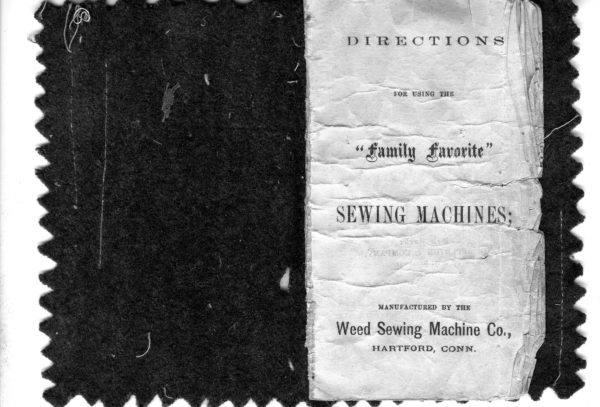
User manual for Weed Family Favorite. 13 pages in English. Read the original PDF, download or print a copy without registration.
13 pagesEnglish8.7 MB PDF
Loading your manual…Open PDF directly
Document details
- Brand
- Weed
- Model / document
- Weed Family Favorite
- Document type
- User manual
- Language
- English
- Pages
- 13
- File size
- 8.7 MB
- Category
- Sewing machines
- Document date
- Not specified in catalog
Contents
Search available document text
Find a term, then jump to its page in the original PDF. Image-only pages may not be searchable; check the PDF for exact wording and diagrams.
Page 3 · Read text
4
                                                                             5
   rests upon the rod, at each end. of the
                                                   wheels in the grooves;  and, with       >   (3   pitman, and at the hole in the hub of
                                                         presser-foot raised from the feed,         l   the Wheel; then
                                           Prepare to run the Machinl           Oil the Machine
                                                 by seating yourself in front. and phte
   in the fulcrum of the vibrating arm, the              the feet on the treadle, with the boil
  two  supports of the  needle-bar,  the               as nearly over the rod as possible (
   joints and bearings of the take-up,“                          ‘ iifiws‘mrnthe wheel toward you).         '.
  maedlebar connections.                 %                the  feet steadily up and down by        :
    Now turn the machine up, and  oil              ankle-Joint  motion,  Without  Jcrkll  (,
   the under parts, as follows, viz.: the            keeping the heel and toes firmly on  t  j
  main shaft at the two holes in its bear-               tremlle.                                                                          vi ,
    12115“, tilieehniigrgnwe and cam-roll stud,                     ‘ Continue this motionuntil it b‘eu‘fn’itr
  the feed connection-bar at both ends               natural, easy, find uniform.  Next,
   (especially where  it bears on the ec-                            Fill a Bobbin
v' {mime   , the grooves in which the shut-                                                 thLLthread from spool placed-on spool- "   tle-driver moves, both ends of the piece                                                      pin at the right and top of machine;  which connects the shuttle-driver arm                                                           to do which you  ivill plaice bobbin  in   With the crank, the rocker—shaft at both                                                      spooler by putting one end into the con-    its bearings, both  feed lever bearings,                                                   cave cup at right—hand side of spooler,  the feed—cam (this  last  is the most 177?                                                    then pull the plunger in opposite side
  portant place on the machine).                      of spooler to the  left, and the bobbin    And remember, whenever the ma—                                                               will come to place and be held firmly.   ehine runs hard, it is probably because                                                               l’htee end of thread between end of bob-
    it needs oil or cleaning.                              bin and cup of spooler.   Start machine,      Next,  place  the  belt around  the                                                      pressing the rubber ring gently against

   v v1                                                                                                                                                  <l     into-1mW's?”
View original page 3Page 6 · Read text
10                                                           ll
     Holding end of upper thread loosely                                                          Soft  and thin  goods  require  but
  by left hand, turn fly—wheel toward you                                                                     little tension; but on thick and heavy
  once around, when the two threads will                                                 goods the tension should be taut.
  have become locked, and can be drawn                                                   Proper adjustment of the tension is
  through the  hole  in needleplate  by                                                 one of the most important things to
  drawing thread  in  left hand upward.                                               comprehend.
   Pass the two thread ends away to left.
  Put the slides into their placesmentlie        ~cetrequired length ofStitbh     i
   shuttle.  Turn the fiy-wheel until the          by turning; the nut under back side of
   needle  is raised to the highest point,           machine, to the right or upward for a
   then put the goods underillgpresser-            longer, and to the left or downward for
A? foot,       and /drop it down.                           a shorter stitch; but  it nifty 35a turned-hf      .3. ,¢\V:
        Regulate Tension                      so inuch to the left or down (unscrewed)         W
   of upper thread by turning the tension             as to stop the motion of the feed alto-
  thumb—screw  to the  right,  until  the           gether;  should  this  happen.  turn  it
   thread seems'to draw through  it with           again to the right (or screw  it up) to
   about the same tenacity as it did from             set the feed in operation.
   the shuttle, for the purpose of making           You can now proceed  to sew, re-
   a stitch alike on both sides.                     membering} that practice  is necessary
       if the under thread  lies straight, or             for performing these instructions prop—
     is not drawn sufficiently into the goods,              crly.
   turn  the  tension-screw  more  to  the             Remove the Work
    right.   If such is the ease with the 11p-                                         when the needle  is out of the goods,
   per thread, turn to the left, or increase                                             and the presser-foot raised, drawing it
    shuttle tension,  as  directed on pages                                         from ‘you after pulling the upper thread
                                                   out two or thrce inches.
View original page 6Page 7 · Read text
12                                               13

        HEMMING.                          FELLING.
                                                   Let one edge of the cloth  project
      Lift the prcsser-bnr  to  its highest                                                 about one—fourth of an inch beyond the
  point with the left hand, then raise the                                                   other (or place the edges together, and
  lifter as high as it will go with the right
                                                           stitch about one-fourth of an inch from
  hand, to support the bar in this posi-
                                                  the edge, then trim off the under edge
  tion; turn the small screw that holds                                                                    {1&2}: toithcmscam), open the work and ,the foot  in  its place toward you oeee                                                  turn the wide edge over the narrow around, and slip the foot of downward  ;                                          oné~then slip this edge into the hem—  put-the hemmer on  in place of foot                                                  mer, which turns the raw edge under,  (being sure that the needle will pass                                              and will operate as in hemining.
 through centre of hole in hemmer) and                                                      in addition to the hem“ whieht  tigiteh‘ivith  the screw.   Clip of the                                               accompanies every machine, there are
  right-hand corner of the cloth, so that                                                           a great variety, some of which may be
  it will get the roll more naturally; turn                                             worthy  of  attention for  facilitating
' up the edge of the  elotlr about one—                                                          vheni‘niing  various  widths and heavy
   forli‘th of an inch, and push  it into the                                                    goods, and over seams.  The particular
  scroll or mouth of the hemmer, and                                                        adaptabilities of these “wide hemmers ”
  draw  it along with any pointed instru-                                               can be explained by any one selling the
  ment until the needle will enter it.                                       Weed Machine.
    Now let down the presser~bar, and
  take the edge of the goods between the                CORDING.
  thumb and forefinger of the  left hand;               This  is done by expert operators
  keep the scroll of the henimer just full,           without the  aid of  an extra  attach-
  as it will leave a raw edge if there  is           ment, but most. persons prefer using a
  too much or not enough turned in.                 “ Cordon”                                                                                                               ,

                                                                           1
View original page 7Page 8 · Read text
14                                              15
          The following style  is attached to           guide,  then  let down  the  foot,  and
        the presser—bar in the same place and           stitch as usual, keeping the goods well
       manner as  the  foot.   (See directions           to the left while stitching.  Should the
         for putting on the hemmer, page 12.)           needle pass through the cord, or too far
                                                 from  it, change the position of cordcr
                                                              as may be necessary, to right or left.
                                       To Gathei' or Ruffle without the
                                          Use of an Extra Attachment.
                                             Let the  stitch be quite long, and
                                                          icgulate the fullness ofgathers by hav-
                                                         ing the 11ppe1 tensimi more 01“ less tight
                                           Run the machine Withm it it 5“,
                                                        preterablemto regulate the fullness  by»
                                                       gathering on one of the threads, leave

_   ~_    7   Directions for using.                  the tension on one side very light in.
 w'      Put the Corde1 on in place of pieSsei-           order that the thiead may lie stiaight;
          '     foot.  Thread the cowl through small          then draw it as in gathering by hand.
        hole in   left end  of  Corder,  thence
       through tube or cord—guide, letting two       TO GATHER AND SEW ON AT
        or three inches remain out.  After the            THE SAME TIME.
        cloth  has been  prepared,  either  by              Place the cloth to be rufiied on the
          creasing,r or stitching a seam, place the          under  side, make a long  stitch,  and
        cloth one thickness over and the other          have the tension same as in ordinary
                                                                                                                                                                                                                                                                                                                                                                                                                                                                                                                             '       under the cord—guide, and the whole           sewing.  Hold the upper cloth firmly
       under corder—foot.  Carry the cloth to          between the thumb and fingers of the
                                                                                                                                                                                                                          ~       the  left  till fold touches end of cord—               left hand, so. that the under cloth shall
View original page 8Page 11 · Read text
21
                            N)O
                                                          If you wish to sew with a view to   or bent away from the shuttle race, or
   by the accumulation of lint or oil in the        ravel easily, leave the upper tension so
   holes through which the needle passes,         light that the under thread will not be
    so as to prevent  its throwing a regular      drawn into the goods, but lie straight.
   and perfect loop.  Pay especial atten-
    tion to final directions for setting the                                           The treadle  in the stand may wear   needle on page 9.                                       Jesse  so  as to  rattle.   In such a case,

                                                                                                                                                                                                                                                                                                                                                                                                                                                                                                                                                                                                                                                                                                                                     .                                                                                                           v,           loosen the conéfim the right hand of
      Loop stitches sometimes occur from        the treadlew drive  it up  close 430, the
        .  using needlesioo fine for the thread:         treadle, and 133qume   if thistbrings
                                                                                                                                                                                                        ~   but generally from the thread feeding        the pitman out of perpendicular, loosen‘f‘l'rswrrtoevso ;    freely, which is remedied by re-        the left instead of the right 09W
   lymding the thread“ If the sppertlrread       machine—runs easiei“vs"hen the pitm;L        ,
     ‘oops, increase the upper tension  ;  if the             is perpendicular.
  *‘ \T\)Wel‘, increase the shuttle tension.
                                             The belt may become stretched, and
            If- you have too much  tension on          slip on the wheels, in which case out a
   both threads, it will be shown by the         piece off one end, and make a new hole,
    constant breaking of the upper thread,          for theuhOQk.‘
    or the gathering of the work.
                                             The needles Furnished with the Weed
        If you prefer to use  a  size finer       Sewing Machines are manufactured by
    thread for the under one, there  is no         the “Excelsior _Needle Co.,” by a pat—
    objection.                                    ented swaying process, consequently are,


                            ‘___/n,,.t1x,                                                    1G  ~   -,.                  WV. -v
View original page 11From the ISMACS International. Original publisher and archive notices are retained.
Check the model and edition against your equipment.
PDF verified 2026-10-11.