Film cameras
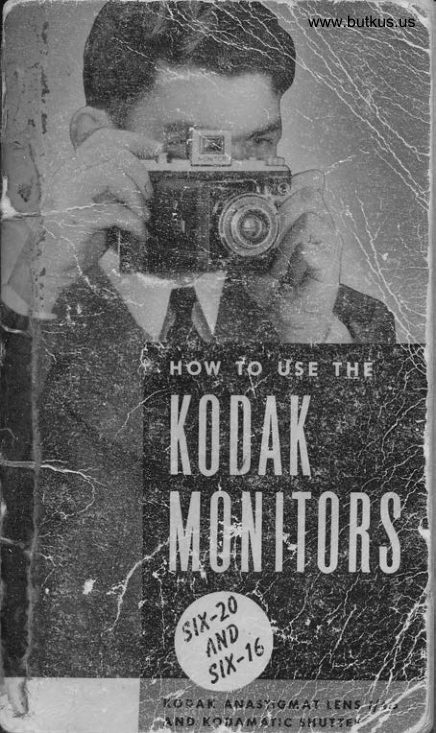
Kodak Monitors User manual
User manual for Kodak Monitors. 29 pages in English. Read the original PDF, download or print a copy without registration.
29 pagesEnglish3.5 MB PDF

Loading your manual…Open PDF directly
Document details
- Brand
- Kodak
- Model / document
- Kodak Monitors
- Document type
- User manual
- Language
- English
- Pages
- 29
- File size
- 3.5 MB
- Category
- Film cameras
- Document date
- Not specified in catalog
Search available document text
Find a term, then jump to its page in the original PDF. Image-only pages may not be searchable; check the PDF for exact wording and diagrams.
Page 2 · Read text
Outdoor ExposureGuiCe

           Srrr,jet-.t                  S I r u It t ' r                                                       i ,,,lll]|i,,,  Sllt'erl           l:>r',w 1 |                                                                          v
                                       YAverage    Subjects:     Neirr-lr1'                     '.50     I ' e o p l e ,   ( i a r d e n s      I l o t t s ( ' s ,        f    l l                 |
  Sccttes nol  itt 5fi:;,ie.                            i
Bright   Subjects:    \r'rtr -by
                                  a rrd                             i t t   \ l a t .                                                i t t c ,   Bcrt,-it,                                                                                I  P e,r p l e                                                                            f , ' 1 6            | /.5o                         St'r'ttit's                                    rvit lr l'r'rrt'-            Sct'rtt's.   Srlotv                                                                                      |
   grrlr n r l  o l l j  t 'c t s .
iriui"t*  s"ui""tit  g"t.l";"      I
   ri.c,  rrtt<l Srto*' s."*:..'   iti:-    |
      t arr t  L i r t t d s c : a p c s     i tttcl  \Io ttlt-       |       f  2 2             I ,.5o
      t ain s   r v i t l t o t t t  p r o t t t itte ttt  d a rk   L
    ollj ect s  itt   t he   f ort'gr<ltt nd.
                                   ()err-                     PeoJrle,         Subjects:Shaded                                                  -1..5     1,',100                                s   ir r        .f                           sttb jet't  d e n s ,          artd  ot lrer
    ( )perr SIrade tliglrtecl b1' opt'n
   s k r ' ,  n()t  rrtrrlcr trces,  por<'lt
     r ( ) o l . c t c . ) .                                                 f  5.{t      1 ,5 0
Moving   Obfects:  \\'hen  photo-
  graphing a moving object suclr
   :rs a runner,  train  or an auto-
   mobile, the subject slrorrld be        f 5 . 6     1/200
   rrroving towards or ztu'itf iront
   tlre camera  at   :tll  :tttgle oi
   abortt 4.5 degrees.

  Exposrrres are for tltc Itottrs [r<-rnrotre ltour zrfter sun-
rise until one Itour belore sultset on datys wlten the sun
is shining.  If picttrres are made earlier or later, or  if  it
is a  slightl)' cloudl,  ,.r ltazy da1', use a larger stop open-
ing. This  table  is tor Kodak  Vericltronre and Plus-X
Filnrs.
    \\ritlr Kodak  Srrper-XX  Patrcltronratic Film use tlre
next sm:rller stop opettirtg, or usc a slttttter speed twice
as fast as tlrat  tiiven  in  tlre tzrble. \\-ith  Kodzlk Patra-
tornic-X  Filrn g,r'e twice tlte exposttre.
   Tlre  lirrgest stop opening  is /'4.5.  The  higher  tlte
rrrunber tlte.sntulltr  tlte clpenittg.


                                             www.orphancameras.com
View original page 2Page 3 · Read text
YOUR KODAK MONITOR
                         \\'l'r H the Kodak  lr{onitor'  clcar, sharp
               pictures can be nlade  right  from  the
                 start, outdoors or incloors. in the day-
              time or at night.
               Thc  seven easy stePs to tnake good
                pictures rvith your Kodak  are given on
               the lbllowing  pages. They  are sirnple,
             and very easilv lrtemorized.
              You   will   fincl  rltan\r  illustrations
                rvhich   u'ill  give  you  stlgg,-estionsfor
              rnaking similar pictures.
              Left-Actual  size of pictures made with Kodak
             Monitor  Six-20. The  Six-I6  makes pictures
               2t z x 4r'i rnehesin size.


www.orphancameras.com
View original page 3Page 10 · Read text
cxposure may be wanted, make the first        CLOSTNG THE
cxposure;  then  push  lever  F  to  thc        KODAK
opposite end of the slot, set the shutter         BBronB closing the
with  lever  C, page 6, and again press         Kodak,  adjust the
the exposure button  E.                           focus  for  infinity.
  A T.B.I. Cable Release No. z can be         T h e    r e f l e c t i n g
uscd  with   the  Kodak   Monitor.   To            finder  must be  in
altach  the cable release, screw  it  into           the  upright   posi-
thc socket in thc center of the exposurc             tion;   then  press
button E. For directions regarding  thc           the  same  buttorr
usc  of  the  T.B.I.  Cable  Reieasc scc           that is used to open the Kodak,  raise the
page 26.                                     bed and snap  it shut.

THE SELF TIMER                      REMOVING THE FILM
THrnE  is a self-acting release built  into         To uxr-oao the Kodak  after the last pic-
the shutter; by using this self timcr you            ture has been made, move the winding
can include  yourself in the picture.                clutch  to WIND;   then move the metal
  To use the self timer, place the Kodak            plate on the back  of the Kodak  in the
on a tripod  or other  firm  support. Use           direction  of the arrow and
propcr speed and  stop opening. Push           turn  the  winding  knob
the  setting  lever  C,  page  6,  to  the             until  the end of the paper
opposite end of the slot; then push the         passesthe red window.  In
lever H as far as it  will go in the direc-          a subdued light, open the
tion of the arrow, see page6.  Press the          back of tlie Kodak.  Hold
exposure button E. Get into the picture.           the end of the paper taut
After  about  ten seconds the exposure         and turn the knob until all
will be made. Do not use the self timer            of the paper is on thc roll.
for  cithcr  time  or  "bulb"   exposurcs.                                                                                      If  the sticker folds under the  roli,  turn
                         1 4
                                                                                                                                                                                 t 5
                                  www.orphancameras.com
View original page 10Page 14 · Read text
'l't                                                                For   portraits,   the
    lt.. r'irriorrs clist;ln('cs a I  u'hic.h tlrt.         sub ject  should   be
 Koclak nrirv llt' lircrrst'clilr(. (.r)q'r-irvt'c[<lrr                   f airly  close  to  the
 tlrt' t'rlqt'ol' tht' lt.ns rr)out)t.'l'hcsr.irl(.orl           lens,shoulciandbe theadjustedfocus
                                                                       accordingly. tlrt' Six-:o Kocl:rk is rrrzrrkt'cllor- .i.lz. J.
 -).(;. il. r(). r5. i.').itrrcl1o li.t.t.zrrrclI\1.'.
 rirrlirritr'): ir is rhr. :i;lnt('()r) tht. Six-l(i          For  groups  s e t   t h e
 Ir.oclirk.('.\('('l)Ltlrzrtit (locs rrot inr.lrrclt'                f o c u s  a t     l 5  o r  2 5
           I                                                                                                                            f eet. tlrr''1 z-lilot clistar)('('.    'l'o
       li)('us tht' Koclirk. rcvolvt' tlrt. lc.ns
n)ount rrntil thc' Iigrrre rcl)r(.s('rrtinqtlrt'
clistirn('('           .f'runtl/tr subjt:ct lrt lerr.tis rrnclcr
rl-rc     ltoint('l'zlt the tc-r1rof'thc lt.ns.   'l'hc
        cIistanr:r'l)('[\\'('(.rrtlrc srrlljr.c.t:rncl
Koclak cirn llt't'stirrrzrtt.clrvith<lrrtrnczrstrr--
inq'. rvlrt'n tlrt' srrlrjt'c'tis lr yorrrl                                           fil'lrnt.[cel:
lirl it)stiln('c.il' tlrt' lilr.rrsis s('t ztt  l.:l 1(.(.t
( t lrt' usu:rl clistzrn('(. lrlr orclinzrrv str-t'r.t
sct'rrcs)tlrc slr:rr'pt.st                                  ol' tltt'                         l)zrrt                                             llir.ttrrt'
rr ill  l rc t lrc olr jt't'tsil t  t ltirt clist:tn(.(.h-orrr
tltt' c'iur1('r:1.llrrt (.\'(.r'\'tl)irrgli-orrr:tllorr(
 r () to irllout .J..,Ii'r't u ill  llt' in qoocl lirc.rrs                            #'lt,s
rr itlr tlrc Six- r (j. rvht.n rrsinq'srop                                                          .l 4.il.           For distant
rr ill)  snrirllt'r'stol) olx.nirrq'stht' r-;lnq(.           s u b   j e c t s
rr ill  lrc  qt'('ilt('r'.s(.(. t;rlllcs ()n                       the focus                                          l):tq'(.s          s h o u l d
: i l    i t t l c l : j : i .                                                        b e   s e t
       l : t n ' r / i t l r r r t lv i t ' r t s  t u l - n  I l r t . l t . r r s n l o l t r ) t            a t   I N F .
r r r r t i l I \ l ' .    ( i r r f i r r i r r ' )i s u r t r l t ' r -r l r t . r r o i r r r r . r - .                r( ti vn )f i n -
                                  ) ,


                                                    www.orphancameras.com
View original page 14Page 15 · Read text
F o r  a m o v i n g  o b j e c t
SNAPSHOTS                                                                                                         Iin 5 . the6  a nsunshine,d     l , 2 O O  susee c -
SrrsIII\t.. is not rrt'r:clccIto rrr:tkc::il)ill)-         o n d .
slrots u illr \-our I{ocIirk \[rtnitor.  \\titlr
                                           W h e n    t h e s u b i e c t()n(' ol' tlrt' l:rrgcr stol) olx'nings, sr):ll)-
slrots (';rr) llc' rrr:rclcu'ith thc sulrjcc:tin                               issh a di ne ,   t uh se e  of p4e' 5n
ol)('n  slraclc,' on  sli,ghtl_yc'lorrclr-clervs.        and   I IOO second
                                                                         o r   f 5 . 6 a n d    I , ' 5 O
:rrrcl ('\'('n clrrrinq'tlrr: r:rin in thc miclcllcr         second.
o[' tlrt' clar-.Sct' clircc'tionslirr rrsinq'stolr
ol)('rrinqsgivt'n on       2g:rncl                     I)zrq('s       3o.
   \\'lrcn thc strn is shininq. it shr-rtrlcllrc
lrt'lrirrclvorrr lrac:k()r o\-cr thc slrotrlclcr.
Il' iL slrint'sclirt'r'tlvinto tltc lt'ns. it u'ill
lrlrrr  :t rrcI Iog  thc               [-Iou'(]\'(:l-,                            llictttrr-.
lrt'rrrrtil'rrlclli'cts culr-rl-rc <,rlltaint:<[]ry
lrrrck- ol' siclt'-liq'htinq'.\\'ltt'n pointine
tlrt'Koclrrk  torvitrclstlrt'sur).  tht: lerts
n)ust lrc slutclt'cIso tlt;tt tl.rc clircc't srrrr-
liqlrt rr ill rrot strikt' tlrt' l('ns: lirr tlrc lrcst          I.tr'('slrltsrrsc tlrt' L('ns I I<loclof tlrt' Kocl:rk
( lorrrlrirurtiorr  Lt'ns  ;\tt:tc'ltrrrcnts.,so('           Forj e c t near-bys   o n    tsub-h e
             t()    or  rI Koclirk.\cl.ftrstztlrlt'       beach   in  sun-l);rq('s+7    +().                                                                                  s h i n e , u s e {    l 6
Lc rts I I oocl \o.   -].                                    anC   I 50 sec-
  Sn;rusltotssltorrlcllrc rrrirclccltrrinq'tlrc            o n d .

                                                                                      - )t t
                                                                                                                                                                  - . -
                                                     www.orphancameras.com
View original page 15Page 16 · Read text
Ir,rrrs frorrr on(' lr,rrr zrl'tt'r-sunrist. rrrrtil
 on(' lrorrr llt.lilrt' suns('t.

 ..BULB''      AND TIME EXPOSURES
 1",r<:r strlr.j.c'tirr th.  clt't'l)sh:rclt..rr'crcr
 tlrt' r'r<ll''l' :r                  llrlrc'h or trrrcler ul trcc or-r
cl:rrk. c'l,rrcl' cla's. zr "lltrlll"  or   ti'r'
('\l)osur'(' shotrlcl llc  nraclc.  lrrlr  all
 "lrrrllr"         or  tirrrt' (.\l)osrlrcs thc Krclak
nlust llr'Plirc't'cl ()n zr triPr.rclor  sonlc             i?
rlt lrt'r' stt'it(l\'. f irrrr sul)l)ort   rl,  ttrtl /t,lr/          la
it   irr llrr ltunrl: or. thr.                            Pictrrr.. *ill   llc
 lrlrrrrt'cl.
    'l'o
       rrurkt' a  " llrrlll" (.\l)osur.(..r.(,r.r)lr.(.
 t lr.  knrr.lt'cl' c',lla.  'l'  .tlrt' shrrttt.r-rrrrtil
tlrt'irrclicirtrlrR is at thc lcttt.r..B." scc
l)irq('        (;. prrsh tlrt. scttinq.lcvt'r. (: Io the
()l)l)OsitCt'ncl 0l'tlrc sl0t. arrcl                                 l)rcss the
('\lx)sur'(' lrrrtton  L  (P:rqc  r:):   thr.
slrrrttt'r'rr ill  .r'rrr,i'  ol)('.  ils  l''q'  as
l)uttor) I: is lrt'lclclrln'n.
            'l'rru..
                  ('\l)osrrr('s (.iln  llc  rrraclr.
          n'ith thc Koclzrk \lonitor  u'hcn
          zr'l-.8.1. (lzrlrlt'l{t'lt.zrsc\o.   r  is
            s('r('\\'('clin to   t hr. sor.kt.t  ol'  t ltt'          ('\l)osur'('llrrtt<lnIr.                                                                                                    r.l$
               'l'o
                                                                                                               Photollash  Lamp  in                  rrr;rkr':r  lirrrr. ('xl)()sul.(..          Made  on  a  clark day  with  No.  5
                                                                              Krrclak Se.ior  Synch ronizer, Speedgun  Model  E. Kocl.rk
           tlrc  cir'<'rrl;rr'pir.r't: slrorrl<l lrr.             P l u s - X F i l m , E x p o s u r e  / ,  l 6  a n d   I 5 0 s e c o n d .

                                      J ( t

                                                     www.orphancameras.com
View original page 16Page 17 · Read text
turned so that the notch on the edge is
directly under the small button, see the
illustration  on page 26. Set the shutter
for a "bulb"   exposure. Press the push-
pin of the cable release; time the expo-        THe stop openings reguiate the amount
sure by a watch; and then press the small            of light passing through the lens. The
button  to release the pushpin  to com-          openings are enlarged or reduced by
plete the exposure.                         moving the lever D, see page 20.
  For making  "bulb"  and
instantaneousexposureswith                            t/4.$-For   moving  objects on gray days, use
the cable release, turn  the                      shadows,r/roo  second;use  r /zooif  thesecond.light  isForhazy,ordinarywith sub-soft
circular piece so that  it slides                           jects outdoors on cloudy days and during  rain
under the small button. Press                            in the middle of the day, use r/roo second. For
the pushpin of the cable re-                       exposuressecond,  if earlyon a orcloudylate onday,clearusedays,r /5ousesecond.r/roo
lease which will spring back                        For portraits  in the open shade with  clear sky
to  its original  position when                       overhead, use r/roo second.
the finger is removed.                                   Important:  When using stop//4.5  orf  15.6, and
  For  Photoflash  PhotograPhY,  see            theten feetdistanceor less,betweenthe distancethe subjectmust andbe accuratelyKodak  is
page  44, we recommend either  the           measured, see range  of sharpness tables on
Kodak  Junior  Synchronizer  or  the           pages 3z and 39.
Kodak Senior Synchronizer, Speedgun
Model E. These synchronizersmust be             sunlight,f/5.6-For userapidlyl/zoo second.moving  Forobjectsexposuresin  brighton
connecteddirectly to the shutter instead            cloudy days and during  rain  in the middle  of
of the exposure button E. Remove the             the day, use  r /5o secotid. For  portraits  in the
screw in  the  cable release oPening          opensecond.shade with  clear sky overhead, use  r /5o
directly under the reflecting finder J
and make the connection. After the ex-              f/8-For   snapshots on slightQ cloudy  or hazy
posure is made with a synchronizer the             days, use r/5o second. For scenes on narrow
e*posure button E must be pressed to           andmovingslightlyobjectsshadedin streets,bright usesunlight,r /5o second.use r/rooFor
free the winding mechanism.                       second.

                                   www.orphancameras.com
                                                                               "ft
View original page 17Page 18 · Read text
:
 tltL   For  att ordinary outdoor pictures, such as
near-by landscapes showing  little  or no  tky,groups and street scenes, when the subject is in                        ffim.,.
bright sunlight, use rl50 second.

f/16-For   open views, when the sunlight on the
subject  is unusuall2 strong, and  there  are no
heavy shadows, such as views at the seashore
and  on  the  water,  use   r f too  second. For
ordinary  landscapes,in  bright   sunlight,  with
clear  sky  overhead,  use   I l5o second.  For
Interior Time Exposures, see page 36.

tl22-For   snapshots of extremely  distant land-
scapes, marines, snow scenes without  promi-
nent dark  objects in  the foreground,  and  for           The  picture  above was made  with  the  lens                                                        focused on the  third  domino,  using  a largeclouds only, in bright  sunlight, use I /5o second.                                                            stop opening.AIso for "bulb"  or time exposures' see page 37 -
                                                                      In  the  illustration  below  the focus  is on the
ll3;2-For   "bulb"   or time exposures outdoors               third domino, but a much smaller stop opening
on cloudy days, using one to four seconds, de-          was used. Note the increase  in the range  of
pending upon quality  of light. For interior time            sharpness by using a smaller stop opening.
exposures, see page 3/. Not  suitable for snap-
                                                                                                                                                                                                                                                                                                             rittrlitj ishots, unless using Kodak Super-XX  Pan Film.                                                         ,

   AII the exposures given in  this table are for
Kodak Verichrome  or Plus-X Film. For KodakPanatomic-X  Film give twice the time given in    ,l
the table or use the next larger stop opening.             'With  Kodak  Super-XX   Panchromatic  Film         l'f
give one-half the exposure recommended,  that
is, use a shutter speed twice as fast as the one
given in the table, or use the next smaller stop
opening with  the same speed  The smaller the stop opening the greater the                    lIIt
range of sharpness, see pages ?2 and q3.                                     i
                                  www.orphancameras.com. {{x1                                                                               .,{
View original page 18Page 20 · Read text
ROOM INTERIORS BY DAYLTGHT
'I'o
     rt.-\KI..ir 1>ic:tLlrc'ol'a roonr interior  lrr'
clavliq-ht. acl.jtrst thc shtrt tcr lrlr zt " llrtlll"
('xl)osrrrcl)\' rc\'olvinq' tl-rckntrrlccl collar'
o1-theshutt('r trntil tl-reinclic'zttorB is ztt
thc lcttcr "B."  I)trsh the settir-rqlevcr (:
to thc oppr-rsit(-cncl o[ thc slot. zrnclntove
tlrc stol) ol)('nirrq'l('rrer I)  to.f  l(i (this
ol)cninq' qivcs thc llcsL avcraq'c rcsrrlts).
  Placc the ('zun('rzlon a tril>ocl (it lrets
t\\'o sockets for this l)rlrposc, for vcrticaI                                                              incltrcle rnore of thc  floor  of thc roorn
or horizontal lricttrres), or placc  it on                                                than o[ thc cciling.sorne othcr  solicl support. Thc  ilh-rstra-
                                              LcAve the ftrrnittrrc in thc roollr in itstions  trelou' shon'  thc  Koclak  in  thc
                                                             rrstrzrlplacc, rs  lar as possiblc, btrt  lrcvertical ancl horizontal  positions. \\/ith
                                                     sul'c'there arc no pieccs closc to thcthc Koclak on a table. usc sllpport N or
                                                calncra lcns.O. I)o not placc thc Koclak rnorc than                                                     Foctrs thc Koclak lrv revolving the lcnstu'o or threc inches fronr the tablc cclec,
                                                                  rrntil the fiqtrrc corrcslroncling,-u'ith thc
or the tablc lvill slton' in thc lticture.                                                 avcraq'c clistancc betu'cen thc ollie cts in  (lrlmposc \-our suhicct in thc finclcr to
                                                     thc r'oorrl ancl thc lcns is at the locrts
                                                           llointcr i\. at thc top ol the lens.
                                                          \\'hcn  rcaclr,'to  takc  thc  pictrlrc.
                                                       stc:rclr-thc Koclak ancl prcss thcr cxpo-
                                                 surc lrrrtton to ol)cn thc shtttter. \\Ihcn
                                                    thc l)rol)cr tirnc has elapsccl (scc Expo-
                                                              sur'('(irriclt'). r't'lcasethc l)rcssurc on thc
                                                                       lrrrt ton to clost' tlrtr shtttter.
                                                                                                                                                       ''                                                                                                       . \ l'lt'r'  t ht' last    lrtrI l)" exposure has

                                                                                35
                                   www.orphancameras.com
View original page 20Page 21 · Read text
l>cen rna(le. r'(-\'olvc thc kntrrled c<lllar ttl'              ('\l)osur'(' q'ivcrr ir lrovc  irncl u  i tlr  Krlclak
t h c  s h t r t t c r u r ) t i l   t h c    i n c l i c a t o r R    i s z t l -               l'zrrrzttornic'-\. Iiilrrr q'ive tn'ic'e Ilx'  Iirrrt'.
l  .2ir scconcl. to  lre reaclr' lor sna l>sh<lts.            S to p  .f  r (i qivcs    t hc  llcst   il \rcra g^c r(:-
                                                                   strlts.  I)rtultlc Ihc  cxl)osur'()s n'ith  caclr
Exposure Guide  for   I nteriors  by  Daylight                 ttttulItr stol).  :rncl h:rlvc   tlrr'  ('\l)osrlrcs
                                                                        rvitlr cix'll lurgrr stol) olx'ninq'.
I.'ol< ilr)  intc:rior  u'ith  nreclitttn-colorecl                                            ' l ' o                                                                                                         r r r i t k c   i l    t i r n c  c x l x ) s u r ' ( ' . u s c : 1 "
                                                                                                                            'l '.                                      n'inclou's.                     and  tn'rt              I'ttrnishir-lq'sn'erlls        itncl                                                               B. t . ( lit lrk'  l{ clca sc \-o.   ..:., sc(' 1rzruc  :.r(i.                            an                                     cxl)ostlrc               shir-rinsr -nrakertith  tl're          sttn
ol' ir lrorr t ,z sccrtnrls,u'ith   str,rll,f   I 6.  \\til h         DAYTIME  PORTRAITS INDOORS
on(' u'inclon'.  clotrllle thc  exl)ostlrc.  a trcl                 'l'o rt.\KI:.zrn inclrtrlr IX)rtrait  lrv clavliq'ht.
if   t ltcrt'    il rc  nr()rc    t ha n  tn'o  u'inclo\\'s.               sirrrilar to  thzrt shrlu'n  llclrln'.  llil\,(' tlrc
halvc  thc cxl)osurc.                                             srrltjt'c't st:tncl or  lrc scatccl  irr lrclnt  of
    I1' thc  clzrr- is clottclt'. tuake  a ll cxlx)-             a n  trnshaclccl u'inclo\\',  u'ith  thc  lloclv
srlrc of  [] scconcls to   t tj secttncls.                                                                            ;lrclt'r';rlrl)' at zr cliaq'<lnal to thc ciuncril  .
   \o   clt'finitc  rrrlc  czlr-l lre --ivett lor  all                    I)litcc al l'(:llr:ctrlr
in tt'riors  lret'ztttsc ol'  t he qrca L vztrie tv  tlf'                    ( it  sltcc t  or   t ztl llt'-
liqhI  conclitions.   I t  is sttgr*ested that  ?t               t'lotlr  tlrrt)\\'r) o\'('r
scrics of'cxlx)surcs  ltc rtraclc {rotn  allottt                          il  s('r'('('r'l or  t'herir
2 s('('onclsto  r 6 scconds, using sto1t./  t 6.                 n'i l l clo ) zr lc n'  li'c t
clotrblinq' c;rt'h sttcccssir,'ccxl)ostlrc.
    Intt'rit-rrs llv clzrvlig'ht shrtuld  lre tttzrclc               For large  portraits  set the
l'rorn thrce hottrs altcr sunrise  tllttil thrce                focus at 31 2 or 4 leet
Irorrrs bclorc  .sunsct:  if  carlicr  or  later                                                                                 i- trBrEcr
 t ht' cxlx)srlrcs nlust bc lonqcr.
   'I'hc          ('xI)()stIres rccotlllnendecl   aIlo','c
il rc  lor  Koclak   Vt'richrottre   or  Koda k
 I'lrrs-\   Iiilrns;  n'ith  Kodak  SuPer-XX
 l'zrnchrornatic   Filnr  qivc  one-half  thc

                      36
                                   www.orphancameras.com
View original page 21Page 22 · Read text
from the subject and at the angle shown           the button  for one or two seconds-
in the diagram.  This reflects light  to the         depending upon the quality of the light
                                                 -then   release the  pressure and  theshaded side of the face.
  Revolve   the  knurled   coliar   of  the           shutter will close.
                                                          In  light-colored  rooms where  theshutter  until  the  indicator  B  is at  the
                                         window faces the open sky, on brightletter  "B."  Push the setting lever C to
                                            sunshiny days, satisfactoryportraits canthe opposite end of slot, and move lever
                                         sometimes be obtained by making aD  at the bottom  of the shutter to Jltr.
                                             snapshot,using the largest stop opening  Place the Kodak  in either a vertical or
horizontal  position on a solid support             Ul+.il  and r f z5 second.
(or on a tripod)  a little  higher than an       KODAK PORTRAITATTAGHMENT
ordinary  table. The Kodak must not be          WnIr-n the Six-zo Kodak can be focused
more than two or three inches from  the             for subjects as close as S% feet, and the
edge of the support.                               Six-r6 Kodak, 4 feet (close enough for
   Locate  the  subject  in  the  finder.    If         head and shoulder portraits), they can
the  reflecting   finder   is used and  the         be focusedfor even closerdistanceswith
subject  is ten feet or nearer  to the lens,         a Kodak Portrait Attachment.
move the Kodak  a little  to the right  for           By using the Kodak Portrait Attach-
a vertical  picture  or  tilt   it up a trifle  for          ment, large images of flowers and simi-
a horizontal  picture.                                   lar "still life" subjectscan be obtained.
   Turn   the  lens  so  that   the  figure            Place the Attachment over the lens
corresponding   to the distance between         and compose the picture in the finder.
subject and Kodak  is at the pointer A at        When making vertical pictures turn the
top of the lens.                           Kodak just a little to the right, and for
  When  ready   to  take  the  Picture,           horizontal pictures tilt  it up a trifle, as
steady the Kodak  to keep  it from mov-           the short distancesat which the subject
ing, and press the exposure button E to         must be from the lens make it necessary
open the shutter. Keep  the pressure on            to center the subject by eye.


                                  www.orphancameras.com
View original page 22Page 23 · Read text
The subject must be at one of the        INDOOR PICTURES AT NIGHT
distances from  the lens, given  in  the          To rarB  snapshots or other indoor  pic-
table below. Measure the distance care-            tures at night, you need only a roll  of
fully from the lens to the subject, and          Kodak  Film,  a few Kodak  Handy  Re-
revolve the lens mount until the correct              flectors, and a few Photoflood  or Photo-
figure is at the focus pointer, see table.             flash buIbs. The  bulbs  can be screwed
                                                            into  all regular lamp  sockets.   Drsrexcn BBrwrBN            Trrn LBNs
    Sunyrcr eup LrNs       MouNr MUSTBE              For making  exposures with  ordinary
        MUST BE               TURNED  TO            home   lighting   the  "Kodak   Home
        r foot  r r inches.                 3rl  feet                Lighting  Guide for Pictures with Kodak
     z feet    I inch.              4                                             Super-XX    Film,"   available   at  your     2   "   4inches             5       "
     2 1 1 6 , , 6 "                                           dealer's, will be found very helpful.
     2 " I o 8 '
                                                            PhotoFLOOD gives a steady light     z " r o "
     g   "   5    "       . . : . . . . . ' .   1 5                                              of great brilliance. Comes in two
                                                                              sizes for the amateur: No.  r and
  The same exposure is required  as                          No.  z. The  No.  z bulb  sives                                                                              twice the  light  and  lasts a6out
without the Attachment.                                               twice as long.
  IJse Kooer  Ponrnlrr  ATTAcHMENT                                    SNAPSHOTSwith PHOTOFLOODSJrto.5Awith the Kodak Monitor Six-zo,
with the r03 or Io5mm. KodakAnastig-         To  rare  snapshots at  night  with  the
mat Lensf l+.5 and Kodamatic Shutter.         Kodak   Monitor,    load   the  camera
Use     .a3 with  the Kodak  Monitor             with  Kodak  Super-XX   Panchromatic,     "Mo.
Six-r6  with  the Kodak  Anastigmat           Plus-X,  Verichrome   or  Panatomic-X
Lensf 14.5and Kodamatic Shutter.                Film.  Place  two  bridge  lamps   fitted
  To produce a true, soft focus effect,            with  the Kodak Handy  Reflectors, and
use the Kooax  Pontnert  DrprusroN          two No.  z Mazda  Photoflood  Lamps,
Drsr Snnres VI  with the Kodak Com-          one four  feet from  the subject and  the
bination Lens Attachments, see pages           other eight feet, as shown in the illustra-
+7 to 49.                                                   tion on page 42.
                        40                                                                              4l

                                  www.orphancameras.com
View original page 23Page 26 · Read text
and push the setting lever C  to the           of the proper Seriesand size tb fit your
opposite end of the slot.                         lens.
  Measure the distance between subject         The SeriesVI Lens Attachments are
and lens,then focusthe lens accordingly.        used with the Kodak Monitors Six-zo
  Use the proper stop opening, depend-        and Six-r6 with the Kodak Anastigmat
ing upon distance between lamP and         Special Lensf 14.5.The Kodak Adapter
subject, size of lamp, kind of film, and         Ring must be tfu inches in diameter for
reflector, see exposure table, Page 45.         the Six-zo with  ro3 mm.  lens, and
  Use a Photoflash bulb  in anY home              r/   inches for the Six-r6. All Wratten
lamp or a portable reflector unit having           Filters, supplementary lenses, Pola-
flashlight batteries.                         Screenand Lens Hood must be SeriesVI.
  To make the exposure, turn out  all          The Adapter Ring Insert, which is a
lights (except a small light behind the          retaining collar, is first unscrewed from
camera), direct  the Photoflash at the         the Adapter Ring. The Adapter Ring is
subject,open the shutter, flash the bulb,         then slipped over the lens mount, and
and close the shutter.                       an unmounted Wratten Filter SeriesVI
                                                  or supplementarylens SeriesVI insertedKODAK  COMBINATION  LENS
ATTACHMENTS                                         in the Adapter Ring and held in place
                                          by screwing in the Adapter Ring Insert.Tnu Kodak  Combination  Lens Attach-
ments permit  using in combination  un-                   If  it is desired to use a Kodak Pola-
mounted  Wratten   Filters,  one  of  the        Screen with a supplementary lens or a
Kodak  Supplementary  Lenses such as             filter, the Pola-Screen is first screwed
 the Kodak   Portrait   Diffusion  Disk  for           into the Adapter Ring and the filter or
close-ups, the Kodak  Pola-Screen and        supplementary lens is placed in front of
 the Kodak  Lens Hood.                         the Pola-Screen,which then is held in
  The  basis of the combination   is the         place by the Adapter Ring Insert. If you
 Kodak  Adapter  Ring  and  its AdaPter         wish to use a Kodak Lens Hood in this
 Ring  Insert. The Adapter  Ring must be         combination, the Adapter Ring Insert
                        46                                                47

                                 www.orphancameras.com
View original page 26Page 27 · Read text
Adapter  Ring                          Retaining   Ring       Kodak           Wratten   Filter      Adapter   Ring            Kodak  Lens  Hood
                                                          Pola-Screen                                       Insert

                   K O D A K  C O M B T N A T T O N    L E N S  A T T A G H M E N T S

      is omitted and the Lens Hood  is used to          Ring. Then  the double threaded Re-
     hold the filter or supplementary lens in           taining Ring is screwed into the Adapter
     position in front of the Pola-Screen.              Ring,  which  in  turn  takes the  Pola-
                                                   Screen. The Wratten  Filter  is placed in      To use a Portrait  Diffusion Disk  r,r'ith
                                                             front  of  the Pola-Screen and  held    i n    a  filter    i t  rvill be necessary to obtain
                                                     place  either  rn'ith the  Adaptcr  Ring    a  double  threaded  Kodak  Retaining
                                                            lnsert or Kodak Lens Hood.     Ring, Series VI. The  Portrait Diffusion
    Disk  is placed  in  the Adapter  Ring                          Iior  details and ftrice.s s(e _your Kodak  dealer.
    and then the double threaded Retain-
     ing Ring  is screwed into  the Adapter         E,ASTIUAN KODAK  COMPANY
     Ring.  The   filter  is inserted  into  the                    RocHBS'rER, N.  Y.
    Retaining Ring and held in place either
     rvith the Adapter Ring Insert or Kodak
    Lens Hood.   If a Kodak  Pola-Screen is
    used in  this combination,  the  Portrait
     Diffusion  Disk  is put  into  the Adapter


                                      www.orphancameras.com
View original page 27Page 28 · Read text
Enjoy  Developing  Gonvenience  and
    K O D A K  S E R V I C E                                   Ease with the  .  .  .
    R A N G E  F I N D E R                                   K O D A K
                                                              A D J U S T A B L E
                                                         R O L L  F I L M  T A N K


                                                              ABOVE:
                                                                  Ease of load'
                                                                                 ing is an out'
                                                                            standing ba'
                                                                                          tur e.

'l'o     llc surc of olttzrining slrarl-llr'[trcust'tl
1-ricturcs,a Kodak  Servicc Ral)g-c I'in<lt'r'
is rccomrncndcd, u'hich catr bc :tttachccl
tr-r the Kodak   ltlonitor  b1'sliding    tlrt'                o Rcnrarkablt:   loacling  ('AS('        unilornr
round  cncl o[ the ILerngc Iiindcr  into thc                devck-rprnent          n'iclc  aclapta l-lilitv
ranqc  findcr  clip  L  , Pagc   | 7 ,  u'i th  t]rc                 arc   lxrt  a  f'crv ft'aturcs-Iank. of  tltc  Korl;rk   '\cl-                                                                  justable  Roll  Irilrndistance scalc  tou':trcls thc  ft'c,rtt o[  thc
                                                                   Loaclins   is clonc  in  clarkn('ss.  .'\l'tcr loacl-Kod;rk.
   -fhc                                                                 ing,   all   clc:velopi.g,   fi.xing  ancl  u'ashing       Ritnqe  Firtclcr call bc usecl onlr,'               opcrations  rnay be can'iccl  orrt  in  clavlight.
on subjects that al'c lttotiortless.                      Loaded  capacit1'': 32 ounccs.             'I'ank
                                                        The  Kodak   Adjustablc   Roll   liilrn
   Alter dctct'rninine thc clistitn(]cllctu't'ctt               takcs  thc  most  popular    roll   filrn  sizes by
thc: strbjet't itnd  firtdt't' l'lc stll'c tc-r[trt'tts tltc               merely  rnoving  thc upper  flansc   ol' thc  rcel
Kodzrk lor this clist:ttrce.                                 along   the  core.    It   is  adjtrstablc    fr-rr four
                                                           standard  rviclths, including  thcsc sizcs: Nos.
    |ull  directions il(.c()nll):ll))rtltcr Krlclak             B e B , r l l 5 , 2 1 1 5 ,t 2 7 ,  r I 6 a n d 6 r 6 ,  r z o a n d 6 e o .
Scrvicc Itzrnse Ifincler.                                 See  the  Kodak   Adjustable    Roll   F ilm
                                                        Tank   at your  dt'aler's.

EASTMAN KODAK  C(t., ROCHESTER'  N- Y.           EASTMAN KODAK  CO., ROCHESTER, N. Y.


                                www.orphancameras.com
View original page 28Related documents and language editions

From the M. Butkus archive. Original publisher and archive notices are retained.
Check the model and edition against your equipment.
PDF verified 2026-10-10.