Film cameras
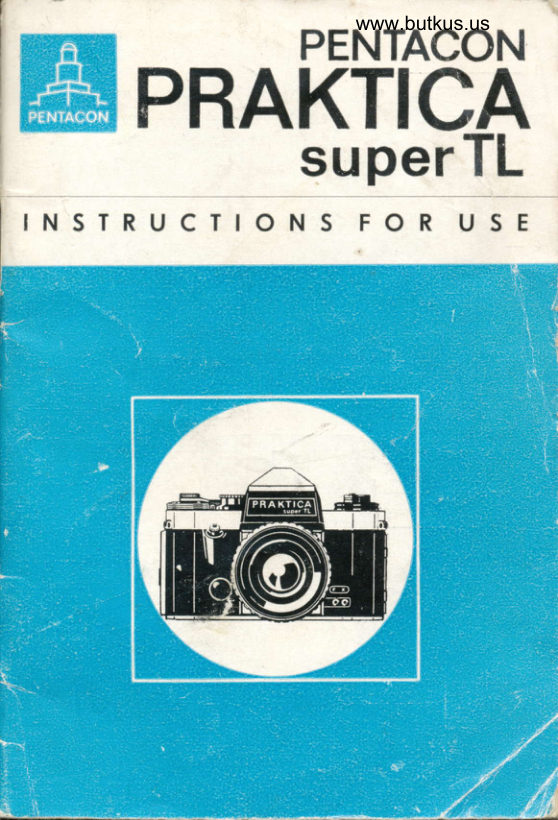
Praktica Super TL User manual
User manual for Praktica Super TL. 53 pages in English. Read the original PDF, download or print a copy without registration.
53 pagesEnglish8.1 MB PDF
Loading your manual…Open PDF directly
Document details
- Brand
- Praktica
- Model / document
- Praktica Super TL
- Document type
- User manual
- Language
- English
- Pages
- 53
- File size
- 8.1 MB
- Category
- Film cameras
- Document date
- Not specified in catalog
Search available document text
Find a term, then jump to its page in the original PDF. Image-only pages may not be searchable; check the PDF for exact wording and diagrams.
Page 5 · Read text
Control Ports of the PRACTICA super T[
 1 Film speed indicotor
 2 Lotch for comero boct
 3 Meter key
 4 Distonce setting ring
 5 Depth-of-field indicotor
 6 Diophrogm setting ring
 7 Length-of-film reminder diol
 8 Rewind cronk
 9 Cocking lever
 10  Rewind releose knob
 11  Film type reminder diol
 12  Exposure counter
 13  Shutter releose
 14  Setting knob for shutter speeds
 15  Diol showing film speeds
 16  Exposure speed index
 17  Flosh socket
 18  Rewind knob
 19  Comero bock
 20  Corrier shoft
 21  Cortridge chomber
 22  Cover plote for power source
 23  Tripod socket
 24  Supporting piece for PL system
 25  Morking point
 26  Toke-up spool
 27  Tronsport sprocket
28  Wire brocket
While congrotuloting you on hoving ocquired o PRAKTICA
super TL, we would olso request you to treot your comero
kindly. Pleose toke your tirne ond reod these Instructions for
Use corefully.
Although of very rigid build, the PRAKTICA super TL is, nev-
ertheless, o mechonicol-opticol precision instrument. Hondled
with core, it will reword you, even when subjected to rigorous
conditions, by giving you beoutiful photos.
On the inside cover poges you will find specified illustrotions.
The reference numbers in the text ore printed in porentheses.
View original page 5
Page 6 · Read text
www.butkus.us
    Speciol Feotures of the PRAKTICA super TL


              PRAKTICA super TL is the converging point cf   o    The            the modern PRAKTICA single-lens reflei system. Key
              to this new system in photogrophy is o newly devised
            method of outomotic exposure bosed on the principle
             of internolly meosuring the light in the poth of roys
             by meons of o photo resistor.

   o     All volues influencing the exposure, such os imoge
              ongle, operture, ond extension foctors for filters ond
              in mocro ond micro work, ore token into occount by
             the meter system. The meosuring ronge extends from
          2 opostilbs ot fl2 to 250,000 opostilbs ot {1122.

   O    Meter key connected to the metering system.

   O    Power source for the metering system hos o working
                  life of opproximotely two yeors.

                  needle oppeors in finder imoge.   o    Meter

           Ronge of film speeds from 9 DIN to 33 DIN or 6 ASA   o              to 1600 ASA.
   o    Focol-plone shutter giving exposure speeds  f rom
            1 sec. to l/soo sec., 5 ond B.
   o     Non-rototing diol for setting the shutter speeds.
    2
\-
View original page 6Page 7 · Read text
o     Prism viewfinderwith bright, unreversed ond porollox-
        free finder imoge. Due to the instont return mirror  it
           is olmost continuously visible.
O    Two possibilities of focusing on the bright viewfinder
       imoge in micro-prism screen or groundgloss circle.
o     Synchronizotion for flosh bulbs ond electronic flosh.
o     Conveniently ploced ropid wind lever ond smoothly
       working oblique shutter releose with locking device
        ogoinst occidentol triggering.
o     Shutter cocking mechonism ond film tronsport ore
       coupled ond provided with locking device ogoinst
       double exposures ond blonks.
O     Automotic exposure counter.
o     Automotic pressure diophrogm
o      Film looding focilitoted by PL System.
o     Swing-out rewind cronk, self-locking  rewind releose
        knob.
o     lnterchongeoble lenses from 20 mm to 1000 mm focol
        length, with PRAKTICA fitting, mostl.y with outomotic
        pressure diophrogm.
o    Wide ronge of PRAKTICA occessories.
View original page 7Page 8 · Read text
www.butkus.us
      Internol Meosuring System of the PRAKTICA super TL'

    The poth of roys forming the imoge of the object is conducted
    through the lens, by woy of the instont return mirror, the Fres-
     nel lens with focusing system, the pentoprism ond the oculor to
    the eye of the viewer. Focusing is performed by rototion of the
    distonce setting ring on the lens mount with the oid of the
     focusing system. Port of the light coming from the entire imoge
    oreo is deflected from the poth of roys of the viewfinder to the
    photo resistor. Any light porticles outside of the imoge onqle,
    which might couse incorrect meosuring, ore thus cut off. All
     correcting foctors to be observed hitherto for the use of filters,
    close-up ond micro ottochments ore, in the internol metering
    system, directly token into occount. The meter reoding is
    reveoled in the finder imoge by the meter needle of o micro-                    ;\   ommeter. Power source of the exposure meter system is o  '*{
    mercury oxide bottery instolled in the bose of the comero.
     Pressure on the meter key closes the meosuring  circuit.
                                                                                                                                                                                                                                                                                             tt
                                                                                                                                                                                                                                                         ?t:

                                                                                                                                                                                                                                                                                     i
                                                                                                                                                                                                                                                                                                                                                                                                                                                                                                                                                       Ill

                                                                                                                                                                                                                                                                                                                                                                                                                                ll
   How the PRAKTICA super TL works

   When the shutter releose is depressed the instont return mirror
    moves out of its viewing position into picture toking position.
    At the some time, the pressure diophrogm of the lens is outo-
     moticolly closed down to the selected operture. As soon os the
    focol-plone shutter hos run down the instont return mirror
    springs bock into viewing position ond the pressure diophrogm
     is fully opened ogoin. This meons thot the finder imoge is
    except for the moment of the exposure    continuously visible.-
     In the single-lens reflex system   even if-interchongeoble  lenses
    of extremely long focol lengths,-  or close-up ottochments ore
     beirrg used    there is never ony donger of porollox.    The finder imoge-      is somewhot smoller thon the finol negotive.
    Everything visible in the finder imoge is sure to oppeor on the
     film, which meons thot the finder imoge moy be utilized to its
    very edges.
    1
I-                 , -r4-
View original page 8Page 10 · Read text
www.butkus.us
        Abridged Instructions ond Conten

                                                                    Detoiled
                                                                                    d esc  ri oti on
       Opening the comero bock                      poge 10

          lnserting the film                              pose 1o
         Pull out rewind knob (18) os for os it will go.
       Ploce full cortridge into cortridge chom6er
        (21). Push rewind knob (18) in 69oin. push
       lower perforotion of film from obove under-
       neoth the little support (24), ocross the trons-
       port sprocket (27), ploce beginning of film strip
      on to core of toke-up spool (26) os for os
       morking point (25). Wire brocket (28) must not
        stond upwords   !


        Closing the comero boclr                       poge 12

         Setting the film speed                        pose t2
          Lift setting knob (14) ond rotote it either woy.
       The white dot (1) on the perimeter of the set-
        ting knob (14) hos to stond ogoinst the re-
       quired film speed numerol on diol (15).
7:\
LE J  Setting the type of film                        pose rZ
--     Rotote film type reminder diol (11) until the
       symbol morking the film meets the red dot.


        Preporing for the exposure                     poge 14
       Actuote shutter releose (13) ond cocking  lever
        (9) until exposure counter (12) stonds  on
       number  1.
6
View original page 10Page 12 · Read text
www.butkus.us


                                                              d.?i.[li::                          r
Frt
t G I  Setting the exposure speed                    poge 16L'--l       Rotote setting knob (14) (without lifting  it)
         until the desired speed numerol coincides with
        red triongle (16).

        Setting the diophrogm                        poge 18
       Rotote diophrogm setting ring (6) on tens      mount to bring the desired diophrogm numerol
        ogoinst the red mork.

       Automotic exposure system                      poge 20
        Preselect either the exposure speed or the
        operture. Depress meter key (3). While the key
         is being depressed, odjust either the operture
      or the exposu re speed so os to centre the
       meter needle in the imoge field to the circulor
       morking point.


        Focusing                                     poge 24
       Rotote distonce setting ring (4) until the imoge
       in the circulor micro-prism screen is perfec[ly
        sho rp.

       Releosing qnd cocking the shutter             pose 28
       Actuote shutter releose (13). When the shutter
      hos run down o red signol oppeors in the
       finder imoge. Swing cocking lever (9) oround
         until it stops ond move it bock ogoin.
View original page 12Page 13 · Read text
Detoiled
                                                                    description

       Chonging the film                             poge 30
        After the lost exposure, depress rewind releose
      knob (10), Swing out rewind cronk (8) on
        rewind knob (18). Rewind film in direction of
        orrow. Open comero bock (19). Remove cor-
         tridge from comero.


        Exchonging lenses                               poge 32

        Flosh exposures                          poge 34
                                                                                      (

        Exchonging the power source                   poge 36ooo
       Mointenqnce of comero qnd lens               poge 38

         Accessories                                   poge 38@o


These obridged instructions ore o short summory of the moin
 points in the Instructions for Use. These points deserve spe;ciol
 ottention. They ore, however, not o substitute for the volu6ble
 informotion which you will only be oble to goin by reoding the
 complete instructions.
View original page 13Page 14 · Read text
www.butkus.us


   Push lotch (2) Ior comero bock in direction of orrow. Open
   comero bock, ond the exposure counter (12) will outomoticolly
   jump to zero,


   The PRAKTICAsupeTTL occepts ony type of perforoted 35 mm
   film in commerciolly ovoiloble stondord cortridges. The cor-
    tridges contoin film lengths for 36 or 20 exposurel in the 24 X
   36 mm picture formot    either on block-ond-white film, on coL   our negotive film for -colour prints, or on colour reversol film
    for colou r tronspo rencies.
   The cortridges ore light tight. Nevertheless, we would odvise
   you not to insert films in direct sunlight-the shode provided
   by your own body will suffice. Pull ou-t rewind knob (18) os for
   os it will go. Ploce cortridge into cortridge chomber (21) ond
   push rewind knob (18)    with slight bockword ond forword
   movements- right bock -into the comero. Corrier shoft (20) will
   engoge in the core of the cortridge. Push lower perforotion of
   film from obove underneoth the little support (24) over the
   tronsport sprocket (27), ploce beginning of film strip on to the
   core of toke-up spool (26) os for os morking point (25),
   The wire brocket (28) must not stond upwords! Should this be
   the cose, rotote lower milled ring of toke-up spool (26') to
    bring the brockets to horizontol position.


    10

L.
View original page 14Page 16 · Read text
www.butkus.us


 Close comero bock (19) ond press it on tightly. lt locks outo-
 moticolly.


 Lift setting knob (14) ond rotote it either woy. Diol (15) below
 the knob remoins in stotionory position. The white dot (l) on
the perimeter of setting knob (14) hos to be brought ogoinst
the required film speed numerol on diol (15). Setting knob (14),
when lowered, clicks in.
o
The film type reminder diol (11) is to help you remember whot
 kind of film you hove looded in your comero.
The symbol corresponding to your film is set ogoinst the red
 morking point. You will thus olwoys know which type of film
 you hove in your comero.                                                                        ;
 The length-of-film reminder diol (7) serves to mork the number
 of exposures possible with the film in the comero.
The selector of the length-of-film reminder diol (7) hos to be
 set to the corresponding number (12,20 or 36).

 12
View original page 16
Page 18 · Read text
www.butkus.us


Swing cocking lever (9) oround os for os it will go ond let   it
glide bock. (Move cocking lever only in winding direction.
Forced movement in the opposite direction will couse domoge!)
Actuote shutter releose (13).
To ovoid inodvertent tripping, the shutter releose (13) is pro-
vided with o locking device. The releose mechonism is locked
when the red dots on the knob ond on the outer ring meet. The
mechonism is unlocked by rototion of the knob through 90".
Repeot the cocking ond releosing procedure described obove
once more ond then cock the shutter ogoin. Rewind knob (18)
moves simultoneously in onti-clockwise direction.
The outomotic exposure counter (12) now stonds on frome
numberl. Speciol setting of the exposure counter is not neces-
sory since it storts working outomoticolly when the comero
bock is dlosed.


t4
View original page 18
Page 20 · Read text
www.butkus.us


The focol-plone shutter of the PRAKTICAsupeTTL is colibroted
for exposure speeds from 1 sec. to 1/56s sec. The B setting is for
ony desired length of time. (The shutter remoins open os long
os the releose knob (13) is depressed or kept open by meons
of o coble releose with locking device.) Forfloshlight exposures
pleose refer to Section O.
The numerols on the setting knob stond for the exposure
speeds os follows:

Red numerols long exposure time
B, 1 :  1 sec., 2:   Iz sec.,4 :11 I sec.,8:  f6 seC.,15 :   f15 sec.
For these exposures o tripod hos to be used.
White numerols short exposure time
                                                                      1/25e sec.,                             1/5s sec., 125 :   f125 sec., 25O :30 :   f36 sec., 60 :500 :   V5ss sec.
The speeds ore groduoted so thot eoch numerol indicotes
double, or one holf of the speed morked by the neighbouring
figure on the scole.
Set the speed by rototing setting knob (14) until the desired
numerol meets the red triongle (16). Setting knob (14) clicks in
noticeobly ot eoch speed stop, occidentol reodjustment is thus
impossible.
Pleose note thot setting knob (14) must not be lifted up for
setting the exposure speeds (this is done only to mork the
speed of the film). The exposure speeds con be set either be-
fore or ofter the shutter hos been cocked.

16
View original page 20Page 22 · Read text
www.butkus.us
     [.n,UtnU[iog
On the lenses with outomotic pressure diophrogm in  the
PRAKTICA super TL the desired operture numerol on the dio-
phrogm setting ring (6) need only to be brought to meet the
red index on the lens mount. The diophrogm closes outomoti-
 colly when the shutter releose is depressed.
For the purpose of checking the depth of field, most lenses con
be stopped down to the preselected volue by o  monuolly
operoble lever before the exposure is mode.


18
View original page 22Page 24 · Read text
www.butkus.us


 lf lenses with outomotic pressure diophrogm ore being used,
two woys of metering ore possible with the outomotic exposure
 system of the PRAKTICA super TL.

 Exposure reoding with shutter speed preselected
 (e. g. for objects in motiont
Shutter speed is set! Depress meter key (3) ond rotote dio-
phrogm setting ring (6) on lens mount until the meter needle
in the imoge field is centered to the circulor mork.


  @


20
View original page 24
Page 26 · Read text
www.butkus.us
Erposure reoding with cperture preselected
(e. g. for o desired depth of field!
Aperture is set! Depress meter key (3) ond rotote setting knob
(14)    using only click stops     until the meter needle  iscentered-   to the circulor mork. Should-     the click stop settings of
knob (14) not permit o perfectly occurote centering of the
needle, fine odjustment hos to be mode by meons of dio-
phrogm setting ring (6). On pressure of meter key (3) the
diophrogm is outomoticolly closed to the preselected volue.


Meosuring ronge of the PRAKTICA super TL

         Film speed                     Exposure speed
   DIN          ASA

                                                                             1/6s sec.      9                6                   1 sec. "   '
     12                 12                   1 sec.'  '  ' 1/125 sec.
                                                                           1/25s sec.     15               25                   1 sec. "   '
                                                                             1/5ss sec.     18               50                   1 sec. "   '
      21               100                   1 sec.'  '  ' 1/5ss sec.
     24             200                       112 sec.'  '  ' 1/56s sec,
                                                                         1/56e sec.     27              400                            1/a sec. "   '
     30              800                            1/6 sec.'  '  ' 1/5ss sec.
     33                     1 600                         1/15 sec.'  ' '1/soo sec.
Outside the ronge given obove, the meter system of the comero
is out of oction for the film speeds ond shutter speeds os
indicoted. The meter needle then stonds in its end position  in
the imoge field, ond exposure reodings ore not possible.
Should the meter needle moke no signs of deflecting  if o reod-
 ing, os described obove, is to be token, the bottery will hove
to be exchonged (see Section P).
22
View original page 26Page 28 · Read text
www.butkus.us
Exposure reoding with lenses without outomotic pressure
diophrogm
In principle, exposure meter reodings os described obove ore
possible olso with these types of lenses. Only the diophrogm
hos to be set to the desired volue by hond. lt is odvisoble,
with such lenses, to do the focusing before toking the meter
reoding, since the diophrogm does not reopen outomoticolly.
Owing to the construction of their borrels, some of the older
type lenses protrude into the spoce occommodoting the dio-
phrogm mechonism ond con,  therefore, not be used, os they
would render it impossible  to releose the shutter.


The prism viewfinder of the PRAKTICA super TL is fitted witn
o Fresnel lens to brighten up the imoge. Focusing  is performed
by rototing the distonce setting ring (4) on the lens mount.

There ore two different methods of determining the shorpness
of the imoge:

Focusing on the centrol micro-prism screen
Correct focusing is ochieved os soon os the imoge in the mic.o-
prism screen is cleor ond free from fuzziness.
ff the imoge looks fuzzy or crumbles into screen elements, it is
out of focus.
Focusing is extremely relioble owing to the opporent quick
tronsition from unshorpness to shorpness ond vice verso. lt   is
odvisoble to do the focusing with the lens ot the widest oper-
ture (smollest diophrogm numerol).

24
View original page 28
Page 29 · Read text
To be used                   Not to be used


  Micro-prism screen             Micro-prism screen
  is tuzzy :  unshorP              not fuzzY :  shorP


                                                        25
View original page 29Page 30 · Read text
www.butkus.us
 Focusing on the circulor groundgloss qreo
The groundgloss oreo encircling the micro-prism screen moy
 be used for focusing with the lens ot o smoll operture (lorge
 diophrogm numerol) or in cose of greoter scoles of reproduc-
 tion os, for instonce, in close-up or mocro photogrophy. The
 remoining section of the finder imoge is not meont for focus-
 ino.

 Depth-of-field indicstion (51
 These ore the figures on the right ond left of the red focusing                  I
 index. The exposure distonce is set ogoinst the red mork. On
 the left of the mork, next to the desired diophrogm numerol,
you reod on the distonce scole where the depth of definition
 begins, ond on the right, where  it ends.

 For the 50 mm Poncolqr f/|.8 from Jeno
 In occordonce with the operture setting, the two block morks
 refer to the depth of field. The distonce figure stonds ogoinst
 the red index. On its left you see where the depth of definition
 begins ond on its right, where it ends: You move forword from
the morks on the white or block rim surfoces towords the dis-
tonce scole.
Depth of field con olso be checked in the viewfinder imoge cn
octuotion of meter key (3), or of the monuol stop down lever
on the lens mount ofter the exposure reoding hos been token.
All reodings on the distonce scole ore in relotion to the posi-
tion of the imoge plone. Toking lens ond finder lens being one
ond the some, there is no porollox error. Persons with foulty
eyesight moy insert o corrective lens in speciol mount into the
eyepiece of the viewfinder (connecting point for further spe-
ciol finder equipment   see Section R).                        -For infro-red exposures the focusing point hos to be slightly
modified. By rototion of distonce setting ring (4) the distonce
reoding which, ofter focusing, stonds next to the red indicotor,
hos to be moved to meet the red dot (infro-red dot) next to
the indicotor. Thus, the imoge produced by the no longer
visible infro-red roys, which is somewhot forther owoy from the
lens thon the one designed by the visible light, is brought into
correct position in relotion to the film.
26
View original page 30
Page 32 · Read text
www.butkus.us


Before releosing the shutter, pleose note the following:
1. Moke sure thot the shutter releose is unlocked (Section F).
2. For exposure speeds slower thon 1/3e sec. it is odvisoble to
   use o tripod ond o coble releose.
3.  lf signol is visible in viewfinder, the comero is not reocly for
   exposing  ! Cock the shutter.
When toking your picture we odvise you to hold your PRAK-
TICA super TL so thot it lies firmly in both honds ond you ore
oble to octuote the shutter releose (13) comfortobly.
The shutter releose (13) hos to be depressed smoothly- never
with o jerk-os  for os it will go, until the shutterhos run down.
Do not leove hold of the body releose, or coble releose, be-
fore the shutter closes completely, otherwise the diophrogm
will open before its time. (This refers especiolly to the slower
eJ(posure speeds.)
When once releosed, the shutter connot be releosed o second
time (lock ogoinst double exposure).
After releose of the shutter, o red signol oppeors in the upper
left-hond corner of the imoge field.
Cocking lever (9) hos to be swung oround ogoin os for os  it
will go ond moved bock smoothly (see Section F). Once more
the comero is reodv for oction.
View original page 32
Page 34 · Read text
www.butkus.us


When exposure counter (12) shows the figure indicoting the
number of fromes morked on the film pocket (12,20, or 36), the
film hos to be exchonged.
Depress rewind releose knob (10). Knob remoins locked in this
position. Swing out rewind cronk (8) on rewind knob (1S).
Rotote rewind knob (18), not too quickly, in the direction of the
engroved orrow. Rewinding too quickly couses electrostotic
chorge ond stotics on the film.
Towords the beginning of the film strip greoter resistonce be-
comes noticeoble. After this, the cronk (8) turns more eosily,
o sign thot the film is fully rewound. Fold rewind cronk (8)
down ogoin.
Open comero bock (19) by pushing lotch (2) in direction of
orrow,
Pull out rewind knob (18) os for os it will go ond remove the
cortridge.
On rewinding of cocking lever (9) or    should the shutter be
wound up-on  octuotion of shutter- releose (13), the rewind
releose knob returns outomoticolly to its initiol position.
Should you hove ottempted to expose more fromes thon the
number morked on your film pocket, it moy hoppen thot cocking
lever (9) gets jommed ond connot be swung oround com-
pletely. ln this cose depress rewind releose knob (10), ot the
some time swinging cocking lever (9) until  it stops. The film con
then be rewound os described obove.
View original page 34
Page 36 · Read text
www.butkus.us


The PRAKTICA super TL lenses ore interchongeoble. regordless
of their distonce ond operture odjustobility. Toke hold of the
lens mount, os shown in the illustrotion, ond turn it in onti-
clockwisedirection. The exchonge lens is inserted occordingly.
The comero occepts oll the lenses with PRAKTICA fitting (screw
threod M 42X1) with focol lengths from 20mm to 1000 mm'
Focusing, in connection with oll the                   lenses, is
performld in the prism finder of the 'I-ter.9lolgeoblePRAKTICA super TL. Since
ih. toking lens oljo octs os finder lens you obtoin,.ot ony {ocol
length, o-finder imoge coinciding, free from porollox, with the
picture which you will get on your film.
bwing to the construltion oi their borrels some of the older
type Tenses protrude into the spoce occomodoting the dio-
phrog, mechonism, such lenses connot be used os they would
 r"nd6r it impossible to releose the shutter (see Section  l)'
Interchongeoble  lenses
Zeiss Flektogon                 20mmfl4      APD
Meyer Orestegon                   29 mm ll2,B     APD
Meyer Lydith                       30 mm f/3.5     PD
Zeiss Flektogon                    35 mm f/2,8     APD
Zeiss Poncolor                     50 mm f/1,8     APD
Meyer Oreston                     50 mm f/1,8     APD
Meyer Domiplon                   50 mm f/2,8     APD
Zeiss Tesso  r                       50 mm f/2,8     APD
Zeiss Poncolor                     55 mm f/1,4     APD
Zeiss Poncolor                    75 mm f 11,4     APD
Meyer Orestor                    100 mm f/2,8     APDiPD
ous Jeno S                       135 mm f/3,5     APD
Meyer Orestor                    135 mm f/2,8     PD
ous Jeno S                       180 mm f/2,8     APD
                                                                                                                                                         f 14       PDMeyer Orestegor                   2O0 mm
ous Jeno S                       300 mm f/4      APD
Meyer Orestegor                  300 mm f/4       PD
Meyer Orestegor                  500 mm f/5,6     PD
 Zeiss Mirror Lens                  500 mm f/4
 Zeiss Mirror Lens                1000 mm f/5,6
APD :  outomotic pressure diophrogm,
PD     pre-set diophrogm      -
 32
View original page 36Related documents and language editions
From the M. Butkus archive. Original publisher and archive notices are retained.
Check the model and edition against your equipment.
PDF verified 2026-10-10.