Photography reference
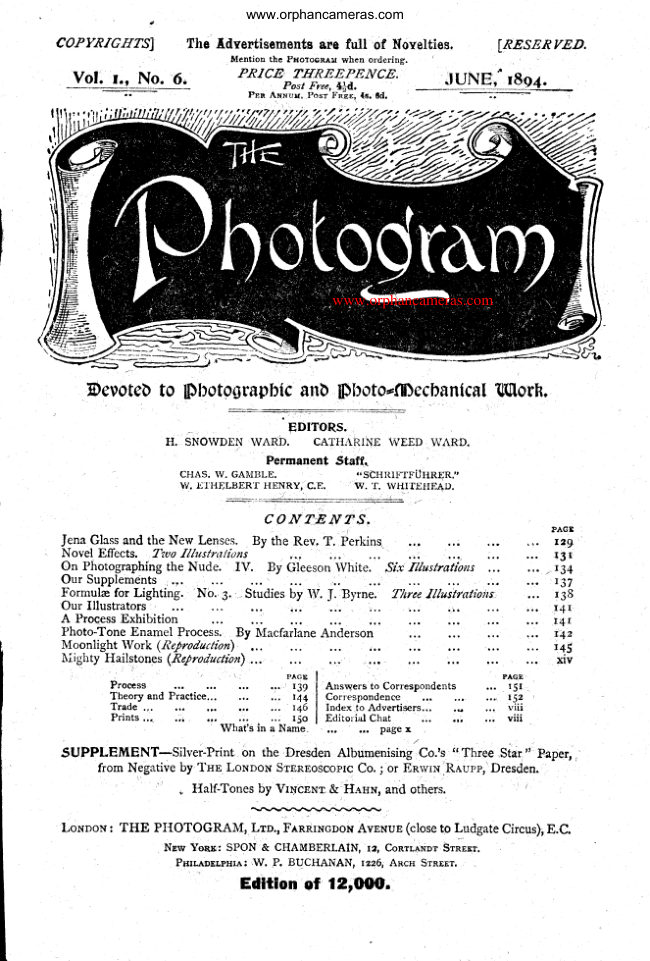
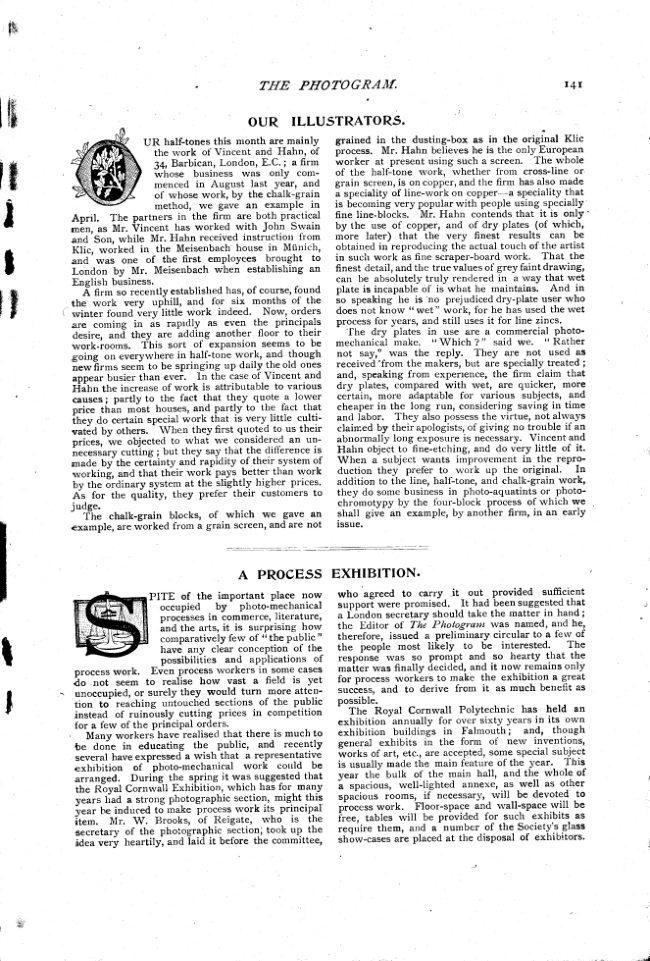
The Photogram - 1894 Product booklet
Product booklet for The Photogram - 1894. 25 pages in English. Read the original PDF, download or print a copy without registration.
25 pagesEnglish5.1 MB PDF
Loading your manual…Open PDF directly
Document details
- Brand
- Various brands
- Model / document
- The Photogram - 1894
- Document type
- Product booklet
- Language
- English
- Pages
- 25
- File size
- 5.1 MB
- Category
- Photography reference
- Document date
- Not specified in catalog
Search available document text
Find a term, then jump to its page in the original PDF. Image-only pages may not be searchable; check the PDF for exact wording and diagrams.
Page 3 · Read text
MTE ?}TOTOGRAIW.
                 RN€NT


            (EyfrE & 8P0TT|.8W00DE,Praprietors),
   GREAT,HEW ST REET,,L0'ND0N, E.C.


                                                                                       .#,%....^^                                                   -'\^-Fs\-\.Ar.\-'\1-'

      r      rrF                 'rclaptat{on       frr1/        new a                              of  the well-hnolvq }Vooclburytype Permanent Photographic                ,  t I
        Printing Proccss is called til[OODbtttg'GfnUllfCo  and is the outcomeof many       I    5'       yearsof experienceanclof constantand costly exireritncnt.
       It  is claimed that the nery process meegsa long-felt want on the part of publishers
generally, inasmuch as it  is a.process'which is capable of reproducingwith equal facitity
Copies <lf llrash or Linc Drawings,                                         Portraitsr'from  Life, .Landscapes,,Reproductions of                               _
Photdgraphs,Paintings, Old EngraVings,and Sketchesof all kinds for the purposeof high-
classbook illustrations.
    T[lOObbUtT'@UittrUfe  has the  follorving great advantages over other hightlass
Ixocesses,such as photo.engrilving,etc. :-
          T. There is no initial eipense in,preparing  a plat€.
         ?, There  is tberefore no risk of such a plate being spoiled by a lerge edition, thus obviating the                  c o s t o f a s e c o n d . p l a t e . - , , , ' . . . . , " . ' ,
                     J,!  The  last capy pulled  in Woodbury.Gravure  is in every rvay equal to the first, whetber the
                   edition required is to  or tgooo copiesr.
      +  Production  is more fapid.
          5. The ink used is capable of being graduated to suit any particular artistic. effect that may tF
                            .  regtrired.                                                                   \
{ltOOD$Utgtppe  Dftnttng   gives a fac-simile silver or platinotype print, and is most useful to the pro.       fessio-nJpholographeilforthe rapid pioductionof Largenumbersof prints in the minimumof timer
GOUOIgW Ef{ntlffg   of the best descriptio+ aj the lowe.stpossille p'ri$.,
Gaf bOn Df{ntlffg  for publicationpurposes,alio enlargementsupon p"p"t, opal, canvas,and ivory.
CAfbOn Elgg{tg is suppliedin cut pieces,in convenidntform, for amateurs'use.
A SbOrt Ureatise on tbe  flrt   of GarbOtt Srlntirrg  for flmatgurg  has beenprepared. Post free
       four stenps.
D[AtinOtppg AnD ,${lVgt  Ft{ntifrg,  .in large or small quantities,for amsteursor the profession.
flmatgUfd   llCgAtipgg  developed,varnished,spotted,blocked-out,printed frbm, mounted,or enlarged.
DaIf=GOne OrOCegg filtOche of an improveddescription. Tley ar9 ma{q. o-n hard .copper,and.bear      long nrimbers without pcrceptiblewear..For s[arpnessof detail, and light an{ shade,thesebloclcs
         are  unsurpassed'
                                                                        - !^v   v svvvvvw                     v  v  v  u v    !
.Pt"tccLhtt,  Sl,ecinmt,4d  d$infonnatien  on alllicalion   to
             OR.EIT NEW STREET, LONDON, E.C.
               lllorhs:*
           CASTLE BAR, EALING, W.
                                                                     ,
View original page 3Page 6 · Read text
www.orphancameras.com


                         'TEE                                                       1U.                          PT{OTOGRAM.


SENSITIZED   PAPERS

   $eailg SensitizeilT"pets.
         IIOUBLE ALBUMETIIZED BRTLLIA]IT.
          ITIATT SURFAGE.
          scnblzlc's  ENAInEL.
                             A  Gelatine Paper  with  a hardened  surface.
                     lBmutsto$! 1        4 . .    Srpers.
    The  0TT0"  ?aper.              "glossy Gelatino-chlor,dePaper.                         A
   nir00tI'hePrittirusimplest  of PirotographicDER.Platinu.'A(C(OEBY'SIPrinting  ProcessesPizziu[0lliin existence. Pa[0r.

                   Full Particulars and Instructions on application to-
     0TT0scH0LZlc,31,Binfield[oad,clapham,london,
                             Telegraphic  Address   :   r' OsrestoR,  LoNooN.
View original page 6Page 8 · Read text
www.orphancameras.com


                                TTTE PTTOTOGRAM.

                Trrrcnapsrc  Aponrss:  " HENf'SCHEL. LONDON."           NarroNer, Tnrrpnonn  No. 2866.
       L HTNTSCHEL & CO.,
        gtreet              ?rtoto €retter{8e€n ryrader{,
                                                                                                                                                                           t * *
           182, 188, & 184a, Fleet Stneetn London,n. E, nV I I E f f i l9^r
                                          And   a.t WEST NORWOOD,                                                                                                                                                                                                                                                                                                                                                                                                                                                                                                                                                                          -I-\        I

         The  Leading  London  lllustrated  Papers have  nou/ adopted  CARI-  HENTSCHEL'S
                    System  of Reproduction, a sufficient  guarantee that  his work
                                                                      .    .   is of the highest  quality.     .    .


             Our  Facilities  for Engraving   all  kinds  of  Illustrations   for Books, Magazines, Newspapers, and Catalogues,
                                    whether   Half-tone   or  Line,  by  our  process  are unexcelled.

           E.stifiates, price T,lsts, Specinrenganb anp otlrer infornrationwitt be forwarbeb on
                                           applicRtion.
            T elegrams.'-'{ COLLOf YPE, LONDON.''
      PHOTO-PROCESS BLOCKS.
      HENRY TUITE &  CO. have completed  their  arrangements to  supply their Pnocrss
                                           Br,ocrs,  Half-tone and  Line,
        TO THE PROFESSION
                                AT WORKABLE  PRICES.
       PERFECT SCREEN NEGATIVES ALSO SUPPLIED.
                             ARTISTS IN COLLOTYPE,
I     68, Dennington Park, West llampstead, London.
   u?uPH0T0-    lFhotograeure. thatf"Gone,
  AUTOCO?YIST.          The SIMPLEST anci CHEAPEST PROCESSfor the
                Reproductionof Photographsof any subject.
           Equal-    to the best Reproductions by the Collotype or
                               Platinotype Process6s.
                 Write  for  Price Lists  ancl Specimens, or call and see il
                                               uorfttng.

                           Sor-e Pno
     THE. AUTOCOPYIST CO,.'
                 72, L,ONDON IITALL, I/ONDON, E.C.                                       lpboto"l,itbo. ARMLEYLEEDS.
View original page 8Page 12 · Read text
www.orphancameras.com


                     TEE  PTTOTOGRAM.                                 tx
   reat
       Stghttt.etde        lot
    #####          ShotoSraphg.

Adarnson'sNew?atentINCANDESCENT
            systern:-
Excels  Daylight
         Shontest Exposune
                Ready  a't a Moment's  Notice
                            Great Economy
                                 Under  Perfect  Gontrol
Ga,nnot get  out  of orden
        Any  effect can be nepea,ted, a,s often  a,s
                   desired, with  equal  results
                    No  Pnevious Experience  required
                         €
The system,in workingord.er,may be t..nu;r, any time between9 a.m. and 6.3o P.m.,
                                                                                 '\ry',  SICHEL & CO.'S Showrooms, 47, Oxford St., London,9.                                         €rft€=*-o-

                                 APPLICATIONS    TO
  Messrs.  ADAMSON    BROS.,
--                136, Buchanan Street, Glasgow,
     I
                                     OR TO
  O. SICHEL &  CO.,  52, Bunhill  Row, London, E.C.
View original page 12Page 15 · Read text
r{*ry


                  TT{E  PIIOTOGRA]I.

   g94-5,     f

 88th  Yea.n Issued.

 V   .sSP


                          t                                  ANrr           r  L)         ^t\)-
   ^- {.^-I. V       r.-^.  \-         SO]I|PRE[|E]I|SII/E    D  <)           tr>-                  2        CAUI.5.ITq^GII   E   >
                  PhotographicMaterials,
             Chemicals,andApparatus.

     TstscRlpHtc  ADDREss-" FALLoWFIELD, LoNDoN."

   JONATHAIIT'AIIOWI'IELD,
  CENTR^II.L PMOTOGR^U'PUIC STORES,
  146,CHARINGCROSSROAD,W,

        POST  X'REE  ONE   SIIILIJING.


                   Eoreign stampsfrorn abrood' aoce,tted'
copyRrcHT.r                                           .ENT. sTA. HALL.
View original page 15Page 16 · Read text
www.orphancameras.com

THE IPHCTCGRAU.

Vor.  I.                      JUNE, t894.                             No.  6.
       . COPyRIGHT.-This     Masazine.  as a zahole. zaith its contents, both literary and  Pictorial,  is  cofyright;  and the
 cop2t.'igh.t..isregigter.e(... !h9.designd.,o.l t4e  inittal   letters, tail-pjecbs, etc,, a.re'separaiell  registered.--TFe  designs of tnosl oI the ortgtnal  tltustratrcns  tn rhe adaernsementrs are reStslered atso.
     Our  confemboraries are aery zuelcomteto quole frovn our Dages (wt.th achnowledgrnent), but we propose to protect
 ourselues and  oilr  adaertisers. a-gainst pirotes-espeiiallst  agafnsl those no-account dealers zuho make up  catalogwes,
 etc., by lheft oJ other people's idcas.

            JENA  CLASS  AND  THE  NEW  LENSE5.
                                                               (Concluded.)
                                  Bv  Rrv.  T. PnnxrNs.
                   LENS   of crown   glass,  thicker     Where;(      , f,   are the  focal  lengths  of  the two  lenses
                                at the  centre  than  at the  cir-    cemented  together,  &rt  ltz the  refractive  indices  for
                        cumference,  is combined  with     an5' special coloured   tight   of  the  glasses of  which
                          a lens thinner   at  the  middle     the  lens are made, and  1u, *   dryr,  ltz  *  dqz  the  re-
                          than   at  the  circumference      fractive  indices  for  another  coloured   light,  and .F the
                                 in  such  a manner  that  the    focal length  of  the combination.      It must be remem-
                         combination     is   thicker    in    bered  thatrf,   and f,  are of opposite  algebraical  signs,
                           the  middle  than  at  the   cir-    so that  unlessrf,  andfn   differ considerably  inmagni-
cumference;    this  will  form  an  image,  and  by   pro-     tude,  I/F  would   be  very   small  and  F- ,very  great.
 Derlv  choosing   the  thicknesses  and  curves   any   Now  unless  the  quantitr"s      3!!'    and  3t3-       differ
 iwo-  colours  can  be combined.    But    all  cannot                           & r  - I        p z - I
 be  combined,  owing    to   the   irrationality     of  the    considerablyr   we  see  from   the  equation    (z)  that
 spectrum   produced   by prisms   of  different   kinds   of      .ft  x  -f" must  be nearly  equal.   These  quantities  are
 .g1ass.  Suppose   the two  prisms   are so chosen   that     called the relative  dispersions, and denoting  them by
 the total  length  of  the  spectra from  the  red  to  the           I
 violet when each is used singly  are the same  if these    VL ano   y,f2  equation (z) may be expressedthus-
                                                                 light                        and a beam                                                of white                        side,     placed             side b1' are
                                                              that                                                                      it  may                                        happen                          separately,                each passed         though                                                                            is                 L.,a T, : o
 the yellow   is refracted more by one than  the other, so                               Jt      Jz
 rthat the spectra are as represented  in  fig. 3;   if  these   Now, as has already been said, these quantities
 two  prisms  are placed  in contact  as described  above,   denoted by V vary in the Jena glassesfrom /o ta r9'7.
 the  violet and red  will  be  united,  but  there  will  be     Take, for example, two  glasses,a Medium Phos'
' outstanding  yellow.   By suitably  choosing  the angles   phate crown and a Borate flint, in which  the dis-
 of the prisms  the second spectrum may be shortened,    persions at various parts of the spectrum are very
 so that  the distance  of  the red  from  the  yellow  may    nearly proportional, in the  first, I/t  -  66'g;  in the
 be the same length  and the  violet  of the  first allowed    second, V2  :   Jl'2,
 rto remain  uncorrected   ; something   of  this  kind   is     From the second equation we get
 ,done  with   telescope  objectives.   For   photographic                                 r       66'q        I
 lenses the second spectrum  is lengthened, so that the
 yellow  and violet are the same distances apart, so that                                -f'        55'2   J z
 ithe most chemically  active  and  the  brightest  visual     Hence, if we wish  to produce a combination ol
 tay  may  be  combined   and  brought    to  a  focus    ten inch  focus, since lenses thicker  at the middle
 together,   the  outstanding   red  rays  which  do  not    than at the circumference have a negative focus, we
  affect  the sensitive  plate being  disregarded.            must put F  :   -  Io, and must substitute the value just                                                                                              giveus                                                                                                        this will                                                                                   in the                                                                                                     first equation;                                                                        for rlJ,                                                  found                        glasses  manufactured              the  new   Among                                                           at  Jena,                                                                                                                  In                                                                                                        other                                                                                                                             -   -  I'65 nearly:                                                                   nearlv,                                                                           hencerf,                                                           and                                                                       fr-z                                      refractive   indices-but              pairs                       of  different however,
 dispersing  the  light  without  so much  irrationality-      words, the crown  lens must be thickest  in  the
 may be obtained   ; hence  it  is possible by means of a   middle, with a focal length of nearly rfr rnches, and
  combination   of two  lenses cemented  together  to com-    the flint  lens thinnest in the middle, with  a focal
  bine three  colours  almost  completely,  only  a slight    length of about z inches. Using these glasses,there-
 €xcess  of red or violet  remaining  when  the other  is    fore, we shall thus obtain a lens almost entirely free
  perfectly  combined  with  the yellow.                   from colour. The focal length of a lens is connected
   Two  formule   given   in   all  works  on  geometrical    by the following  formula with the curvature of the
  optics must here  be  given  before  the  advantage  ot    surfaces.
                                    fully  understood.                      be  the new  glasses can                                                                                                                 !  -  I                                                    J                                              = e,-r)' '       (                                                                I        r                                                    I                                                                                                               s l \                                                                                                                                                                                        \ r                                                                                       J                                 ( r '            'f,*E=r                      when   r and s are  the  radii   of  the  surfaces.   Now
              ( z \     d P r   x ' *      d l ' n  x    r  = o              since the two  lenses are to be cemented, the numeri-
                              I t t - l           f ,     p z - t           f ,                      cal value  of  the   radii  of  curvature   of  the  tu'o  sur-
View original page 16Page 17 · Read text
r 3 0                   TTTE PTTOTOGRAIII.

                     'must
  faces   in   contact        be  the  same.  hence  the      The more formidable  rivals  of the old Rectilinears
  optician has three curvatures  connected bv two  rela-    are the Zeiss and Goerz lenses  ; the  forrner  are made
  tions  only, so that he can choose these so as  to get     in  six  different   series,  with    full  apertures   ranging
  rid  of  other  aberrations  as far as possible.                from  fl4'5   to  flr8,   and  focal  lengths   from   z]'onlyin.   The method  of  calculating  the focal lengths  of the                                                           65   in.  The   latter   at  preseni  are made                                                       1o
 component  lenses above described  is not peculiar  to     in two  series, one workinC;t        and the other    jt
  the Jena glass;  the advantage  of  the new  Jena, glass      -fltr.   The Zeiss and Goerz  aie"f17.7entirelv  different   in
  is the possibility  of  finding  corresponding   flints  and     construction,  and each has  its o*n   a*"-a1larr".r.
  crowns  with  proportional   dispersion.   Unfortunately,       The Zeiss  Series  L,  II.,  III.,   IIIa.,  are  formecl  of
  however,  the new  borate  crowns  and  flints  are  in-    two  combinations,  the  front  one  consisting   of two
 jured  by exposure  to damp  air, hence  they cannot    cemented glasses, and  the  back one of  three glasses
  safely be used  for  the  outer  glasses  of compound    cemented  together.    Series  IV. and V. have only  two
  lenses, but when  three lenses are cemented together    glasses  in  each combination.   The  Zeiss  construc-
  the borate  glass may be used  for  the middle  one.     It     tions  differ  entirelyrin   principle   from   that  which  we
 may be noticed,  however,  that  in the catalogue  of the    meet with   in  R.R.'s.   There  is no approach  to sym-
 Jena manufactory   five  crown   glasses  and  six   flints     metry   in the two  combinations.    The  front  one   i!  of
 are mentioned  as generally  sufficient  for photographic      very  long  focus compared   with   the  back,  which
 lenses, and  of  these  five  are  said  to  exactly  corre-      drffers  but  little  from  the focus  of  the complete  lens.
 spond with  the ordinaryoptical    glass manufactured  by    Th-e makers  hardly  claim  for these lenses ali that they
 Chance.   More  recently  other  glasses  have been  in-      will  do, as on reference  to their catalogues   it  will  bL
 troduced  at Jena  under  the  name  of  Baryta   Light     seen that  the  size  of  plate covered  sharply  by each
  Flints,  which  possess considerably   less dispersion     lens rvith  the  second  stop  is  given;    it-willi   how-
 than   ordinary    light    flints   of  the  same   refractive      ever, be generall-v found  that    it   is capable  of  cover-
 indices.   The object  in view  is  to  allow  the  neces-    ing  pla_tes of  the  size mentioned   with   the  largest
 sarydrfferences   in  refraction  and dispersion  betrveen     stop.  Of course these lenses, like  all others, musi be
  positive  and negative  lenses  to be obtained  by  pairs    stopped down  to get objects at different  distances  in
  of glasses  of  lower   dispersion   than  those  formerly     focus together;   their  special virtue   is  that stopping
 used.    It  is also  claimed  that  by special modes  of   down  need  not  be  resbrted   to  in  order   to  oUtain
 manufacture   at  Jena  glass  freer  from  colour  than     marginal  definition.
 usual can be made.   The freedom   of  glass from  any      The Goerz double  anastigmat  consists  of two  sym-
 yellow  tinge  is of great importance   to photographers,      metrical  combinations,  each  of  three  glasses,  ce-
 save  in  special  cases when  isochromatic   plates  are   mented   together,   the  central  glass  being  a  flint
I used,  since  a  yellow   lens,  like  a  yellow   screen,    placed  between  two  crowns,  but  with   refrictive    in-
 lengthens  the necessary time  of exposure.                dex,  intermediate  between  those   of  the  two  crown
   There  can be no doubt  that  the  investigations   of    glass-lenses, those  on  the  outside  of  the  complete
  f)rs. Abbe and Schott are both highly  interesting  and    doublet  having  the  highest  index.   Each  lens,- like
 valuable, and that by the manufacture  of new glasses    those  of  the  ordinary   doublets,   is, therefore  con-
 they have put new powers  in the hands of opticians,     pletely  corrected   lbr  spheric:il  and chromatic  aberra-
 but, on the other hand,   it mustnot  be supposed  that     tions and  for astigmatism.
 the new glasses  will  work  miracles, and  it must also      The  field  of  the  Zeiss lenses we have  tried   is not
 be remembered   that many  lenses aclvertised  as made     quite  sg flat as those  of the Concentric  and the Goerz
 of, and  really made  of, glass  manufactured    at .Jena    lenses, but  they have a great advantage  over  the con-
 are made  of  glass  identical  with   that which   has  for     centrlc  in point  of rapidity,  and the three lower  num-
 many  years been manufactured   in England.   Hence    bered  series have a similar  advantase   over the more
 we  need  not  cast  aside  our  old  favourite   lenses,    rapid  series of the Goerz lenses. Thesi  latter  profess  to
 which  have done good work  for us hitherto,  expect-    work  atflT'l,   but  in the specimens  which  we have ex-
 ing  that  a Jena glass lens  will  enormously  impiove     amined  the diameter  of the largest  aperture  was  one-
 the  character  of  our work.                                   ninth  only  of  the  focal Iength   ; trence  in  rapidity     it
  _ Specimens   of   all  the  new  lenses  have  passed    only  slightly  exceeds  the  Zeiss  Series  IIIa..  wtrich
 through  our hands, and have been carefully   trled  on    works  at-flg;  we say slightly  exceeds, because owing
 the camera, views  being  chosen which  would   bring      to the compression   of the  rays  by  the  front  lens the
 out  their   peculiar  properties.   The  Concentric   will     actual  effective  aperture   of  a  stop  with   a diameter
 probably  not come into general  use, its price  is high;     equal  to one-ninth   of the focal  length   is rather  more
 and  though   flatness  of  field  has  been  secured,   to-     thanf,g.         If we  compare  two  lenses,  aZeiss  Series
 gether  with  freedom  from  astigmatism,   yet  spherical        II.  capable  of  working    at f16.3  with  a rGoerz  of  the
 aberration  has not been cured, and   it  is onlv by the   same focal length,  and   if  both- are stopped down   to
 use of a small stop, aboutlfl2o,   or.vetr   s-uil.titt     ut    the  same  aperture,  say  flg,     it  will  be  found   that.
 sharpness  is obtained, and a stop  of  this  size will do    they   will   cover  about  the  same  sized  plate,  but
 much   to flatten  the  field  of  the  ordinary  Rapid   or    owing  to the greater   flatness   of  field   of  fhe  Goerz
 Wide-angled    Rectilinears,   which  are  capable, when     the marginal  definition  with    it  will  be rather   better.
 required,   of being used over a limited  angle,  and on    assuming  that  the subject  is a flat one, but the Zeiss
 certain  subjects with  an aperture  to whrch  the new      will  have the advantage   of  being  capable   of  being
 Concentric  cannot be opened out.  There  is one use-    used on a smaller  plate with  a larger  aperture.  And
 ful -purpose  to which  these lenses might  be put  if the        if we compare  the Goerz, with   a  Zeiss  Series   IIIa,
 makers would  issue them with  larger  stopsf and that     the  full  aperture   of which   is ffg,  equal  rapidity    will
 is the  production    of  pictures  with   a  flat   field,  but    be obtained, but  the Zeiss  will  when  stopped  down
 with  sufflcient  spherical  aberration   present  to secure     further  cover without  showrng  dark corners  a much
 that diffusion  of focus which  has so great  a charm     larger  plate  than  the Goerz.   As regards  absence  of
 for many  workers.                                         astigmatism  they are about  equal   ; with   tull  aperture
View original page 17Page 18 · Read text
www.orphancameras.com


                                            TI{E  PE{OTOGRAM.                                                                 I 3 I

                 there  is a very  slight  trace  of spherical  aberration    in     for  picforial   or artistic  purposes  this  lens will  scarcely
                 the  Goerz.   The  Zeiss lenses  have  the advantage   of    ever be employed.    Evervone    is  familiar   with   the
                 greater  equality  of illumination  than the Goerz form.    unpleasant   though   trutlrful   perspective  which  we
                But  both the Zeiss and Goerz lenses  are a great  ad-    see   irr   architectural     pictures   taken    with    wide
               vance  on any  types  previously  existing,  and  it may    angle   lenses,  owing    to  the  camera   having   been
                     tre  safely  stated  that  lenses  the  more   rapicl  series    placed  too near  the  building,   or  from  too  much   of
                      will   cor.ier with  almost  microscopical   definition  a    the  subject  having  been  included    I now  exactly  an
                  plate  with   length  equal   to  their  own   focal  length     opposite  but  equally  unpleasant  effect  is  obtained    if
             when  a stop of flg  or flro   is used.                          the camera  is placed  too  far  away,  and  only  a small
                The  prices ate higti and  to many   will  be  prohibi-    angie   is  included.    The  horizontal   lines  of  two
                     tive,  but   it may be a satisfaction   to such to know  that     walls  of a rectangular  building  taken opposite  to tbe
                 they need not despair of producing  equally good work     angle from a distance  of a quarter   of  a mile  or  so,
                 from  a technical  point   of view  with  their  old lenses  I   and with  such  a  long  equivalent  focus  that    it   fills
                 generally    it  will  only  require  the  use -of a rather     the whole  of the  plate,  vl'ill not  perceptibly   converge,
                 Jmaller  stop to secure quite as sharp results.  For two    as the vanishing  points  will  be  at  a  distance  of  so
                 kinds  of work,  however,  the new lenses possess ad-   many  feet on either  side  of  the centre  of the picture
                vantages, namely,  for interiors and snap shots in  dull    plane,  hence the idea  of  solidity  in  the form  is lost,
                weather,  when  the possibility   of  using a large  stop    and the picture  will  look  flat.  When  used, hou'ever,
                 without  loss of definition  is a thing much to be desired.    so as to produce  only  a moderate amount  of amplifi-
                   Dallmeyer's  Telephotographic   lens  places  a new     cation.  as;  for  instance  to  convert  a 6  in.  or  8  in.
               power  in the hands  of photographers,   lut    it   is only    focussed lens into  one  of  not  more  than  20  to 25
                           ir, rare instances  that  this power  will  find  scope  for    inches  focus, this  lens will  be a most useful addition
                       its exercise.   Absolute  clearness of  atmosphere  4nd     to the  outfit  of any photographer;   but   it will  always
               freedom  from  the least vibration   in  the  camera  are    require  judicious  use, and  is not an instrument   to be
                 absolutely  necessary  lor technically  good resrrlts, and   used indiscriminately.


                           NOVEL EFFECTS.
                           ARIETY  is one of the greatest    of  different   lightings.   Such  application  and atten-
                               charms of a good photogra'    tion  to detail could  not  tfail  to   tell  upon the artist's
                                     pher's work,  and  yet,  in  a    work,  even  if he  had  not  been  the  genius  that he
                                busy professional studio, it  is    undoubtedly  was.
                               one that  it is difficult to culti-      Even  with  the  greatest  pains,   it  is  not every man
                                      vate.   It  is impossible to saY   who  can  or who  ought   to  trust  himself  to invent
                            how much of the depression   poses  and   lighting   effects;  and  many  who  can
                      in photography    is due  to  the   rr'rn oh  a few  stereo'     irrange  a very  beautiful   effect when  quiet  and alone
                typed poses and  lightings,  a  small  series-of  -acces-   cannot  safely do so when  busl'. with  exacting   sitters.
                  s-oiiesiand  retouchers'work     that  brings  the  indivi     A  plan  adopted  by Mr. A. Smith,   of  Southampton,
                   duality   of  skins  and  faces  to  a  dead   level,  but    one of  the  most  successful  portrait   artists  on  the
                undoubtedly   the  tameness  and  sameness of  studio    South  Coast, may  be found  useful.   This gentleman,
                   portraiture  has been one  of  the  factors  in  driving    who  has a studio  in which  he can work   either  end,
               photograms-               rtout  of  fashion."                            leaves one end  for the ordinary  run  of work;   and at
                 To  put  anything    like  variety  and  originality    into     the  other  end makes  a new  and  often  elaborate
                 our work  we must  be  able and  willing   to  devote    arrangement   of background  and  accessories every
              much time, thought,  aud labour  to  it.   Like  the best     d.y.   This  is  not  changed  during  the  day, and  its
                              {' impromptu   "  speeches, impromptu   inspirations    in    arrangement    is the result  of calm consideration,   with
                   treating  sitters depend on  long and careful  prepara-     plenty   of  time.     It  may  be  used,  or    it  may  not.
                     tion.  A  painter  clevotes time, often a long  time,  to    Sometimes  three  or four  suitable  sitters may come  ;
                  the study  bt  nis  sitter;  and  since  the  photographer      but  if not, the other end of the studio  is used entirely.
                cannot glve  this  time,  it  is  the more necessary that    For those who  have much  children's work   this  plin
               he should  be thoroughly   acquainted  with   his acces'    has many  advantages, and  even   if  a new  setting  is
                   sories, etc., and  should  have  considered beforehand     arranged  every  day  for a week,  and  never  used, the
                what   it  is  possible and what   it  is impossible  to use    educational  value  of the work   is very  great.
                under  given  circumstances.  Some  of  the  greatest       For  those who,  as yet, do rrot feel confident  enough
                 workers   realise  this  the most  full5'.  Adam  Salomon,      to  originate  (and   it  is dangerous   to  erperirnent  on a
               whose  work  brought  photographers   in numbers,  even    paying  sitter), such  suggestions as  the  two  accom-
                    l'rom  America,   to  learn  how     it  was  done, was  as    panying  these  notes  may  be useful   ; not   if  slavishly
                  regular  and earnest in his practising  as a professional     copied, but   if used as suggestions  merely.   And   in
                     piinist   or  violinist  must  be.  He  devoted an hour     the picture-galleries,  the print-shops,  the  illustrated
                  6net3r tttottting  before  any  sitters came  to  the   plan'     press, and  the  scrap-albums   of  the  children  many
                                                 memory   all    suggestions  may  be  found.    S. N. Bhedwar,  whoserFningof    effecti  and  to  refreshing   in  his
                   the wealth   of knowledge  he had gained  from  experi-    work  is world-famous,  has thousands  of scrap studies,
                 ence.  He used two  lay figures, one dressed in white     collected  from  all possible  sources, and  mounted   in
                and the other  in black,   to  give the  extreme   of  diffi'     scrap-books.   Some  of  his  best  groups   of  children
                    culty, and spent  th9  tlme  in  posing  and  arranging     are from  advertisements    of  soaps  and patent  medi-
               them  jn a viriety   of different  attitudes,  with  a variety     cines.  Many  of them are cheap German  Christmas
View original page 18Page 21 · Read text
1 3 4                     TEE  PTIOTOGRAM.

                            ON PHOTOCRAPHINC THE NUDE.
                                                                                  Br- GrnrsoN   \Mrrlrr.

                                                                                                      IV.

                                            HILDHOOD     in  the nude must be the  last subject  to.
                                                              close these rambling   papers.    '-fhis class  of  work,
                                                                 unlike  those we have  belore  considered,  is  only  too
                                                            popular  to-day  I and, ifanything,  too eagerly accepted
                                                                             !y  Mrs. Grundy.   The  beauty   of  a young   child's
                                                              lSure   is beyond praise;  at every period  of Art   it has
                                                          found  admirers.   The  cherubs- and  the amorini   of
                                                               the Renaissance may be named  in passing, merely to
                                                                bring  to mind  the  thousands,  poJsibly   mittioni   of
                                                     nude baby figures  that  play so prominent  a part  in
                                                               the sculpture and  decoration  generally  in  the  great
                                                                    revival   of  classic  art  which   yet  controls  half  the.
                                                                archifecture  of our modern   cities.  From  the cupids
                                                                            ol Raphael  to  the baby  in  a  tub, sponge and  all, of
                                                            a soap advertisement,  is a wide  step  artistically,  yet
                                                               the beautiful  little  figure may be equaily  delightful   in
                                                                      either.   One can but  feel, however,  that  the realism
                                                                       of  the  nursery  so  beloved  by mothers  should  be
                                                            avoided  as much  as possible.   The   after  effects are
                                                               apt  to  be very  trying   to  the  unfortunate   models.
                                                           For  Reggie, when  he has obtained  his commission
                                                      and become engaged, to light upon one of these early
                                                        photographs  as he shows  his family  portraits  to his.
                                                              betrothed,    is  hard  on  Reggie.  A   popular   and
                                                    pompous  celebrity  opening  a Strand  Magazine   of the
                                                           year A.D. rg2o say, will  hardly  feel  a  thrill  of  pride
                                                                       to discover  that  the  curious  sequence  of  portraits,
                                                        reproduced  therein, begins with  his pomposity  sitting
                                                                               in a wash-hand   basin,  grasping   a sponge  and  a tin.
                                                                 soldier.
                                                            Commercialiy,  no  doubt, these things  must needs
 Pholog'ran      by)                                                                                                                I ur.    HatbLd1ttards.         be  ; but those  who  seek after   art, utay essay  better-
                                                    The  rare  perfection   of  the  baby's  limbs  needs, on
oxe hand, no sham setting  of  clouds  and  crude  wings   to make   it a picture;   but  the  domestic  insignia   of
the  bath  are  equally  superfluous.   Perhaps    it  were  best  to  keep  the  accessories  quite  secondary, abso-
lutely  of no importance  in themseives-mere    draperies  or quiet  plain  curtains-that   do not  force themselves
upon  the  spectator.    Certain  natural  objects, a  shell  held  to  the ear with   the  child's  wonder   at  catching
the music of  the ocean from   its  convoluted  tubes, or  a  branch  of leaves, are hardly  likely   to  be objection-'
able.   Even  simple  artificial  objects,  as  a hoop  or  a  ball, may  be  quite   in  keeping;   but  dollies,   fl.ttry
wool   lambs,  and  the  rest  give  a  Christmas-number-colored-supplement      effect  that  cannot  be  held   to.


                                                      www.orphancameras.com                                                                       www.orphancameras.com                                              www.orphancameras.com
                                                                                          www.orphancameras.com                                          www.orphancameras.com                                                                 www.orphancameras.comwww.orphancameras.comwww.orphancameras.comwww.orphancameras.com                                        www.orphancameras.comwww.orphancameras.com
                                                                                          www.orphancameras.com                            www.orphancameras.comwww.orphancameras.comwww.orphancameras.com                                                   www.orphancameras.com
                                                                   www.orphancameras.com                                                            www.orphancameras.comwww.orphancameras.com


                             Photog'ram     byl                                                                                   lDr,  Eall  Eauards,
View original page 21Page 23 · Read text
r36                   TEE PEOTOGRAM.

its rotund  proportions,   too near a rivalry   to the lines     amorini-the    ideal of  sculptured  childhood, even  as
of a plump  sausage or a bolster,  to come within   the    the Apollo  or the Venus  of Milo  represents  the  ideal
canons  of  the  highest   art,  especiallv  when   color,     of the matured  figure.
which   is its most exquisite  attribute,   is very  faintly       Probably   the  enormous    difficulty    in  seeuring
suggested  by   the  monochrome    of  photographic     groups   of  nude  children  would  frighten  even  the
pigments.    r' A baby's feet like sea shells pink, a baby's    boldest experimentalist;    yet  the results,  if  success-
hands  like  rosebuds  furled   ; "  or  the  baby's  eyes,     ful, might  be  artistically  and commercially   of  great
as Swinburne  has so charmingly  sung  them  in  his    value.  The  graceful   studies  which,  by  the  kind-
Etude  Realiste, can never be  quite  adequately    illus-    ness   of  the   artists,   Dr.  Hall-Edwards    and   Mr.
trated  by a photogram.   Then   the  dainty  charm  of    Spink,   I am enabled  to reproduce  here, charming  as.
color which  is beyond   its grasp would  tempt one  to    they  are, are obviously  portrait  studies.  In them the
wish  that  more symmetricaily   proportioned  age had    object has been, rightly  enough,  to represent  the in-
been  chosen   to  supply   perfection    of  form   as  its    dividual  child selected  ; the others are equally charm-
reason  for existence.   For a child  r{rising  three."  as    ing  and  have  besides  an  added  interest  in  their
Southey  put  it, seems often enough as neir  ideal per-     pictorial   completeness.     Art,   however,   may  be
fection  as we  can hope to  discover    it in llesh and     entirely unconcerned  with  the likeness, when seeking
blood.   At  that  period  the  deforrnities  which   cos-     for  decorative   motives   ; and  one fancies  a series  of'
tume  inflicts  are  (or should  be) unknown,  and  the     child  figures   disposed   in   architectural   featuresn.


                                                        chif dren  playing  with a Mask.  lo'  G' Rejldlkler
easy movement  of the  limbs,  the  tender  modelling     lunettes,  spandrils,  circular  windows,   and   nicheg
of the surfaces, and the rrtexture   "  of  the  flesh  are   would   be  of   considerable   use  to   carvers  and                                                                                                                                                              IIequally  delightful.    But  here  prurience   is  apt  to    decorators   generally,  who  are  not  always  able to
step   in  and   forbid   undraped  photograms   being    obtain modeG  for  th6ir  work.  even   if  thev  lailed  to,
taken.   This may  or may  not  be  logicil;   but  is  at    catch  the happy  expression   of  the  face  ihat  marks
least  unfortunate   for   the   artist  with   the  camera    those reprocluced.
who  is ambitious and realises the exquisite  grace  ot     The  Glasgow   authorities  who   have  forbidden
such subjects.                                               the public  display  of photogravures  after some of  our
    It seems more  in  keeping  with  the  color  of the    most celebrated modern  artists,  represent  the  aver-
model  that  light backgrounds  and draperres should be   age prejudice   against  the  nude.   Those  who  are
employed.   Of  course,  for  sculpture  and  r,the  life,,    constantly   in  an  atmosphere  of  art  and  literature,
generally,  the  average  taste  inclines   to  rich  dark    where  things  are viewed  from other  standpoints,  are
backgrounds  on which  the  cast shadows  are unno-     apt  to  ignore   this  old  Puritanical    dislike  to  the
ticed, and the figures marked  out  in sharp silhouette,   human  form.   Differing  from such critics  to  the  ex-
firm and prominent.   Yet a series tear  at hand, with    treme point  of divergence,   I do  not  think    it  fair  to
a white  rug  for the  floor and  a white   sheet  for  the    label them  as prurient   people  of nasty  ideas.  Nar-
background,  secures some of the charm  of bas-relief.   row and uncultured,  they must needs be, but  strong
and offers a pictorial-sculptural   effect which   is pecu-   words  will  not bring  peace.   If the violent  animosity
liar  to  the  delightful  art of low  relief.   This  fbrms     to the idealised  nude  is  thus  openly  demonstrated,
by  association  -   especially    in  keeping   with   the   we can but faintly  imagine  their  attitude  to the  pho-
View original page 23Page 25 · Read text
#


 640                     TEE  PEOTOGRAM.

   iFrom the Autocopyist   Co. we have some very  fine   Beekman  Street, New  York.   The  sketch  will  show
 samples  of work  done with  their  photo-autocopyist.       its construction,  and (to anyone who has used such
 They  are the more pleasing since some of the  eiilier       cells)  its advantages.      It can easily be provided,   for
 :samples were very  poor, and  did an  injustice  to the    process  work,   rvith  specially  long  screws,  so that  by
 process.     It may be said  to be collotype made  easy,
 ,and as a first  step  in  process  work   can  be  recom-
 'mended  to photographers.    Many  a man  who  has
 slack time  on his hands  for  half the year might  pro-
 rfitably  employ    it  in  printing  local  view  stationiry,
 .etc.

   Three color  work   is pressing forward  surely,  if
 ,sloyly, and there seems reason, in spite of the many
 ,difficulties in the way, to hope that   it may soon be
 as easy to print  'r in natural colours " as it now is to
 iproject natural color lantern-slides.  The  work  of                                                   I


                                                           changing  the packing  the thickness   of the cell can be
                                                                    varied.   The  advantage   of  this  only  occurs  when
                                                              using  fine  optically  worked   glass  for  the  sides, the
                                                       expense  of which  may make   it desirable  not  to have
                                                              too manv  cells.


                                                       The  following    ls  a good  method   of  preparing   the
                                                                solution  of bitumen  for coating  plates  :-
                                                                  Sensitive  Bitumen                  13 parts
                                                            Benzole   ...                      288     ,,
                                                                           Oil  of Lavender (common)           8     ,,
                                                                 Dissolve  the bitumen   in the benzole, and then  add
                                                              the   oil  of  lavender.   The  solution   is  filtered  and
                                                               protected  from  light.   The  plates  are  then  carefully
                                                           coated  with  a thin  coating,  preferably   by means  of a
                                                                    whirler,  and exposed.  To  develop,  place  the  plate
                                                                           in a solution  of  turpentine,  and  the  parts  protected
                                                          from   light  should wash  away  without   rubbing.      If
 Ives  is known  everywhere;   and R. D. Gray, working     development   is found  to be slow,  add  to the turpen-
 on similar   lines. has demonstrated   his  results  in the     tine  a  small  quantity    of  benzole.      If   too  much
 flantern   in  large  halls   in New  York  and  Brooklyn.     benzole   is added, there  will  be a tendency  for  the
 The  accompanying    cut,  copied  from  The  Scientific     solution  to attack  the exposed  parts.    After  develop-
 American,   represents   the   lantern   used.   Though     ment,  wash  under  a  gentle  stream   of  water.   The
 fitted  for  four  slides,  only  three  are used, each being     plate  is then ready  for  the  first  etch.
 a positive  from  a negative  taken  through   a colored      The  solution  can be  applied   to  copper,  zittc,  or
:scr€€D.  The image  is in each case projected through     steel.
.a similar  colored  screen  to  the one  used  in  making
 the  negative.                                                                      Dr.  Miethe  has  suggested  the  following   as a sub-
                                                                       stitute  for aqueous  mountants   for  gelatino-chloride
  The following method has been recommended  for     prints  which  have a high  gloss:-
 'etching steel.  Solutions are made as follows:.-              Alcohol    ...                        roo parts
                                                                    Shellac                               o      il
    r. Nitrate of Silver                  8 parts             Mastic                                5    ,,      Distilled \Mater...             250
   z. Sodium Acetate...              8 , ,
     Distilled Water...            250   ,,          A  writer    in  the  Photograpkisches    Wochenblatt,  on                                                              the subject  of reproductions  by photography,  advises
   No.  r and 2 are rnixed, and add strong  nitric  acid
-45o   parts  in summer, and  in winter  5oo parts.           allcleanwhosuchhavebeforeto attemptingphotograph to oldreproduceoii  paintingsthem. Weto
   Next make a solutron  of equal parts of methylated                                                                  think  that  this  is very dangerous  advice  to give.  Oil alcohol  and              water.                                    parts                     Mix                           equal                                                   this                                                     vvith                                               of                                                       the                                                              paintings   I  in   fact,  any  paintings  should   only  be                 given,:solution         above                     and                           pour  into                                      a                                         and                                             dish,                                                    allow                                                        touched by an expert  who  thoroughly   understands
 to stand  for a few minutes  before  the  steel is placed                                                         them.     It   is not so very  long  ago  that  a  valuablein   it to be etched.                                                               painting  by Burne.Jorles  was completely  ruined  by
                                                           a  photographer   tampering   with    it.     If  artists  and
  The best liquid  cell that we have seen for the lan-    connoisseurs   find   that  photographers   are  in  the
rtern, or for holding the light-filtering medium in the    habit   of  applying   solutions   to  their  pictures  they
three-colorprocess,is made by J.B. Colt and Co., 16,     rvill  be chary  of  lending  thern.
View original page 25Related documents and language editions
From the M. Butkus archive. Original publisher and archive notices are retained.
Check the model and edition against your equipment.
PDF verified 2026-10-10.