Historical reference
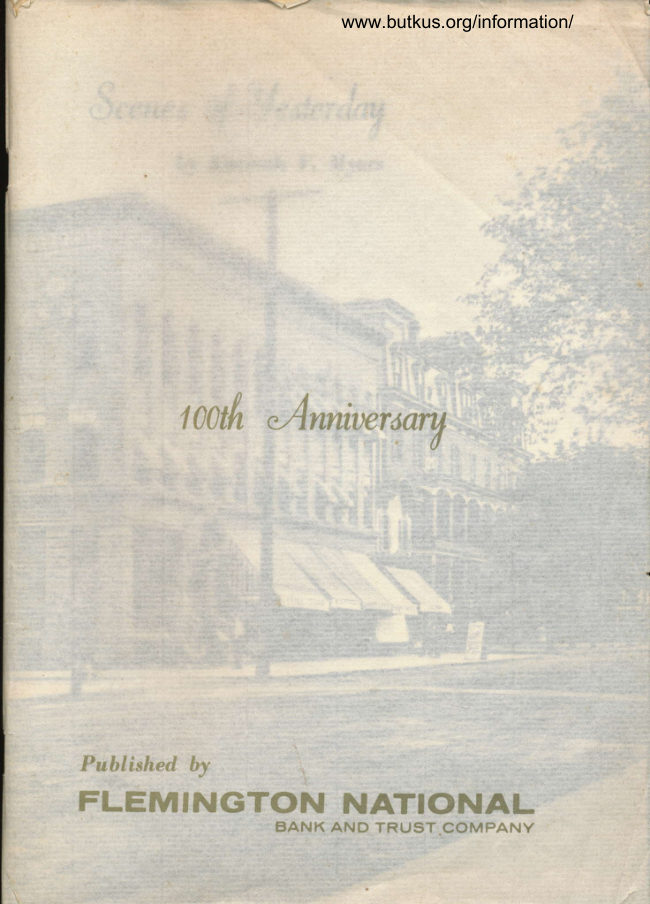
Flemington National Bank, NJ 100th anniversary 1976 Reference document
Reference document for Flemington National Bank, NJ 100th anniversary 1976. 40 pages. Read the original PDF, download or print a copy without registration.
40 pagesOriginal document17.9 MB PDF
Loading your manual…Open PDF directly
Document details
- Brand
- M. Butkus collection
- Model / document
- Flemington National Bank, NJ 100th anniversary 1976
- Document type
- Reference document
- Language
- Check the original document
- Pages
- 40
- File size
- 17.9 MB
- Category
- Historical reference
- Document date
- Not specified in catalog
Search available document text
Find a term, then jump to its page in the original PDF. Image-only pages may not be searchable; check the PDF for exact wording and diagrams.
Page 1 · Read text
ar-/
                                       www.butkus.org/information/


            Ioafi Jnniuerdarq
                                        a


I

I


i

i


l


i
tI       Published by
   FLEMINGTON NATI()NAL
I                      BANK AND TRUST COMPANY
View original page 1Page 2 · Read text
Uedterhy    Errnro tl
             by Kenneth Y. Myers


lsg#ffifl*Fr:j-qo*',
ffi}#
View original page 2Page 4 · Read text
Uedtu hT     Errnro ,f

 1876 A Century of Seraice 1976


FLEMINGTON NATIONAL
                BANK AND TRUST COMPANY

       Main Street Office - Corner of Main & Bloomfield Avenue - Flemington
            Circle Office - South Main Street Traffic Circle - Flemington
              Amwell Valley Office - Boss Road & Old York Road - Ringoes
                  Three Bridges Office - Rt.2O2 at Main & Broad
                    Delaware Office -  Rt. 523 - Sergeantsville

                    Member Federal Deposit Insurance Corporation


       O1976 FLEMINGTON NATIONAL BANK & TRUST COMPAT{Y
                           Flemington, New Jersey
View original page 4Page 7 · Read text
www.butkus.org/information/

              Foreward


  A l00thbirthday is an occasion for great celebration, whether  it be for a man, a woman, a country,
  or a corporation. And so it is with great pride that Flemington National Bank announces the
   reaching of this very special milestone.

  When one thinks back over 100 years, it becomes very clear what a great achievement a Centennial
   really is. One hundredyearsago,ournationwasjustemergingfromtheravagesof     aCivilWar.The
   rebuilding of a unified America was just beginning.

  Another great beginning took place in 1876. A group of Flemington area residents, with avision
   of a growing Hunterdon County, joined together to form The Flemington National Bank and Trust
  Company. And so, the base was established for the bank that was to become known as the financial
   leader of the Flemington area.

  To chronicle our "one hundred years of progress", and honored by its record of providing the most
  progressive services in Hunterdon County for one hundred years, the Board of Directors of
  Flemington National Bank has commissioned Kenneth Myers, noted Hunterdon County historian,
  to record the people and the events that make up our history. True, it isahistory of abank,but
  even more,  it is a history of the people that have led Hunterdon County to its present position of
  prominence in the State of New Jersey.

 We are proud to present the fruits of Mr. Myers' research, together with a treasury of historical
  photographs of the Flemington area, in our 100th Anniversary Booklet, entitled "scenes of
   Yesterdav  ".

  Since our nation's Bicentennial and our Bank's Centennial take place in the same year, 1976, it is
   fitting that we commission a work of historical significance, which we hope will become a valued
  part of our County's historical archives, to be read and used by future generations.

   It is with this thought in mind that the first copiesoff the press of "scenesof Yesterday"  will be
  presented to the Hunterdon County Library and the Borough of Flemington as part of their
  history sections.
                -%9,-z%/fuCharles R. Fisher              v,z/z-O  Clwirman of the Board                                                                                     ' "uohl:#)";
View original page 7Page 8 · Read text
Opened February 25, 1963                        Opened September 21, 1964


  Circle office, South Main St. Circle, Flemington, N.J.


                                                        Amwell Vatley office, Ringoes, N'J'


                                                Established April 1876
                                      At this location since 1896


                                     Main office, Mein St., Flemington
Mike Butkus                     Digitally                                                             DN:email=mike@butkus.org,Date:cn=Mike2022.12.11signedButkus,by16:17:49Mikeo=ButkusButkusc=US-05'00'camera manuals, ou=butkus.org,
                                                           Opened November 19, 1971
            Opened November  25, 197 O                        -


   Three Bridges office, Route 2O2.Three Bridges, N.J.            Delaware  off ice, Sergeantsville,  N.J.

                   1876 A Century of Seraice 1976
View original page 8Page 9 · Read text
www.butkus.org/information/
History of the
      Flemington l{ational Bank
              and Trust Compa,ny


        n 1876 a century had passed since the signing of the Declaration of Independence
          marked the birth of our nation. Flemington had been the county seat of Hunterdon
 County almost from the beginning of the country's independence, and when Mercer County was
 carved from Hunterdon in 1838 Flemington was left in the geographic center of the county.
 Largely through  its commerce, court jurisdiction, news media, schools and churches, the county
 seat became a center of influence in the developement of the county. The accomodating nature of
 the village and its citizens kept the county seat in Flemington even though several unsuccessful
 attempts were made through the years to remove it to another place.

An important accomodation to Flemington's residents and its neighbors came in the spring of
 1876. Despite the fact that the country was in a post{ivil War depression (some 20,000 businesses
 in the nation had recently failed) faith in the area's future was seen when a group of Flemington's
 leading citizens on March ll,1876 met in the County Hotel operated by William Force. The group
 agreed to petition the U.S. Comptroller of Currency for approval of the formation of a national
bank in Flemington. The bank was formed with 65 stockholders who lived in a score of different
towns throughout the countryside. It is interesting that a century later many descendants of the
 original stockholders  still maintain an investment interest in the bank.

On April 22, 1876 the bank was authorized by John J. Knox, U.S. Comptroller of Currency, to do
business with capital of 1,000 shares at $100 per share under the name of Flemington Natlonal
Bank. The stockholders, meantime, had met and elected the first board of directors of the bank.
Leaders of the local area were selected to guide the destiny of the bank, thus a tradition was
established that made the bank so responsive  to the community's needs through the years to come.

Peter Emery, an imPortant leader in the Flemington Presbyterian Church, was the bank's  first
president' He served but a little over a year, however, when he moved to Kansas he was succeeded
by John L. Jones, the first elected vice-president of the barrk. Mr. Jones had been sheriff of the
county and was judge of the County Court of Common Pleas from  I 878 to  I 883. These gentlemen
were joined on the first board by C.C. Dunham, a brother-in-law of V.P. Jones. Dunham was
especially helpful in getting the bank started as he had had previous banking experience. Others
included John N. Voorhees and Edward P. Conkling, prominent local attorneys;Thomas Fidler, a
director of the Flemington Railroad Company; Hiram Deats, a manufacturer of farm machinery;
John Shields, a railroad builder whose contracts included work throughout the country and Canada;
and Moses K. Everitt, who was the County Clerk. Leading merchants who completed the lisT were
Peter  I. Nevius, Zenius Nevius, William Richards, Jr., and Miller Kline.

                  1876 A Ct,nlar! of Seroice 1976
View original page 9Page 10 · Read text
On or about the day authorized to do
business the Flemington National Bank
opened its doors to the public in the
George Rea building on the opposite side
of Bloomfield Avenue from the bank's
present Main Street office. The Rea
building was also known as the Town
Clock building because of the large clock
on its roof. Thus by coincidence there
was an association of the bank and a
public timepiece which was later to be-
come an identifying symbol of the
institution. By May l2th, 1876 the
bank's financial condition was published,
showing that $76,950 of the authorized
capital stock had been sold. Loans of
$31,268 had been made to borrowers,
and balances totaled $37.199. The state-                 The old "Town Clock" building
ment also showed deposits of $30,000 to secure circulation of currency issued by the bank.
Issuing ofpaper currency was a service the bank rendered for over 50 years. The National Bank Act
of 1863 had as one of its purposes the provision of a national currency secured by a pledge of U.S.
Bonds. The last of the bonds eligible to "back" bank notes were retired by the U.S. Treasury  in
1935. Since then the Federal qovernment has devised other wavs to issue national currencv.

A typical note signed by Nedwill Sutphin, Cashier and
F.R. Williamson, President of the bank, as pictured, is
now a matter of history. Silver certificates  to take the
place of coins were first issued in 1878 about the time
of the bank's beginning. They have been discontinued
after about 100 years.
It was appropriate enough to start a bank in
Flemington in 1876 for it was then a part of Raritan
Township and that was the richest municipality in
the county.lts real estate assessments  were $2,428,1 80,
with personal property assessments being $ 1,731,948.
There were 927 registered voters. This last number
was not indicative of population, however, since
women's suffrage was not to be for nearly another 50
years. The bank began in a very modest way and those served lived under equally modest circum-
stances. Richards and Sutphin in the Hunterdon County Democrat on March 14, 1876 advertised,
"Do you want to avoid vexations usually attending making men's shirts? Then buy ready made
shirts from us." The editor commented in his column that week, "That ready made shirt at Richards
and Sutphin is a first rate thing." In 1876 John Van Fleet of Three Bridges was operating a furni-
ture store which included caskets and undertaking services. In Ringoes at the same time P.W.
Shepherd and Sons were advertising "Wool taken in and made to order in cashmeres, tweeds,
blankets, flannels, stocking and mitten yarns for sale or exchange for wool."

Times were changing in the neighborhood,  however. In 1878 the Humphreysbuilt  the impressive
brick Union Hotel, having demolished the frame structure that preceded it. The new hotel was re-
ported to be one of the finest hotels in the state. Then in  I 884 the Lehigh Valley R.R. branched to
Flemington, with much fanfare. Among the welcoming  delegation was bank president Jones and

                  1876 A Ct'ntury r{ Serrice 1976
View original page 10Page 11 · Read text
www.butkus.org/information/

 director Hiram Deats. There is little doubt that the improvement  of rail service had a great deal to
 do with the developing of the already well+stablished and flourishing agricultural economy of the
 atea.


 Through the early years the bank benefited from the sound judgment and ability of C.C. Dunham,
 thebank'sfirstcashier.By  l89lthebank'sdepositshadgrownto$l42,490.Hediedinl89land
 was replaced by N.D. Stiger with B.H. Berkaw as teller. Mr. Stiger served until 1900 when he left
 to be controller for a leading drug firm in Newark. His successor was Mr. Berkaw, who kept the job
 fortwentyyears. In that day it wascustomary to offer at auction in front of the courthouse  invest-
 ments of a decedent's estate. On March 15, 1892, 16 shares of the bank's stock was offered in this
 manner and brought $131.00 per share, making it quite obvious that the bank was a respected
 financial institution. The year  I 893 was a milestone in the life of the bank, for an old town land-
 mark, Blackwell's Row, was sold to Wm. Richards, then bank president who had two years before
 replaced John J. Jones. The bank was now the joint owner of the delapidated frame Blackwell Row
 building and it made plans for the brick structure to be its main office for the next three quarters
 of a century.


The bank's seeking larger quarters was in keeping with the developement going on around  it.
 Flemington in 1893 authorized a sewerage plant. Electric lighting was provided in 1895 to
 Flemington by a company started by Furman Williamson,  later president of the bank. Town voters
 at Reading Academy had voted free text books and school supplies to the students for the first
 time. That the idea was not universally popular is indicated by the local editor's note in March of
 1893 to the effect, "Let's give free books a fair trial."


In February 1898 the bank moved to its new home
opposite the corner where  it had started in 1876. We
may assume the bank was efficiently equipped for
that time. The vault door was reported to have weighed
four tons. The newspaper reported the new banking
room as "light and cheerful, pleasant and inviting.  It
must be a delight to do business there." The building
had for many years other tenants, one of whom was
Joseph VanMarter, the keeper of a harness shop in  ::*     *-
the basement. A faulty gas jet caused a fire in 1908
and but for the metal ceiling in the room the whole
building might have been set afire. Previous to that
tenancy the room had been occupied by Clinton Rittenhouse, one of the town's fine barbers.
These two merchants eventually left the basement quarters, since being in the bank's basement
perhaps gave them a large financial overhead.


The bank prospered in its new home and in the next few years  it saw Flemington grow with new
industry and expansion of those already on the scene. An unfortunate loss came to the bank in the
death of its president Mr. Richards in 1906. He had come to Flemington from Steelton, Pa., to join
in the mercantile business with Howard Sutphin in the year the bank began, 1876. He lived next to
the Presbyterian Church and was a highly respected member of the town's business community.

                  1876 A Century of Seroice 1976
View original page 11Page 12 · Read text
I                                -l                   I With the passing of Mr. Richards, John B. Case, lumber
 merchant, became the bank's fourth president. In the                                                                                                                                                                                                                                                                                                                                                                                                   I
 next year a link in the chain of management was                                                                                                                                                                                                                                                                                                                                                                                                   I
 forged to serve the bank for over a half century.                                                                                                                                                                                                                                                                                                                                                                                                       I
 Nedwill Sutphin, son of the town's merchant Howard
 Sutphin, had studied at Lafayette College and Rider
 College and after being the bank's bookkeeper for
 seven years, became a teller. ln l9l2 he made
 assistant cashier to B.H. Berkaw. This office he held
 until l92l when he was promoted to cashier. His
 banking career saw him serve as vice-president, and
 finally president for twenty-two years prior to his
 retirement in 1963. This was an outstanding  lifetime
 of devotion to the bank and its patrons, typical of the
 loyalty the management strives to engender among its
employees. When John B. Case was made president of
 the bank, John Foran, the owner of one of the town's
leading industries became the vice president. This team
served until l9l2 when Mr. Foran died and was fol-
lowed by Furman Williamson. Encouragement of thrift
has always been a strength of the bank, and in 1907
the accompanying advertisement (reproduced on the
next page) indicated the board of directors heeded
the advice of Benjamin Franklin "A penny saved is a
penny earned".
With the death of John B. Case in l9l5 Furman
Williamson became president and served in that office
until 1933. He was reputed to be an unassuming  gentle-
men and yet he found himself much involved in
community projects. He was president of Dural
Rubber Co., Flemington Water Company and had been
president of Flemington Light and Power until it sold
to New Jersey Power and Light Co., in 1921. During
Mr. Williamson's term of office, many noteworthy
things happened in the bank's history. The chime
clock was installed in front of the bank in 1921 and
became such a popular object on the local scene that
the bank became known as the Bank with the Clock.
ln 1926, under the authority of the National Banking
regulations and New Jersey law, the Bank was granted
power to perform trust functions so that it could act
as trustee, executor and administrator of wills and
could fill other fiduciary responsibilities. The trust
powers were an important service which the bank was
able to render to the community, and to better alert
patrons of the bank of the offering of such a service,
its stockholders on April 2, l93O changed the bank's
name to Flemington National Bank and Trust Co.
ln 1927 the banking  facilities of the home office had
again become outgrown and an extensive renovation

                  1876 A Cantury of Seraice 1976
View original page 12Page 14 · Read text
While the capital make-up and the physical plant of
the Main Street office were altered during the nine-
teen sixties, something else of material importance
was happening.  Its management team was being ex-
panded to bring in personnel with special talents and
training. No longer did management consist of just
the president, vice-president and cashier. Authority
was delegated to accomodate the modern banking
needs of the customers. While organizational changes
were taking place, another career employee was
making a significant contribution  to the leadership in
the bank's affairs. Following Mr. Sutphin's retirement,
John C. Huff became president, culminating his many
officer responsibilities. He had started his employment
n 1929 as clerk and became assistant cashier in 1940.

The bank's first branch was opened at the Route 12
and South Main Street Circle shopping
center underthe charge ofKnud Holnrsen
on February 23,1963. The venture met
with such success that the management
of the bank was encouraged to expand
further and on September 21, 1964
another branch was opened at Boss Road
and Route 179 in Ringoes with Paul
Nosal as the local manager.
In 1968 it was found advisable to in-
crease again the number of shares of
capital stock from 24,000 to 60,000
and an additional 12,000 shares were
sold to bring the number in total to     opening of Drive-up at Ringoes
72,OO0.In this same year the front of the Main Street office was remodelled, and when the third
floor of the building was altered to provide space for a vastly increased bookkeeping load together
with the addition of air<onditioning and modern lighting arrangements in 1974 the major improve-
ments to the Main Street office as we see them today had been completed.

The Three Bridges community on November 25,1970 saw the opening of the bank's third branch
on Route 202. This activity along with greatly expanding business in other areas required the bank
to make further capital increases so that in 1971 the existing shares of stock was increased by
24,000 and in the next year another 24,O0O were sold to the public. ln 1974 by way of a stock
dividend 6,000 more shares were added to bring the total number of authorized shares to 126,000
at the present time. This figure may be dramatically compared to the original 1,000 shares of 1876.

The most recently opened branch of the bank took place in Sergeantwille on November 19,1971
and had as its manager John McCloughan.

On the framework of the banks history just outlined can be placed the many and varied banking
services that have been developed to make Flemington National Bank and Trust Company a source

                  1876 A C,entury of Seraice 1976
View original page 14Page 15 · Read text
www.butkus.org/information/

of satisfaction to all who find a need for such services in this part of New Jersey. Patrons and
stockholders may be assured that the management of the bank will continue progressive  in its out-
look, as has been amply demonstrated over the past century. From its modest beginning with two
employees in a rented room in  I 876, the bank has grown to have a staff of approximately ninety
officers and employees trained to serve in the most modern facilities. Even though  its operations
have become more complex in this modern age the direction of the bank is still, as at the beginning,
under that of a board of directors selected from outstanding  leaders in the local community. By
this close relationship the management of the bank is enabled to better know and understand the
needs of Hunterdon County people and be most responsive to them.

                 c\3,


                 lB76 A &ntury of Seroice 1976
View original page 15Page 16 · Read text
The Bank and its People

      The Directors Since Organization

     William M. Amerman **         Charles R. Fisher **          Edwin K. Large, Jr.
     William E. Anderson           Henry H. Fisher **              Charles McMullen
     George T. Arnwine              William W. Fisher              George D. Muller **
     Martin Alles                    C. Lloyd Fisher                Ralph J. Muller
     Clarence M. Alles              Henry A. Fluck                 Peter I. Nevius
     Bergen H. Berkaw               Linton A. Fluck              Zenus L. Nevius
     William H. Bodine             Arthur F. Foran                 Willard C. Parker
    Guy R. Bell                   John Foran                   John Quick
     George A. Berkaw                  J. Kirby Fowler **             William Richards
     John B. Case                    Joseph Haines                John W. Reading
     William J. Case                Jacob R. Hall                 John Shields
     Jacob Chantz **               C. Ryman Herr, Jr. **         Samuel Stothoff
    Edward P. Conkling            Atkinson J. Holcombe        W. Luther Stothoff, Sr.
     Clarkson C. Dunham             Charles Holcombe            W. Luther Stothoff, Jr.
     Hiram Deats                  John C. Huff **               Fred W. Styler,  Jr.
     Hiram E. Deats                 Joseph W. Hylan                Nedwill Sutphin
     George Dunham               John J. Jones                 John N. Voorhees
     William V. Dunham             Sidney Kirchen                George K. Weller
     Peter E. Emery                    Miller Kline                   Jacob C. Williamson
     Moses K. Everitt               Hervey Kuhl                 Furman R. Williamson
    Thomas B. Fidler               William Kuhl                  ** Serving Currently


t{lilliam M. Amerman              Jacob Chantz                Charles R. Fisher         Henry H. Fisher
     Real Estate                   Attorney     Director, Holcombe Fisher Funeral Home   Farmer


      aa                                 C. Rvman Herr, Jr.            John C. Huff              George D. Muller   J. Kirby Fowler
      hesident             Attorney, Herr and Fisher      hesident - Retired    FlemingtonVice hesidentCut Glass Co., Inc.
                  1876 A C*ntury of Seraice 1976
View original page 16Page 18 · Read text
O. Buchanan, C. Fisher, K. Fowler, W. Amerman


          J. Tine, R. Reich


                          J. Gutowski, F.R. Pidcock, R. Cameron

                 1876 A Century of Seraiee 1976
View original page 18Page 19 · Read text
www.butkus.org/information/


                          J. McCloughan,  B. Gaulrapp,  P. Nosal, R. Vlerebome


R. Ziemba, R. Kendig, A. Dent, W. Zoldi

                   1876 A Century of Seraice 1976
View original page 19Page 21 · Read text
www.butkus.org/information/
          Errnro ,f Uedterq

                                           Keep thy shop, and thy shop will keep thee
I                                                           -Ben Franklin-
I       Industry and Comm,erce

          The early settler in Hunterdon County was a farmer and for a time on his farm was quite self-
               sufficient. As years passed, specialization of labor and trade began with general stores, grain and
            woolen mills, tanneries and many types of artisan shops. These little centers of trade existed mostly
              for local commerce but with the coming of rail service about a century ago a more expansive type
             industry developed.


                                        Frank E. Green drug store was landmark in Flem-
                                             ington operating for nearly a half century in the
                                               building where the bank started. George Bloomer
                                 a nephew of the proprietor is welcoming  trade.


             W.C. Field's gr(rcery store south of the courthouse.          Flemington Cut Glass opened  its doors in 1907 by
           A good place to get a 5d cigar in 1 91 0.                  Al Muller, grandfather of bank director George
                                                                           Muller along with Charles McMullen.

l
I

            Apple iuice was always an important product ol        Empire Cut Glass Factory in Flemington started in
              county farms. J.P. Case handled the product com.            this building constructed by local citizen effort in a
               mercially at Clover Hill starting in 1878. In 19O8        cow pasture in 19G1.  lt gained fame in 193O when
             the business was purchased and moved to Flem-             it became the home of the Flemingron Coop Egg
               ington later becoming Hildicks Distillery.                and Poultry Market,

                          1876 A Century of Serrsice 1976
View original page 21Page 22 · Read text
x"*"i irnr ,,"",       merchant ," ii"rni"n,""         Foran Foundry where farm and factory met in
and hero displays "-"o"rhis delivery rig in charge of         1893, when John Foran established  his foundry  in
George Bearder. Mr. Kuhl wes a bank director  in          Flemington. Mr, Foran was vice-president of the
the early 19(X)'s.                                         bank from 1906 to 1912.


Main street Sergean$ville, a rypicat small town ap-
pearance at the turn of the 20th century. Harness shop,
grocery stores and blacksmith shop are showing. The
barber shop and tavern are across the street.


                                                               Sergeant's mill west of Sergeantsville. Where only
Joseph Croasdale, the Ringoes blacksmith shoeing          the foundation can now be seen there was once an
tre Baptist minister's horse,                             important grist mill on the Wickhechoeke Creek,

                  1876 A C*ntury of Seruice 1976
View original page 22Page 23 · Read text
www.butkus.org/information/

                    When tillage begins, other arts follow. The farmers, therefore
                              are the founders of human civilization.
                                                 -Daniel 14ebster-
Farming

 Farming in Hunterdon County has always provided its greatest source of income. As one of New
 Jersey's leading counties in agricultural production  it has witnessed local farmers engage in many
 types of farming including  grain, livestock, dairy, poultry,  fruit and vegetable growing. Fertile soil,
 good climate and progressive husbandry has all contributed to successful transitions. Flemington
 National Bank has been a constant and reliable source of credit to the agriculturist in meeting
 these changing times.

                No. 6 l)cats Plou'.


                                                      nccd any drsqiplioq  tlr.v rrc n.r. e               Tltl:{Et     .^  ---plon rre tr  rcll Lnoc.l to                     ritb eilbs rtccl s clst rh*l*  grd in nrsral ditrcreor sir*,
                    Sft Ficr.lirt &r infoerrrtiocr"
                 Tbi* L tlr ely *ryk gtox rrprn *lich  r *lcrt rhrlc hsr ercr hetrr r.
                     {1'{rt11dr *rnt**.  Thc *h:rre gn lx rtrirl" lnd. trpt i$ gl(trt b1, en1, hlrc}i.,
                       qr;:;li:  ,'   '    Fld*r sxlrjr lhr c!:al1q.t ;lil  ls-cl lli.,:!.  ,1 f r,r,:ri  r:! u{.
             The walking plow was one of a series of farm implements manufactured bv the
               Deats  f irm in Pittstown.


Jos D. Wilson's home made incubator operated on
his farm at Rosemont. Mr. Wilson made the first
shipment of baby chicks by express to Chicago  in
1892, The beginning of an important Hunterdon
County industrv.                                      Hay gathering near Ouakertown in 1930.

                 1876 A Century of Seruiee 1976
View original page 23Page 24 · Read text
Ot all the local crops, corn required the most work. The corn planter
relieved the drudgery of "dropping corn by hand".                    ln 1890 there were 10674 horses  in
                                                               Hunterdon County. These vrrere mostly
                                                         work horses - one important  function
                                                             was to draw the walking plow.


Looking south from Prospect Hill Cemetery  in 19(X.

Fluid milk shipment changed the
dairy farming industry. The creamery
in Three Bridg€s where dai.ry farmers
in that area delivered their milk for
processing and shipment,


The Grange movement in Hunterdon County was catch-
ing on about a century ago. Ringoes Grange first met in
this building across from the railroad station.                 Ringoes Grange home at the present time.

                 IB76 A C*ntury of Seroice 1976
View original page 24Page 26 · Read text
ryei-


Wlliam Jennings Eryan communicates  in
kmbertville in 1896.


                                                  Central railroad station in Three Eridges.
Lehigh Valley  railroad station
Bridges.


                                                                                                                                                                '   '. 'ali;t   i .                                        i.
Copper  Hill used to have a post office, railroad station and a lovely     Train wreck near Three Bridges on the
lady by the name of Addie Lake.                                       Lehigh Valley during the blizzard of 1 888.

                   1876 A &'nlury of Seroice 1976
View original page 26Page 27 · Read text
www.butkus.org/information/


 Post offices and postmasters in the past changed
 with the political tides. Here are four post offices
 that Three Bridg€s patrons have en.ioyed since the
 first one in 1866.


Ringoes main street when it was a dirt road about the turn of the century.

                 1876 A Century of Seraice 1976
View original page 27Related documents and language editions

From the M. Butkus archive. Original publisher and archive notices are retained.
Check the model and edition against your equipment.
PDF verified 2026-10-10.