Film cameras
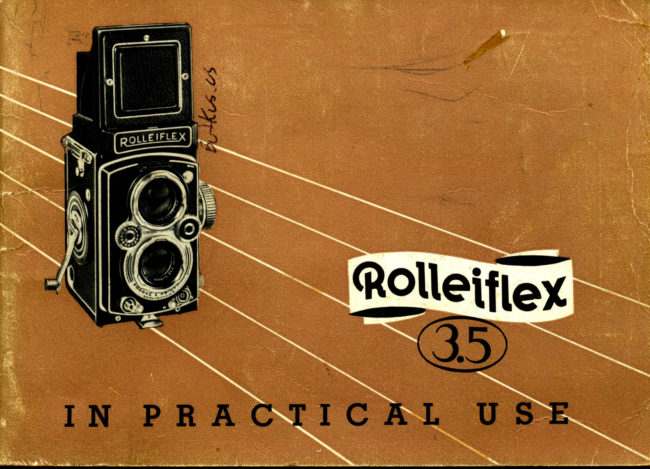
ROLLEIFLEX 3.5 User manual
User manual for ROLLEIFLEX 3.5. 58 pages in English. Read the original PDF, download or print a copy without registration.
58 pagesEnglish6.8 MB PDF
Loading your manual…Open PDF directly
Document details
- Brand
- Rollei
- Model / document
- ROLLEIFLEX 3.5
- Document type
- User manual
- Language
- English
- Pages
- 58
- File size
- 6.8 MB
- Category
- Film cameras
- Document date
- Not specified in catalog
Search available document text
Find a term, then jump to its page in the original PDF. Image-only pages may not be searchable; check the PDF for exact wording and diagrams.
Page 4 · Read text
bh.   Auro^otic Rolleiflex is o precision comero
of lhe mosl odvonced rnodern design. Equipped
wilh lenses of superior opticol quolily, Schneider
Xenor3.5 orZeissfessor3.5,   il offers superb per'
f o rm a n ce. Even m ore oslon ish in g lo  fi rsf-fim e-users
is Rollei's exlreme hondling eose, due |nlirely lo
lhe mony exclusive, oulomolic feolures   i ncorporat'
ed in its design.
fhe correcl methods of holding ond hondling the
comero should be leorned f rom lhe very stort. The
following poges conloin o fully detoiled descrip'
lion, wilh illusfrofions, of the conslruclion ond
funclioning of lhe comero  . Helpful rules ond hinfs,
fundomenlollo lhe proclice of Rollei-ph olog ra phy,
ore olso included.
We hope thot this book will help eoch new
Rolleiflex owner lo ochieve lhe mosf complefe
success with the comero ond, of course, in fhe
shorlesl possible time.

     FRANKE & HEIDECKE
      BRAUNSCHWEIG
View original page 4Page 7 · Read text
www.butkus.usFocuslng Hood qnd Focu"ing Mognilier
(reploces poges 1.-*-17l'
To open the focusing hood: lift reor edge of hood ond roise cover.
To close: fold in both sides (l).
To roise mognifier: press direct viewfinder ponel inword, following
this simple method: grip upper edge of hood with iwo fingers, pushing
the ponel gently inword with the fingertip (2). Alwoys hold mognifier
                                                                                                   (3).close to the eye. - To close: push mognifier support down
Changing Magnifiier to correc] Jor Faulty Vision
Upper Mognifier: with the direct view finder
open, grosp lens from obove ond below, pull
it bock ond then lift it up ond out (4). To insert:
push mognif ier forword ogoinst retoining
spring ond let snop into ploce. For convenient
cleoning: fold down mognifier with the direct
view finder open.
Reor Mognifier: remove ond open focusing
hood. Use both thumbs to grosp, from ihe
inside of the reor woll, the two retoining clips
on eilher side of the reor peep window ond
pull bock retoining lever (5). After chonging
mognifier, push retoining spring forword until
it snops into ploce. Cleon mognifier with soft
cloth.
View original page 7Page 8 · Read text
Inserting fhe Roffeikin Focusing Screen llosk
To remove lhe hood: press the spring cotches on either side of the
hood ond slide hood iowords reor (5).   To reploce: press hood                                            -down on trock ond slide forword until it locks.
To lift lhe focusing screen: toke hold of the two sides of the frome,
pull bockwords slightly ond lift (7).    Close by pushing downword.                                       -Inserting lhe focusing screen mosk: drop into ploce so thot the notch
ond punched holes fit over the studs provided (8). The Rolleikin mosk
is now coupled to the outomotic porollox correction of the comero.

                Cleaning ihe opticcrt parls
                      Lenses, mognifier, reflex mirror ond focusing
                      screen: Remove moior dust porticles first with
                        soft comel's hoirbrush, ihen cleon the surfoces
                    by wiping with soft chomois or cloth. Focusing
                      screen: cleon the contoured under surfoce with
                        soft comel's hoirbrush only, do not touch with
                        fingers. To ovoid dust-collecting elecirostotic
                    chorge: breothe onto eoch side before ond
                     ofter cleoning ond let moisture evoporote.
                     Reflex mirror: the reflecting surfoce, cooted
                     with on extremely hord scrotch ond corrosion-
                         resistont protective loyer, should of course be
                     cleoned with core ond only when necessory.
View original page 8Page 9 · Read text
I
                                  www.butkus.us
TO LOCATE THE MOST IMPORTANTPARAGRAPHSQUICKLY\

Poget                            P o g e :                                                  l          Poge:
 6    l. A Brief Rolleiflex-Anolomy       3 0   lll. L o o d in g o n d Film            50  Reflecting Surfoces
l0  The Automotic Film Tronsporf         Tro nsport                               5l  Plonts
   Mechonism                                    30  Bock                                     5l  Color Pictures
12   ll. Rolleiflex in Operotion        32  Inserting the Film Spool          52  Micro Photogrophy
12  Ever Reody Cose                34 Threoding the Film              52  Core of Comero
12  Lens Cop                       34  Film Tronsport                   52  In Cose of Domoge to  ih.":
14 H o ldin g t h e C o m e r o                                              Comero
16 Fo c u s in gH o o d                  37  lV. Floshlighl Technique
16 F o c u s in gM o g n i f i e r              40  Flosh Photogro,phyTips                                                                           Tobles:17  Direct View Finder
18  Focusing                        42  V. Tips on Piclure-Toking        21 Depth of Field
l8  Diophro g m                     42  Londscopes                 23 Speed of Movipg Obiects
19 Depth of Field                   44  Portroits                           ond Shutter Speeds
24  Shutter Speed                   45  Children                   28 Exposure24  Lig h t V o l u e                       4 5 A n imo ls                                                         38 Flosh-Contoctond Shutter24  Shutter Tensioning               46  Snopshots                                                                    Speeds25 R e leos in g                       47  Sports
26  Self-Timer                      48  Theotre ond Music-Holl         53 Procticol Accessories
26  Exposure ond Light Volue          4 8  Nish t                     54 Rollei F ilter s
29  F ilm R e m i n d e r                  49  Copying                    55 Rolleinor s


        lmporlont: Before ottempting to use or hqndle lhe comero we  urge'you  lo  reod corefully
                                      poges 12, 16, 24 ond 30.
View original page 9Page 10 · Read text
I. A BRIEFROLLEIFLEX.ANATOMY


The Automotic  Rolleiflex  is o comero  chorocterized
obove  oll by two speciol design feofures: the rigid
construction of the fwin lens reflex ond the outomotic
film lronsport mechonism. These technicol odvonloges
do nol form merely o bosis for very high performonce
but  ot  lhe some time contribule moleriolly  to  the
simplicity ond eose of use for which the  Rollei  is
iustly fomous.

Consfrucfion of the fwin lens Reflex

ln the Rolleiflex two seporote comeros ore ioined  in
o twin-comero with o common sturdy die-cost body:
the bottom  holf  is the

loking-comero, in which the film  is exposed, ond the
upper holf  is the

viewing-comero, which is designed on lhe mirror-reflex
principle.   lts speciol tosk  is lo moke the focusing
visible on lhe ground gloss ond to supply o conlrol
imoge essentiolly similor  to  thot  of  the prospeclive
piclure.
View original page 10
Page 11 · Read text
www.butkus.us
The imoge forming roys oro lronsmitted by the fully
open viewing lens, projected on to the ground gloss
screen vio the mirror qnd the resuh is o right-side-up
ground gloss imoge, in the full size of lhe originol
 picture. This viewing imoge is visible ot oll times ond
every detoil  of  composition ond  froming moy be
wotched even during exposure.

The ground gloss screen is ruled with o number of
verticol ond  horizontol  lines moking   it possible to
detecl errors, such os lines which converge but should
be porollel or o slonting horizon, in time to notice
ond correct them.  lt  is eosy to  stroighten or  level
lhe comero by meons of  the  lines on  the ground
gloss screen.

Above  oll,  the ground  gloss screen provides the
meons for focusing lhe comero. This is occomplished
by  rototing the focusing knob.  Both lenses, which
ore inflexibly coupled lo eoch other by meons of o
sturdy common  front  ploie,  ore  thereby odiusted
simultoneously: o  shorp viewing  imoge, therefore,
guorontees on equolly shorp picture. Since the Rollei-
flex  is equipped with o  fost viewing  lens ond on
opticolly prepored ground gloss screen, the viewing
imoge  is extremely bright ond  cleor ond focusing
con be done very criticolly.
View original page 11
Page 12 · Read text
The focuring  hood,  whidr  is designed for one-hqnd
 operolion,  is kept in both open ond closed positions
 by spring  tension.   lt  is equipped  with  o  mognifier
 offering  opproximolely  2.5 times  mognificotion  for
 criticol focusing.

 The rectongulor mognifier  flop olso octs os o shield
 for the focusing hood ond prevents exlroneous light
 from obove reoching the viewing imoge.

  lf  the  front  ponel  of  lhe  focusing hood  is pushed
 inword,   it  is tronsformed  into  o  direct view  finder
 through  which  lhe  subiect moy be seen  in  nolurol
 size moking  it porticulorly eosy to follow  fost oction.
 In this cose it is still possible ot oll times to moinloin
control over focus:  this  is mode possible by meons
 of  o second mognifier  in the bock of  the focusing
hood, ond o  diogonolly mounted mirror.  A  slight
roising  or  lowering  of  the  Rolleiflex  is  oll  thot  is
required  lo olternote between the right-side-up open
view  in  the  direct  finder, ond  the  reversed cenler
portion  of the ground gloss focusing imoge. The foct
thot  the two  finder openings  ore  locoled  so close
fogether, enobles quick froming  of the subiect ofter
focusing.  The  usefulness of  the open  direct  view
finder  is thereby enhonced for  sports pictures.

Focusing the front  lens ponel throughoul  lhe ronge
from o   (infinily)  -   35th inches (distonces meosured
View original page 12
Page 13 · Read text
www.butkus.us
from  the focol or  film plone to lhe subiect) is oc-
complished by one  full  turn  of  the focusing knob.
The  speciol  design  of  the  focusing  mechonism
(o com-drive bosed on  the  principle  of  the orchi-
medic spirol) insures uniform movement of lhe lens
ponel in both directions without ploy or bocklosh.

Tied in with the movemenl of the lenses is o simple
sliding mechonism, locoted beneoth the ground gloss,
providing completely outomotic porollox compenso-
lion. Consequently,the finol picture is olwoys fromed
exoctly os  originolly viewed on  the ground  gloss
screen. Similorly complete control con be hod even
when using supplementoryRolleinor lensesfor close-up
work merely by odding the Rolleipor.

Shutter speeds ond  diophrogm  openings  ore  regu-
 loted by the smoll knurled wheels on the front ponel
while observing the scoles in the single peep window
ot the top.  light  volue scole ond  shuller speed-dio-
phrogm coupling simplifies correct exposure setting
ond permiis quick chonges of speed-diophrogm com-
bin o t ion.

Since the two  lenses ore  of  identiol  focol  length
 (f =75 mm, picture ongle locross diogonol], 560)  it
follows thot the imoge in both sections of the comero
will olwoys be criticolly focused on the some portion
of the subiect simultoneously.
View original page 13
Page 14 · Read text
II. THE ROLLEIFLEXIN OPERATION

      The Ever Reody Cose                               Putting lhe Comers  in the Cose: pull up the clips
                                                        ond  spreod the cose oport;  then  slip  the  cronk
        deserves mention here since  it  is so often used with    through the lorge opening from the inside ond lower
         lhe comero.                                             the comero bockwords into'the cose. Push the clips
                                                    down through the chrome ploted strop holder slots.
       The cose moy  olso be  used with  the  Rolleikin 2
        oltochment merely by removing the leother  inserf to     For Cqmerqs with  Rolleikin  2:  stroighten  out  the
         permit possoge of the lorger counter knob. In order     five metol tobs of lhe  leother insert on the inside
              t:  ossure solid contoct when working with o  tripod     of the cose wilh o  knife @  ond then push out the
                                                    now superfluous disc.
        poge 31), do not use lhe ever reody cose.
          fo Open:   lift the top  by grosping the snop cotch   fhe lens Cop
         butions ot the reor qnd fold forword ond down @.      is foldoble. The upper port  is ottoched in front  of
                                                                  the viewing lens by boyonet mounting ond the lower
       To Close: pull fhe top over the comero ond push    port through friction  fit.
       down  to  engoge the snops. (Simultoneous folding
          of the focusing hood is olso possible with this move-   Removol  of  lens  Cop:   lift  lhe  lower  port  by  the
         ment.) Alwoys  return focusing knob  to  infinity  posi-    fob ot the lower edge ond fold  it ogoinst ihe upper
                                                                        port @.  Remove cop from  ihp  boyonet  by  turning           lion since the extended front moy otherwise interfere
                                                                                                                          it counter-clochvise la  ol o turn @.         with closing the cose.
                                                                   Atloching  Lens Cop:     fit  the  folded  cop  into  the
        To Remove Cqmero From Cose:  pull  up the metol    boyonet of  the viewing  lens  -   hinge  pointing  to         ..ii&          clips locoted ot the top of the sides of the cose @.     the  right  (focusing knob)  -   ond fosten  it  with  o      .:s                lift  the cronk o  little woy from the cose, spreod the     th  turn  clockwise.  Fold down  lhe  lower  port ond
         sides ond  lift the comero forword ond out@.         snop into ploce.

              ,I':
View original page 14Page 16 · Read text
Holding the Comero

Bo s ic rule :  c o m e r o h o n g i n g o ro u n d th e n e ck with    The  Corrying  Strop  is  odiusted  to  o  comfortoble
loul strop ond fhe comero held firmly by both honds.    length, so thot the comero moy be corried on the
The right hond grosps lhe comero  ot  the bottom,    shoulder when not  in use. In order thot the shutter
lhe index finger on the shulter releose, the thumb   moy be releosed with  tout strop to  ovoid comero
                                               movement, loop  the strop oround  the  right hond,
supporting the uplifted cronk (quick hondling of the
                                                         ihus  shortening    ii   to  ochieve  normol  viewing
film lronsport: p.36). The left hond does the focus-    distonce @.  Further shortening of  the  strop when
in g O .      I n  t h i s p o s i t i o n d i o p h ro g m o n d sh u tte r co n -    using the mognifier con eosily be effected by moking
trols moy be operoted comfortobly with two fingers.    use of the  left hond  in the some woy @.
View original page 16Page 17 · Read text
www.butkus.us


Coulion:  o  wrong  or  uncomfortoble  "griP"  moy    Woist-level or eye-level positions for the comero ore
couse you  to   lift  inodvertently the honging top  of    considered normol for most pictures. The extremely
lhe ever reody cose.                                                               flexible  Rollei, however, reodily  permits exposures
In order to be oble to corry the comero slung from     of  or neor floor  level, overheod, shooting stroight
the neck without on ever reody cose, o speciol block    up or down, ond occosionolly, surprise snops "oround
                                                  the                                                                  it, hook                   How                                    to                                   foslenleother                  is                ovoiloble.        strop
                                                         fhe corner" @-@.  Thus  the  viewpoint  moy   b.    I                                             holder                           strop                             on                                              thi  stropmetol loop               the                   leother              of
button (iid),  pull  locking slide up ond push  it  into    oftered  ot  will,   in  order  to  obtoin  o  vorielY  ol f
the strop  holder  slot os  for  os   it goes (6).             picture  effects from  difierent  ongles.                          /
View original page 17Page 19 · Read text
www.butkus.us


 Direcf View Finder                                  the hood  permit ottochment of  the Rolleikin direct
                                                     view finder mosk.
 To Open (ofter roising the mognifier) : push the direct
 v iew  f ind e r f l o p   i n w o r d s u n til it sn o p s in to p lo ce @ .    Chonging     Mognifier        (if eyesisht demonds)
To  Close: depress mognifier  flop  slightly  -   the   To Remove: pull bock ring mount ogoinst retoining
 direct view finder ponel immediotely returns to nor-    spring ond  lift out. To insert: put into position (bock
 mol position @.                                                     first), pull bock ogoinst spring ond snop down.'The
     subiect is viewed  ot eye-level through the direct    Reor Mognifier:  lo remove: push in slightly ot top
view finder ond focusing moy be checked by meons    ond   lift  out. To  insert: slip  mognifier (white dol
of  the second (olso interchongeoble) mognifier.       uppermost) between retoining springs -  push down
The two pin sockeis ond smoll knob on the front of     until  it snops into ploce.
View original page 19Page 21 · Read text
i
                                      www.butkus.us
     Depth of Field
       Most   picture   subiects  require   thot   occeptoble
        shorpness exlend. somewhot before ond  behind  the
        exoct distonce focused on. Londscopes, for  instonce,
        tequhe   consideroble  "deplh   of  field".  Two  foctors
         influence  lhe  exlent  of  the shorp  zone:   distonce
         octuolly focused on ond diophrogm opening.

          In  controst to  close-up focusing  the shorp zone  is
        Jnony limes  greoter when  the  lens  is focused on
                     l o n g  d i s t o n c e :

                         l. The depth  of  field  increoses with  the
                           toking  dislonce.

          In ony cose, however, fhe shorp zone of the picture
      moy  be     i n c r e o s e d c o n s i d e ro b ly b y  sto p p in g
        d ow n ihe diophrogm:                      Depfh of Field Scofe
                    2. The depth of field increoses when          On  ond  next to  the focusing knob two scoles ore
                            stopping down.                          visible:  the  movoble  focusing  scole  with  figures
                                                                       indicoting feet ond the fixed depth of field scole with
       As o  procticol  rule  lhe second ohernolive   is  pre-    the diophrogm volues. The diophrogm stops L-22  ore
         feroble  ond  only   in emergency coses should  the    orronged  in poirs symmetricolly on both sides of the
         loking  distonce  be  increosed becouse  of  loss  in     cenlrol  focusing point   !.   The 5.6 positions ore  in-
       imoge size.                                               dicoted by dots.
       The extent of the depth of field  ot ony distonce moy    The cenler of eoch footoge  figure indicotes the correcl
        be reod  off on  the  focusing  knob.                        setting for  thqt distonce.

                                                                                                                            l9
View original page 21Page 22 · Read text
ln Proctice
After focusing, lhe neor ond for limits of the depth of
field moy  be  reod  oft  directly  below  the  poir  of
figures indicoting the diophrogm opening chosen.

      Shorp focus extends throughout the oreo
       brocketed  by  the  morks  representing
          the selected diophrogm opening.

l.  Exomple: focusing to  15ft with diophrogm open.
ing  ll  gives o depth of field  l0ft  to 30ft opprox. Fo-
cusing fo l5  fl with diophrogm opening  f  : 22 gives on
the  other  hond  o  depth  of  field  from  8 ft  to  rc.
(Stopping down improves the depth of field!)
Consideroble  siopping  down  necessitotes greotly
increosed exposure time. To obtoin depth  of  field
with  the  lorgesl  possible diophrogm  opening,  o
different method of focusing must be employed:
2. Exomple:  the  subiect  requires shorpness from
7 ft  to  10 ft.  (Other distonces,  if unknown, con  be
reod  direcily  off the scole ofter focusing seporolely
to the limits required.) Procedure' the focusing knob
is  lurned   until  both  footoge  volues  ore  locoted
o p p o s i t e i d e n t i c o l    d i o p h r o g m o p e n i n g s , o n d   i n
t h i s w o y     t h e  m o s t      f o v o r o b l e     d i o p h r o g m
opening  is obloined,  in this cose  f   ' 8.
View original page 22Page 24 · Read text
fhe Depth of Field Toble                               In order,|0"   to obtoin  o correct perspective idrpression
                                                                      ot       (o comfortoble viewing  distonce) o  whole
    Since the shorp zone  in the picture does not end     Rollei negotive would hove to be enlorged 3.3Xto
    obruptly,  but groduolly chonges to something less   71/2X71/2".Enlorgements of  this size, viewed  o!  10",
    shorp,  it  is generolly sufficient to  reod  the depth    deiermine the  bosis for  the minimum  occepfoble
     of field  in round figures. With  this in mind the scole    shorpness. Wirh  ihis  in mind the size of the circle
    on lhe focusing knob hos been colibroted for quick     of  confusion  is compulbd  ond  the  limits  of  the
    ond prociicol use.                                   depth of  field oscerfoined. Negotives mode  in  this
                                                  woy  will  permit enlorgements olso  to  lorger sizes,
        lf exoct figures ore desired, ihese moy be found  in    while still retoining the some impression of shorpness.
    the toble on poge 21.                                  This is becouse the viewing distonce is olwoys cor-
                                                         respondingly increosed.
    For normol  use the  u p p e r- of  the double row  of
                                                         With enlo13ementsfrom portions of Rollei negofives    diophrogm figures is used os  in the cose when on
                                                                  or from  Rolleikin negotives, the requirements with    enlorgement  is  to  be mode  loter from  the  entire
                                                         regord to shorpness ore more  criticol.  In this cose    21/+X21/qnegotive. (These diophrogm  openings ore
                                                        depth of field  is colculoted using o smoller circle of    bcised on  o  circle  of  confusion  of  l/1400  of  the
                                                           confusion.  In  procticol use the  required depth  is    focol length.)
                                                         obtoined through the use of  o  smoller diophrogm
                                                            o p e n in g .
   On the other hond  if enlorgements ore to be mode
    from  o smoll portion  of  the negotive (or Rolleikin   The effectiveness of  the scole on  the comero  itself
    n e g o t iv es ) ,i t   i s o d v i s o b l e t o g o b y th e lo we r   ro w   moy be extended in  the some monner merely by
     of diophrogm openings (circle of confusion :  f/2000).   u sin g th e n ext sm oller diophr ogm opening thon the
                                                    one indicoted for the desired zone.
    Explonotion:  the degree  of shorpness required from
    o  negotive is exclusively dependent on the mognifi-        lf enlorgements of  very greot  size ore  to be mode
    cotion of the prospective enlorgement ond  its subse-   use o  diophrogm opening two  stops smoller thon
    quent viewing distonce.                                 the one indicoted.

22
View original page 24Page 25 · Read text
www.butkus.us
Specd of llovlng  Sublccrr ond Shufier Speedr


Moving  Obiects  require  s h o rt   shutler  speeds  in        it  is often possible  in  ocluol  photogrophy  to  use
order  lo  be reproduced shorply. For  this purpose    longer shutter speeds. This is becouse lhe eye inler'
 t h e t o b l e c o n t o i n sc o m p u t e dm i n i m u m   v o l u e s ,      prets slight unshorpness os giving on odded impres-
depending on  lhe  foctors: speed, distonce ond  di'    sion of speed.
 rection,
                                                 Long orrow  :  direction movemeni.Toking  distonce:  the  yord-column  on  the    I e f t
stonds for  sufficient shorpness (f/1400), the  yord-   A short orrow  :  toking direction (J  up Io 10o, y' up
co lumn  on    t h e   r i g h t        f o r   in cre o se d sh o rp n e ss   to 30o ond    f   up  lo 90o to the direction  of move-
 (f/2000). ln  spite  of  these normolly  correct  figures,   me n t).
                                                                               B
View original page 25Page 26 · Read text
Hond-Held Pictures:                                     Tripod Piciures:
                   Fost Speeds                              Slow Speeds                            I  Time Exposure
        l /500   11250      | l12s    l/60          I /30             l / 1 5       ] / 8    1 1 4   1 1 2      I s e c

fhe Shufter Speed                                  Setting the light volue: depress locking button on the
                                                  diophrogm wheel ond turn shutier speed wheel (iD
The Synchro-Compur  shutter  is  o  between-the-lens    or diophrogm wheel @.
shutfer operofing ot ihe obove designoted speeds. ln-
between 'speeds ore  not  possible.  .l/60th  sec.  re-    Shutter  speed-diophrogm  opening  chonge,  while
                                                           retoining some light volue: lurn shutter speed wheelpresents o most commonly used inslonloneousshutter                                                              only  (i?).speed which minimizes risk  cf  comero movement.
Shutter speeds longer thon 1/30lh sec. ore generolly   Shuffer lensioningsofe only with o  iripod. To ovoid unshorpness due
to  subiect movement, see loble  poge 23. Shutter   Tensioning together with  film odvqnce is oulomotic
speed volues oppeor  in the peep window  os  red    through cronk ociion (poge 34). Tensioning without
figures -  reod them os denominolors  of the froction     film odvonce  -   possible only with  roll-film looded
volues,  i.  e. 30:l/30th   sec. Selected scole volues   comero        for   intentionol  double   or   multiple
will resist occidentol displocement through click stops'    exposures:
Setting lhe shutter speed: depress locking button on   Move releose ring  ot bose of cronk  in direction of
 the diophrogm wheel ond turn shutterspeed wheel(i-o).    orrow qnd  fhen  turn. cronk through one complete
                                                         b o c k w o r d       r e v o l u t i o nu n t i l  i t s t o p s @ .
                                                    Tensioning wifh  Rolleikin: oulomotic through cronk
Ihe lighf value                                         oction. Double exposures nol  possible.
is  set on  the  oppropriote  scole, locoted on  lhe    Tensioning with Plote Adopler: swing cronk normolly,
shutte.;rspeed control  wheel. See poge 26 for  infor-    through 180", ond bock to stop. Repeoted tensioning
motion on use of  lighr volues.                              for  multiple exposures possible.
View original page 26Page 27 · Read text
www.butkus.us


Refeosing Shuffer                                   Inslonloneous  expo3urei:   with  releose  guord    in
                                                      lowered  position,  press releose bulton  genily  uniil
The body  shuller  releose  is locked when  the  sofety        it stops (D.
guord  is  in the upper position ond unlocked when    Time erposures: set shutter lo'B',    unlock releose
it  is swung down (1800)to the lower  position. When     bulton,  press ond  hold  for  durotion  of  exposure.
the releose button  is pressed, o  slight but  distinct   To reduce possibility of comero movement, use coble
resistonce is felt ond then the shutler is immediotely    releose.
octuoled.  -  The depressed releose button moy  olso    long  Time exposures: set shutter to'B',    depress
be locked in this position for long time exposures.-     releose slightly  (not enough  to open  shutter) ond
A  coble  releqse moy be screwed  into  the  releose    swing guord to lock it in this position (5D   Exposure:
 bulton ond con be operoted whether button  is locked    press releose completely  (fi)  ond terminote by swing-
 or  nol.                                                      ing  releose guord downword GD.
                                                                     E
View original page 27Page 28 · Read text
Self-Timer                               Exposure ond Lighf Yalue
       lf the photogropher himself wonts to oppeor  in the    Correct exposure is dependent upon existing illuminq-
    pict ure , t h e s e l f - t i m e r i s e m p l o ye d in ste o d   o f th e    tion (more exoctly: subiect brightness).The light volue
    shutter releose button.  lt  is cocked ouiomoticolly by     indicoles the  correct exposure. A  reoding  is token
    cronk oclion (ond is olwoys reody for use). With  the    from the exposure toble or o phoio-electric exposure
    exceplion of B oll shutter speeds from  I  fo l/500 sec.    meter set for the proper film speed ond then irons-
   moy be used. The oction of the self-timer ollows fhe    posed lo  the  lighf volue scole of  the comero. The
   photogropher opproximotely 10 seconds before ihe    shutter speed ond diophrogm opening  relotionship
    shutter opens  for  the  previously  selecfed exposure    ore thus odiusted of once for the correcl exposure.
    lime .
                                                             This correct  relotionship between ihe  shutter speed
      ff the shutter hos iust been releosed by hond  it  is    o n d d io p h ro gm opening is outom oticolly m ointoined
    perhops needlessto soy thot fhe cronk must be wound    by the coupling mechonism even when onother speed-
    before either o self-timed or ony other kind of piciure    diophrogm combinotion is sought to obtoin o certoin
   con be token.                                       depth of field (see toble). In this cose use the shutter
                                                    speed control wheel only. Thus it is possible to quickly
   To Releose the Self-Timer: push the selfJimer releose                                                    choose the most suitoble of the possible combinotions,
    button  in the direction  of the orrow.                                                            wifhout colculolions ond withouf chonging the bosic
                                                           required exposure.
                                                   The  light volues 13 to 9 permit q choice from  six
      The shutter ond  self-timer moy be  left cocked                                                              shulter speed ond diophrogm opening combinotions,
      even when  the comerq  is  loid owoy  for  short       ronging from  f : 4 'to tt22, tor exomple, light volue l3:
       periods of time without weokening lhe power                                                                                                            '1115
        of the springs.                                       Shutter Speeds    l/500  11250 11125 1160 l/30
                                             DiophrogmOpenings4    5.6                    l l   16 22

26
View original page 28Page 29 · Read text
www.butkus.us
                                                         Shutter Speed    e  SubiectMotion (Poge23)
      Biightness -+        Light volue
                                             Diophrogm Opening  e  Depth of Field (Posel9)                           t

lf lhe "B" seiting oppeors when choosing the shutter    to moke use of o photo-electric exposure meter.  lf the
speed-diophrogm combinotion   it  will  indicote  thot    meter is not colibroted for light volues, shutter speed
double lhe next previous setiing is required, or 2 secs.   ond diophrogm scoles ore set seporotely. Thus the
Exposure time is doubled for eoch smoller diophrogm    correct light volue will be indirectly oscertoined ond
o p e n ing. F o r e x o m p l e , l i g h t v o lu e 6 :                  chonges to  other combinolions moy be eosily ond
                                                 'll2                                    1   (21   (4)   (8)    quickly mode in the previously described monner.Shuiter  speed           114
Piophrogm opening      4    5.6   8      ll   16   22    Generol Exposure Rule:  lt  is not olwoys possible to
                                                                 poir o sufficiently fost shutter speed (to minimize effect
Inlermediqte volues moy be used on the  lighf volue                                                                  of subiect motion) with o smoll diophrogm opening
scole. In such coses between-figure diophrogm posi-
                                                                   (for greoter depth of field). Obviously o compromise
tions will  result, ohhough outomotic coupling  in the
proper relotionship will  still be mointoined- f :3.5 is     is required ond  it would be well  to remember thot
 itself on exomple of on intermediote stop, positioned   under-exposure results  in  hopelessly lost shodow
between f  ' 2.8 ond  f :4 of the internotionol diophrogm     detoil, whereos over-exposure moy be compensoted
scole.                                                               for lo o greot extent by proper processing. Therefore:
                                                        o good generol rule for exposure:
The exposure toble  with   its  light  volues hos been
designed for use with most often met with  lighting                                                            Alwoys expose for  the shcdows,
conditions ond serves lo  prevent serious errors. In             rother o  bit more thon too  little!
 difficult coses or for greotest occurocy, it is odvisoble

                                                                                  27

                                                                                                                                                                                                                                                                                                                                                              .l
View original page 29Related documents and language editions
RolleiPDF
ROLLEIFLEX 3.5 PLANAR XENOTAR DANS LA PRATIQUE
User manual
59 pages · FrenchRead →

RolleiPDF
CONTINUTE TO ROLLEIFLEX 3.5 IN DER PRAXIS
User manual
54 pages · GermanRead →
RolleiPDF
Rolleiflex Planar Xenotar
User manual
60 pages · Not specifiedRead →

RolleiPDF
Rolleiflex 3.5 TEORI OCH PRAKTIK
User manual
66 pages · SwedishRead →
From the M. Butkus archive. Original publisher and archive notices are retained.
Check the model and edition against your equipment.
PDF verified 2026-10-10.